H.R. PLASTIC MACHINERY PVT. LTD.
Two Stage Extruder Recycling Machine
Two Stage Extruder Recycling Machine
Two Stage Extruder Recycling Machine | HR Plastic India
Two Stage Extruder Recycling Machine
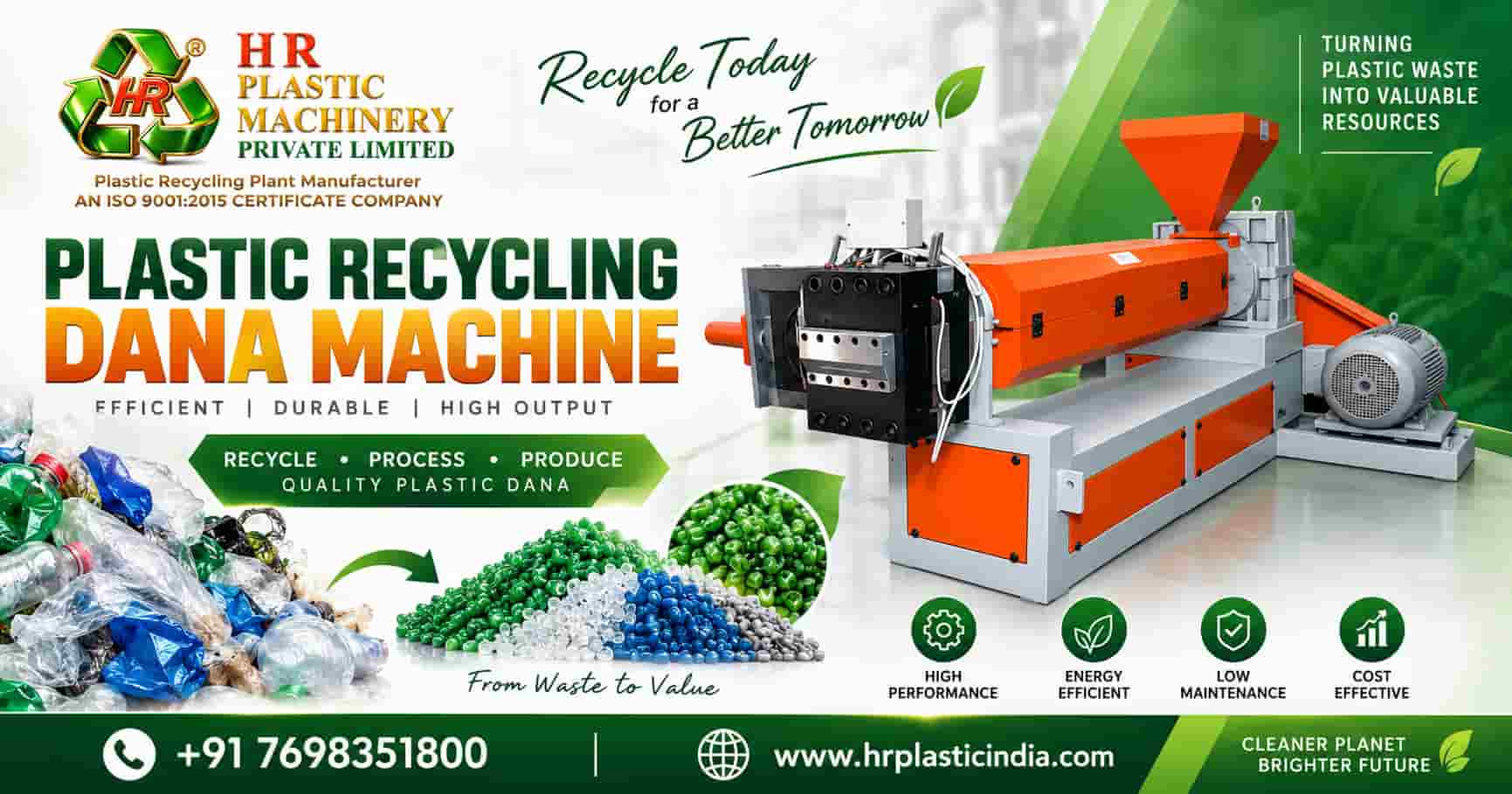
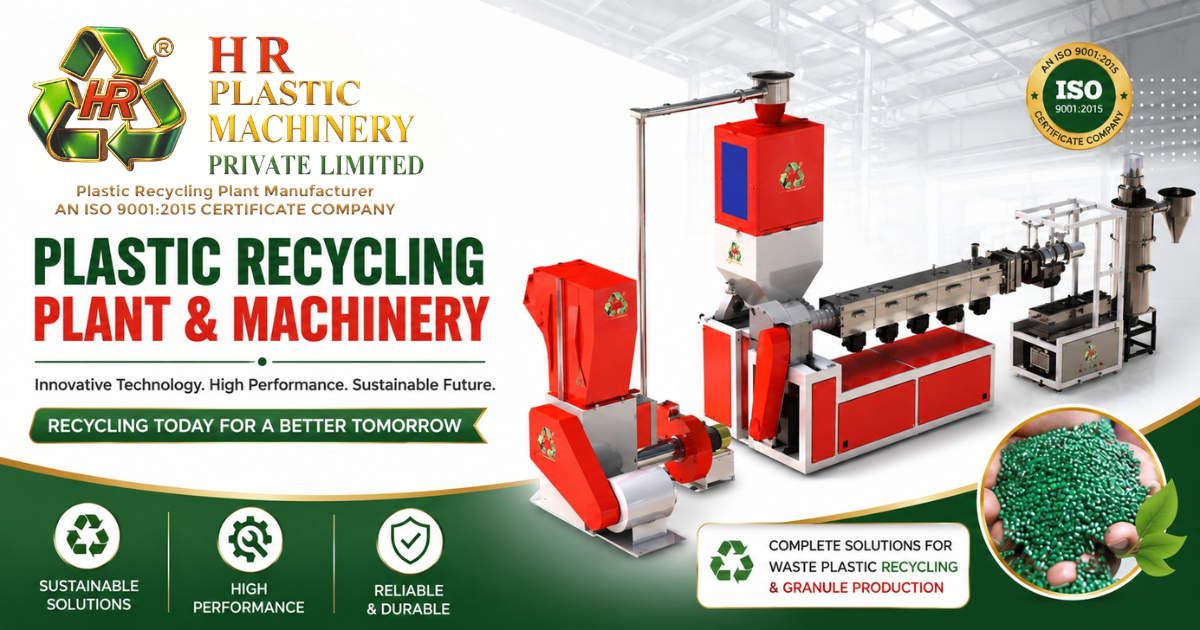
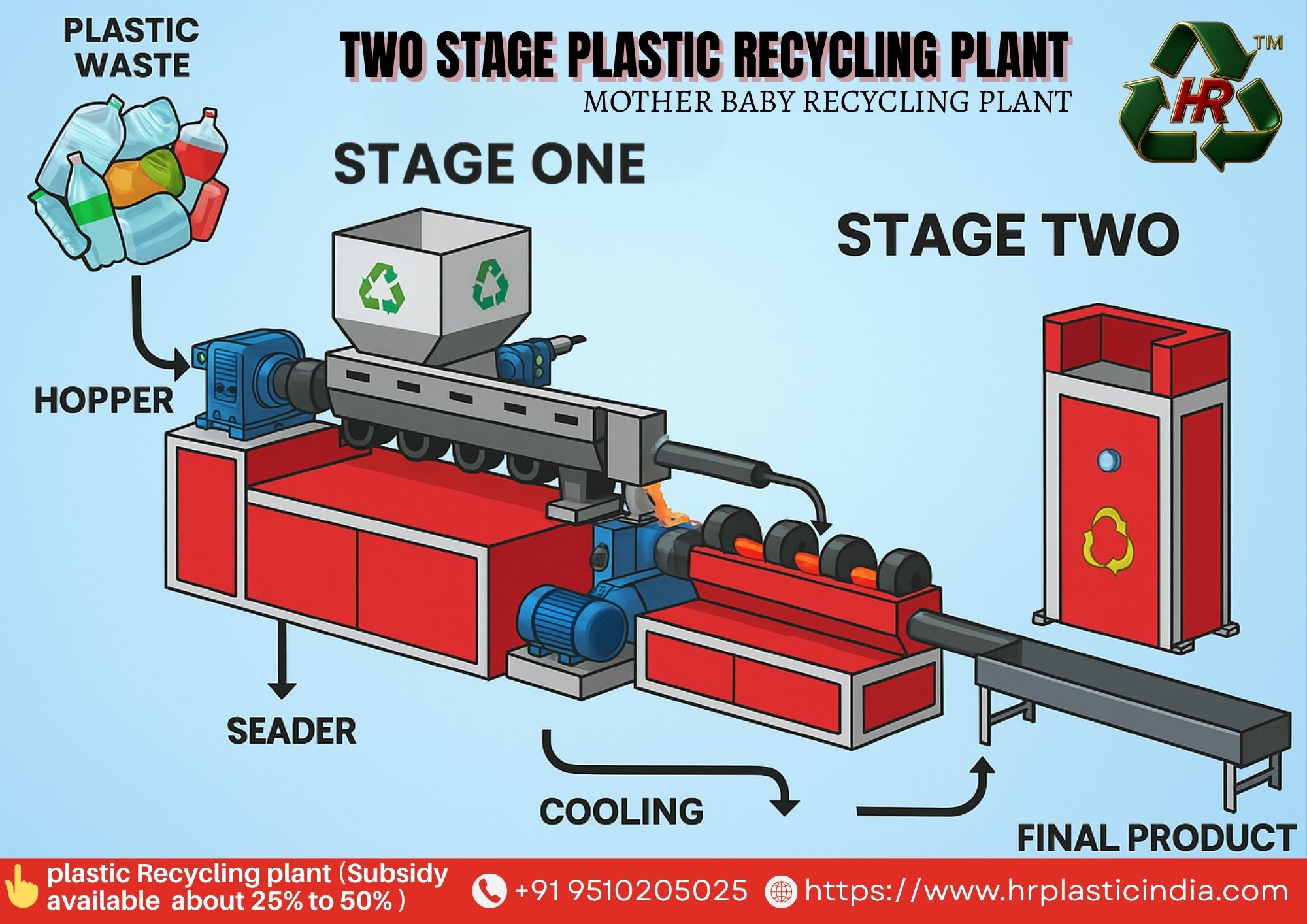
A two stage extruder recycling machine (also called a vented + secondary extruder line) is designed to process highly printed, moist and contaminated plastic waste into clean, stable granules. The first stage agglomerates and plastifies with powerful degassing to remove inks, volatiles and moisture; the second stage re-melts under gentler shear for deep filtration and uniform pelletizing. For configuration guidance, capacities and videos, visit HR Plastic India.
Working Principle and Process Flow
Material passes through feeding → compactor/agglomerator (optional) → 1st stage extruder with double vent & vacuum → melt filtration → 2nd stage extruder (stabilization and pressure build-up) → fine filtration → pelletizing (die face/water ring/strand) → drying → silo. Dual degassing lowers odour and gels, while twin filters capture fines and aluminium/ink residues. PLC-SCADA recipes record kWh/kg, throughput and alarms for audits.
Two-Stage Line Variants
- Film & Flexible Packaging Line (LDPE/LLDPE/PP): forced-feed, compactor + two-stage vented extruders for printed/washed films.
- Washed Flake Line (HDPE/PP): long L/D with high-torque gearboxes for damp flakes from drums, caps, crates, woven sacks.
- PET/Polyester Reprocessing: crystallizer + twin vent, vacuum pump and melt filter options (non-food loop) for textiles/strapping.
- Odour-Control Package: multi-point vacuum, condensers and deodorizing additives dosing for post-consumer waste.
- High-Output Systems: 800–1500 kg/hr twin-line with automatic screen changers and centralized pellet handling.
Key Features & Specifications
- Dual Degassing: atmospheric + vacuum vents with condensate collection for moisture/ink removal.
- Advanced Filtration: hydraulic/continuous screen changers (80–200 mesh) before and after 2nd stage.
- Pelletizing: die-face hot cut, water ring or strand pelletizer with auto speed sync and cutter pressure control.
- Energy Efficiency: VFD drives, insulated barrels, kWh/kg dashboard; optimized screw design for low melt temp.
- Automation & Safety: PLC-HMI recipes, data logging, interlocks, guarded access, CE-style safety practices.
Applications
- Printed post-consumer films (grocery, agro-mulch, shrink/stretch) with high moisture and ink load.
- HDPE/PP rigid regrind: canisters, crates, caps, drums, household items after washing/drying.
- PP woven sacks/raffia, MLP streams blended with PE for utility-grade pellets.
- Textiles & fibre waste (PET/PP) for non-food loops like strapping, monofilaments and sheets.
Benefits of a Two Stage Extruder
- Higher pellet quality: lower gels/odour, stable melt flow index and improved downstream printability.
- Wider feedstock window: handles wet, printed and lightly contaminated inputs with fewer rejects.
- Lower energy per kg via optimized screws, VFDs and heat management; faster ROI from uptime and yield.
- Traceable production with recipe control, batch reports and alarm logs for EPR/brand audits.
Manufacturers & Supply Scope (India)
Indian suppliers provide complete lines including layout design, installation, commissioning, operator training and spares. Typical options: stainless steel contact parts, vacuum pumps, automatic screen changers, water-recycling modules, deodorizing packages and centralized pellet handling. Evaluate throughput guarantees (kg/hr), kWh/kg benchmarks, filtration fineness and degassing performance on your waste samples.
Maintenance & Safety Tips
- Monitor vacuum levels and clean condensate traps to maintain effective devolatilization.
- Track melt pressure/temperature; adjust screw speed to avoid thermal degradation and gels.
- Follow a screen-change schedule; keep mesh inventory with labeled pore sizes and QC logs.
- Calibrate load cells, temperature sensors and energy meters; back up PLC recipes regularly.
- Enforce LOTO, guarding checks and PPE; document preventive maintenance and operator SOPs.
FAQs – Two Stage Extruder Recycling Machine
1. When should I choose a two-stage line over a single-stage?
+
Choose two-stage for printed films, damp washed flakes or odorous waste where extra degassing and secondary filtration significantly improve pellet quality and odour profile.
2. What capacities are common?
+
From 150–300 kg/hr for compact plants up to 800–1500+ kg/hr twin-line systems. Actual output depends on polymer mix, contamination and filtration fineness.
3. Which pelletizing system should I select?
+
Die-face hot cut suits films and soft polymers; water-ring is versatile; strand pelletizer works well for rigid regrind. Selection depends on viscosity (MFI), output and product specs.
4. Can I run mixed PE/PP or MLP?
+
Yes, with proper screening and recipe control. Expect utility-grade pellets; fine filtration and dual degassing help manage inks/adhesives from multilayer laminates.
5. What documentation is delivered?
+
Layout drawings, electrical loads, utility list, FAT protocols, SOPs, maintenance schedule and performance guarantees tied to throughput, kWh/kg and pellet quality.
Contact Details
Talk to our specialists today for tailored solutions and fast assistance.
Company: Hr Plastic India
Phone: +91 95102-05025
WhatsApp: Chat on WhatsApp
Email: [email protected]
Website: www.hrplasticindia.com
Address: Office Address :- 3, Abhishree Industrial Park, B/h. G.V.M.M., Near Odhav Circle, Ahmedabad-382415.
Recent Posts