H.R. PLASTIC MACHINERY PVT. LTD.
PP Dana Making Machine
PP Dana Making Machine
Recycling Machinery Supplier in India | Trusted Equipment for Waste & Material Recovery
PP Dana Making Machine – Overview
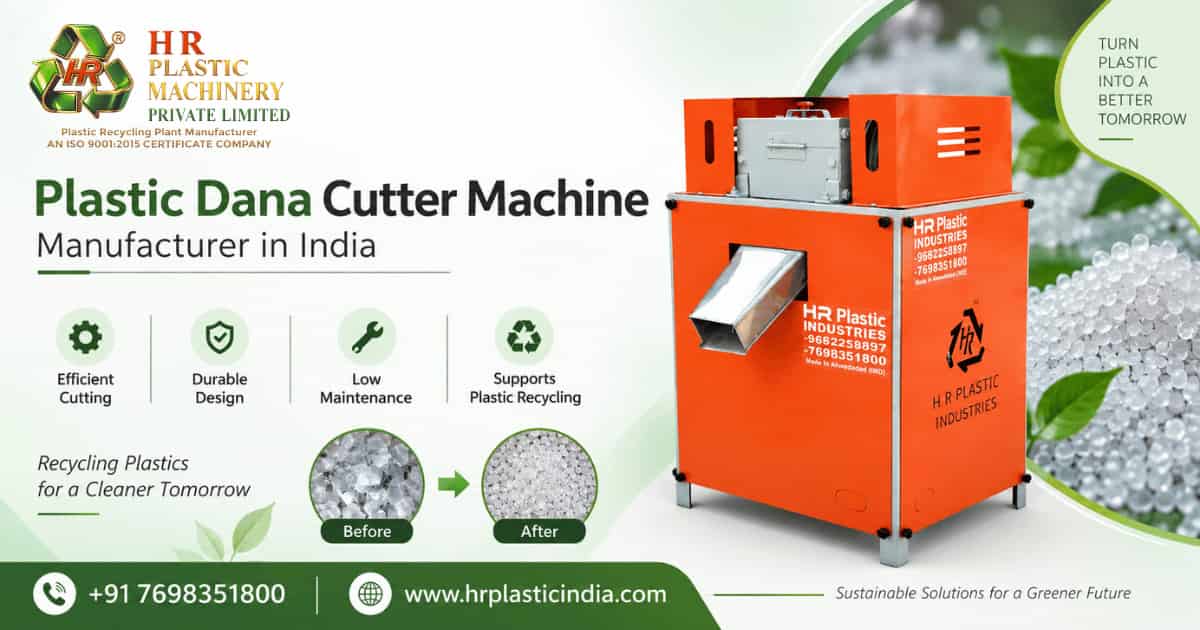
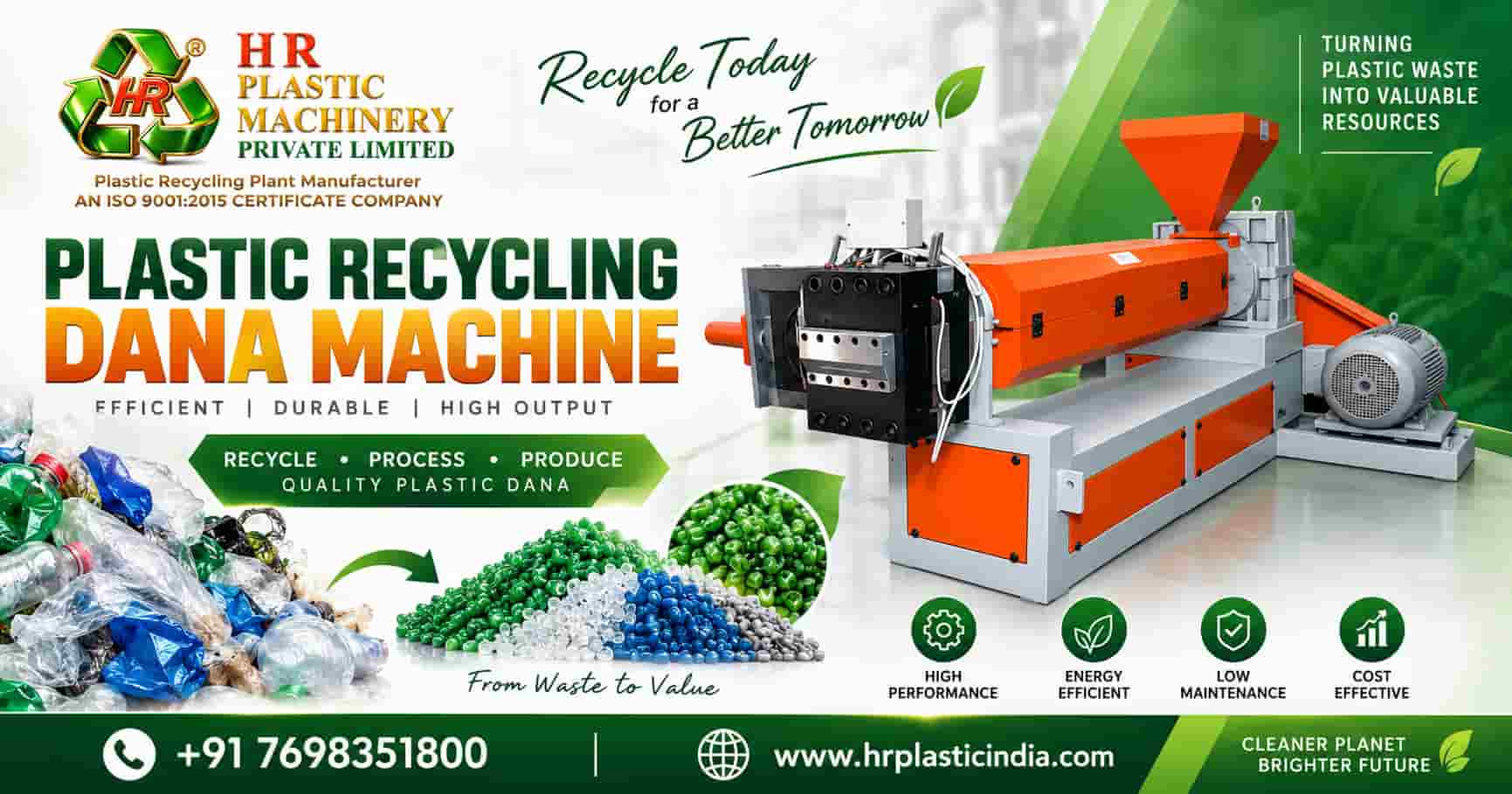
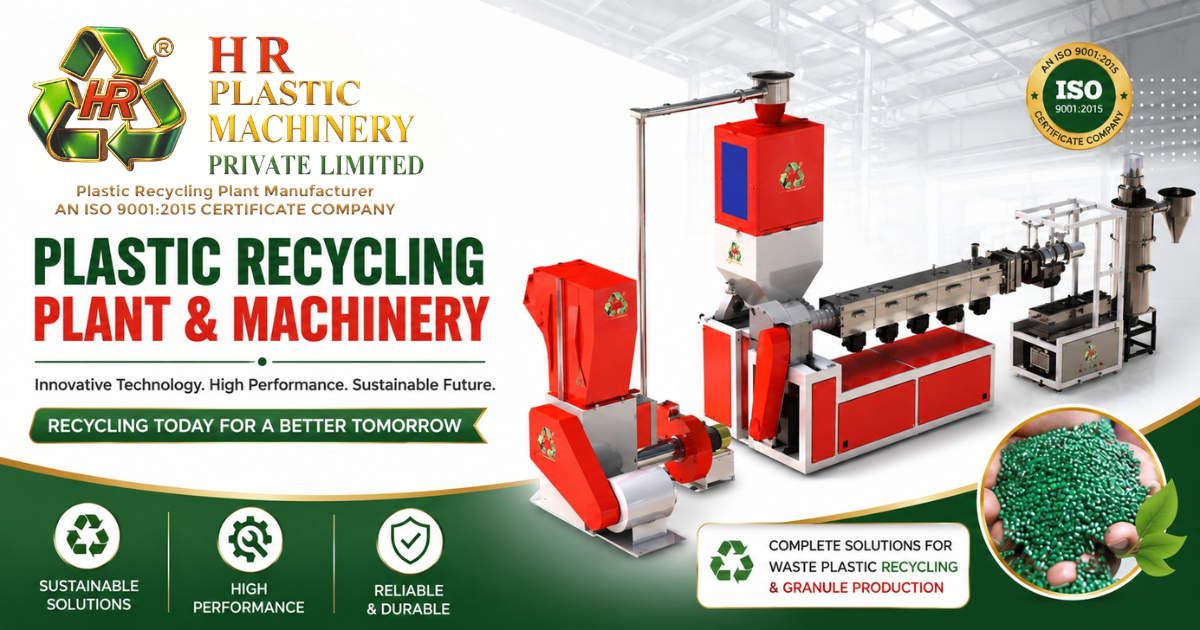
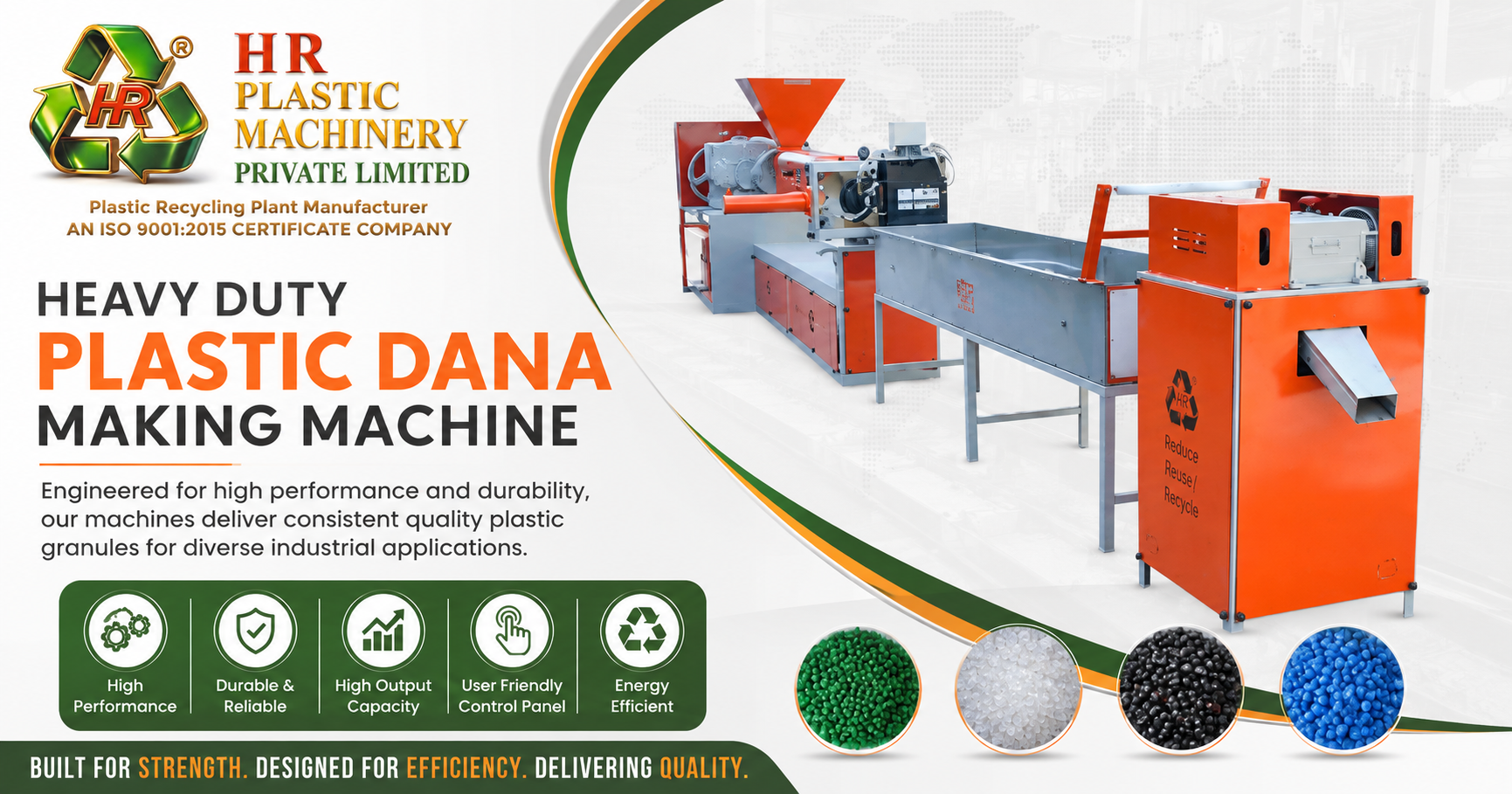
A PP Dana Making Machine converts polypropylene scrap—runners, regrind, woven sack waste, films, and lumps—into uniform PP granules (dana) suitable for injection, extrusion, and blow-moulding. The line typically integrates conveying, crushing, washing (if required), drying, agglomeration for films, controlled extrusion with filtration, pellet cutting, and silo bagging. For Indian buyers, the focus is on stable melt flow index (MFI), low odour, and consistent pellet size with low energy per kg. This page explains working, types, features, applications, benefits, and FAQs so you can specify the right PP dana plant for your capacity and quality targets.
Working Principle and Process Flow of PP Dana Plants
PP scrap is pre-sorted and size-reduced, then fed through a force-feeder into a single- or twin-stage vented extruder. In the extruder, zoned heating and a barrier/mixing screw homogenize the melt while vacuum degassing removes moisture and volatiles that create bubbles and odour. High-precision screen changers filter contaminants; melt passes either to a strand pelletizer (water trough + cutter) for rigid PP or a die-face cutter (water ring/air-cooled) for films and thin gauge material. A cyclone and vibrating classifier ensure even pellet size before silo storage. SCADA-ready controls log kWh/kg, melt pressure/temperature, and throughput, helping you maintain repeatable MFI and colour from batch to batch.
Types of PP Dana Making Machines
- Single-Stage Vented Extruder (Basic) – Ideal for clean, pre-washed PP regrind and injection waste; compact layout with lower capex and simplified maintenance.
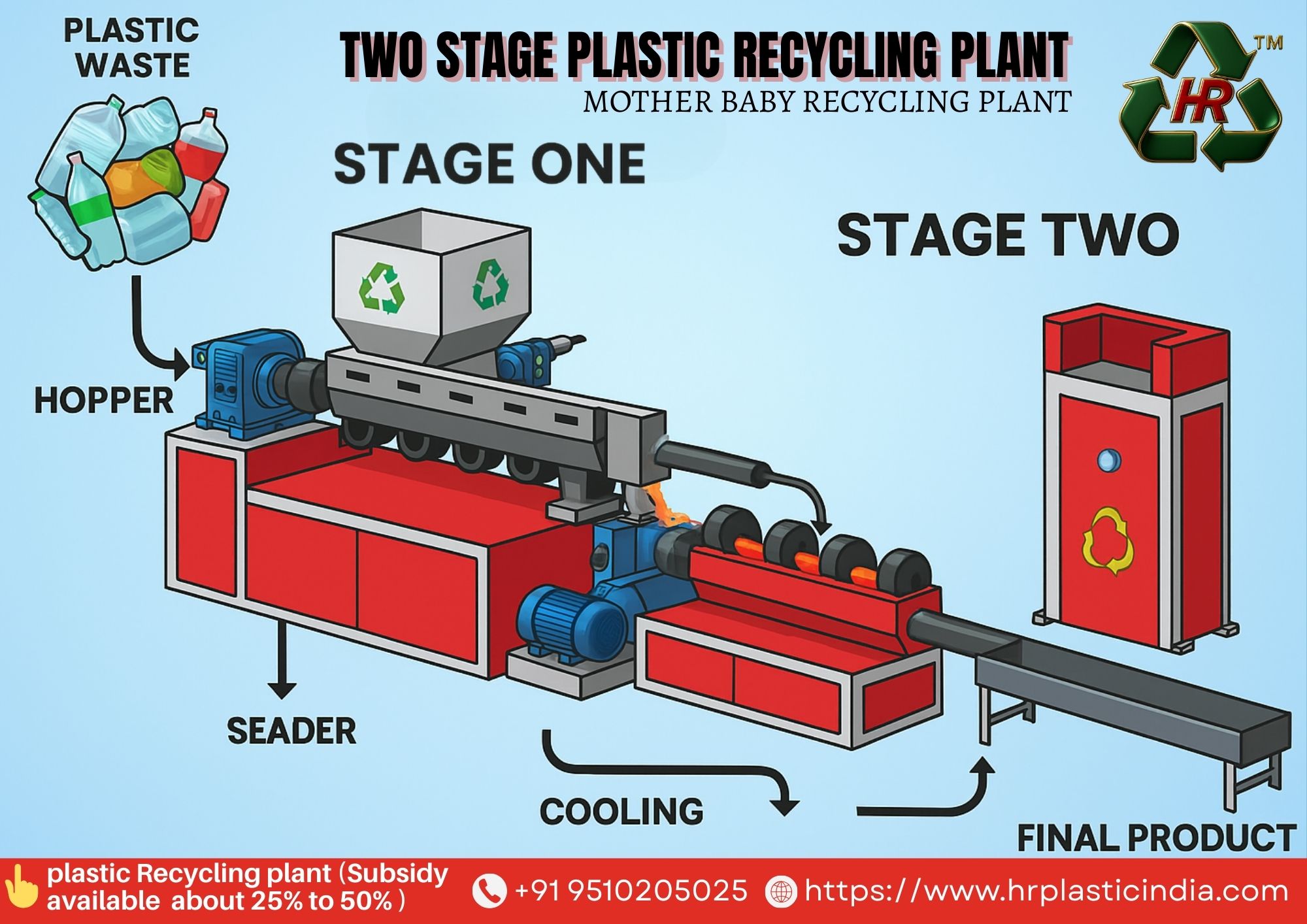
- Double-Stage (Mother–Baby) – Two extruders in series with dual filtration and degassing for heavily printed/contaminated feeds to achieve odour control and stable MFI.
- Film-Focused Line with Agglomerator – For PP raffia/film; densifies low bulk-density feed, enabling steady feeding and high output on water-ring die-face cutter.
- High-Output Force-Feed System – Robust gearbox, larger L/D screws, and torque motors for woven sack/tarpaulin converters targeting 500–1200 kg/hr.
- Color/Fill Masterbatch Line – Side feeders and gravimetric dosing for pigments/fillers (CaCO₃, talc), delivering narrow dispersion and consistent shade.
Key Features and Specifications
- Optimized Screw & Barrel – Nitrided/bi-metal barrels; barrier/maddock mixing; typical L/D 32–36 for stable output and low melt temperature.
- Efficient Filtration – Manual/automatic screen changer (hydraulic/continuous) with 80–150 mesh options to meet black-speck and gel limits.
- Degassing & Odour Control – Dual vent + high-vacuum pumps to remove volatiles from printed raffia and post-consumer streams.
- Pelletizing Choices – Strand + water bath + cutter for rigid PP; water-ring die-face or air-cooled face-cutter for films and thin-wall scrap.
- Power & Drives – IE3/IE4 motors with VFDs; documented kWh/kg; torque-optimized gearboxes and insulated heaters for energy savings.
- Controls – PLC-HMI with recipe management, alarms, remote diagnostics, and melt pressure/temperature interlocks.
Applications of PP Dana
- Injection Moulding: Household goods, crates, caps/closures, appliance parts with target impact/flow balance.
- Woven Sacks & Tarpaulins: Tape plants and lamination lines using controlled MFI dana for tenacity and draw ratio.
- Monofilament & Ropes: Fishing ropes, agro twines, bristles where elongation and UV stability are key.
- Sheets & Thermoforming: Stationery sheets, trays, and packaging with specified haze and stiffness.
Benefits of Choosing the Right PP Dana Machine
- Lower Cost per Kg: Energy-efficient drives and heat management reduce operating costs and speed ROI.
- Consistent Quality: Stable MFI, uniform pellet size, and low gels improve downstream productivity and reduce rejections.
- High Uptime: Rugged gearboxes, quick screen changes, and standardized spares keep lines running longer.
- Compliance & Traceability: Digital logs of kWh/kg and melt parameters support audits and customer specifications.
Manufacturers & Suppliers in India
India’s PP dana plant ecosystem spans specialist extruder builders and turnkey providers. When shortlisting, compare screw metallurgy and design, filtration options, vacuum capacity, pelletizer type, energy benchmarks, and after-sales commitments. Ask for layout drawings, utility lists, FAT protocols, and performance guarantees (throughput at defined MFI, contamination level, and pellet uniformity). Consider service footprints across Gujarat, Maharashtra, Delhi-NCR, and South India to minimize downtime and logistics costs.
Maintenance and Safety Tips
- Log daily readings for melt pressure/temperature, vacuum level, and kWh; investigate deviations immediately.
- Keep screens, filters, and water circuits clean; maintain water quality in strand troughs and die-face loops.
- Inspect heaters, thermocouples, and drive belts; stock critical spares (screens, heaters, seals, knives).
- Follow lockout–tagout procedures; shield rotating cutters; train operators on hot-surface and entanglement risks.
- Calibrate gravimetric feeders and weigh scales to maintain recipe accuracy and colour consistency.
FAQs – PP Dana Making Machine
1. What capacity should I select for PP dana production?
+
Match the extruder size to stable scrap availability and buyer demand. As a thumb rule, 65–90 mm screws suit 150–350 kg/hr; 100–120 mm for 400–900 kg/hr, depending on L/D, motor HP, and material pre-processing.
2. Strand pelletizer or die-face cutter—what’s better?
+
Use strand pelletizers for rigid PP regrind to achieve clean-cut cylindrical pellets. Choose water-ring/air-cooled die-face for films and raffia where steady strands are difficult and finer, more uniform pellets are preferred.
3. Can one line handle printed raffia and clean regrind?
+
Yes—opt for a double-stage vented extruder with dual filtration. Run recipes via PLC to switch screens and setpoints; maintain separate storage to avoid shade/MFI drift between grades.
4. What is typical energy consumption?
+
Depending on contamination, moisture, and pelletizer type, modern PP dana plants demonstrate ~0.25–0.45 kWh/kg. Track kWh/kg by grade and shift to identify savings opportunities.
5. Which tests ensure pellet quality?
+
Check MFI, density, ash %, moisture, colour (ΔE), and gel count. For end-use, validate tensile/elongation on tapes or impact/stiffness on injection parts as per buyer specs.
Contact Details
Talk to our specialists today for tailored solutions and fast assistance.
Company: Hr Plastic India
Phone: +91 95102-05025
WhatsApp: Chat on WhatsApp
Email: [email protected]
Website: www.hrplasticindia.com
Address: Office Address :- 3, Abhishree Industrial Park, B/h. G.V.M.M., Near Odhav Circle, Ahmedabad-382415.
Recent Posts