H.R. PLASTIC MACHINERY PVT. LTD.
Plastic Waste Recycling Plant
Plastic Waste Recycling Plant
Plastic Waste Recycling Plant | HR Plastic India
Plastic Waste Recycling Plant
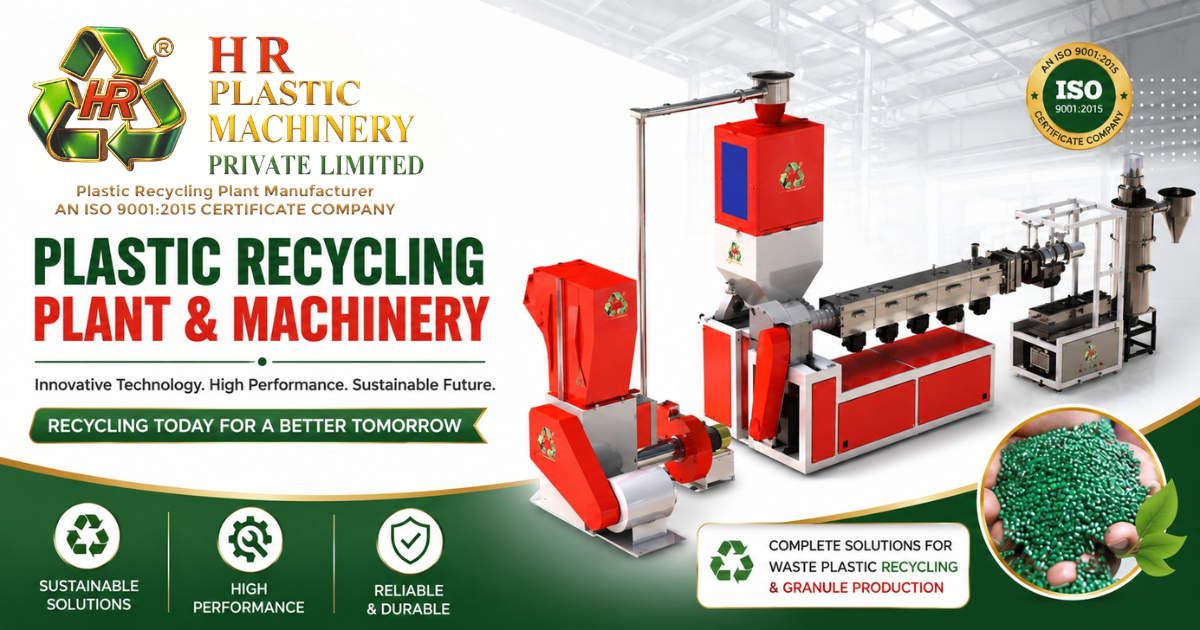
A plastic waste recycling plant converts mixed post-consumer and industrial plastics into consistent recycled granules. A well-engineered line integrates sorting, shredding, washing, drying, extrusion and pelletizing with automation and quality controls. For layouts, capacities and application guidance, explore HR Plastic India.
Working Principle and Process Flow
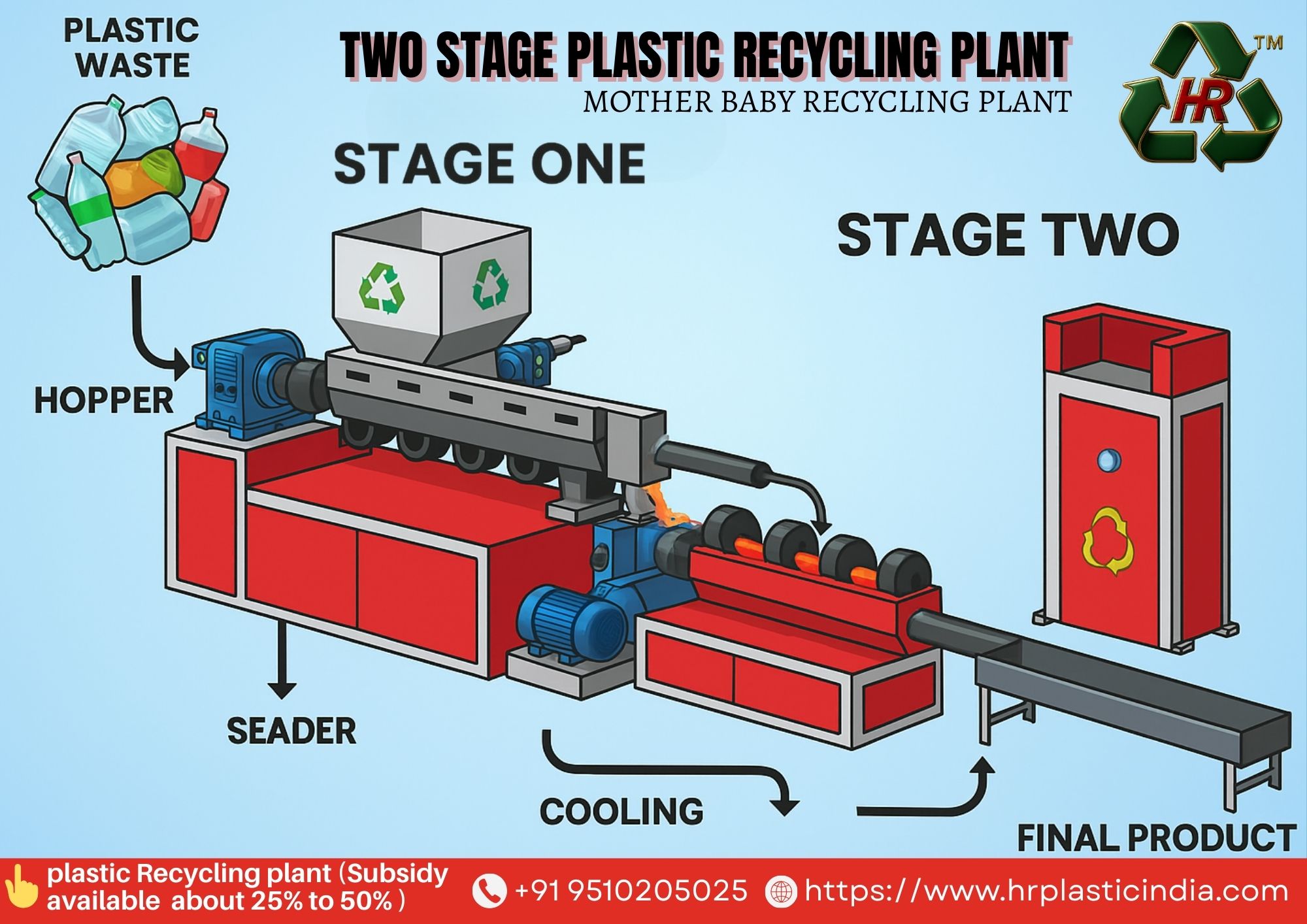
Typical flow: manual/optical sorting → shredding/granulation → washing (friction + hot) → density separation (float–sink) → rinsing → centrifugal drying → extrusion (single or two-stage with vacuum degassing) → melt filtration → pelletizing (die-face/water-ring/strand) → drying & silo. SCADA tracks kWh/kg, throughput, alarms and batch traceability to meet EPR and brand audits.
Plant Configurations
- Film & Flexible Packaging Plant: LDPE/LLDPE with compactor, dual-degassing extruder and automatic screen changer for printed films and MLP blends.
- Rigid Plastics Plant: HDPE/PP drums, crates, caps; includes label remover, metal separator, hot wash and strand or die-face pelletizer.
- PET Bottle-to-Pellet Plant: de-labeller, hot caustic wash, friction washer, IV-retention options (non-food loop) and crystallizer.
- Two-Stage High-Contamination Line: double vent + vacuum with dual filtration for damp flakes and odorous waste streams.
- Water-Recycling Module: multi-stage filtration & DAF to reduce freshwater consumption and meet local norms.
Key Features & Specifications
- Energy-efficient drives, insulated barrels and kWh/kg dashboard for predictable operating cost.
- Hydraulic/continuous screen changers (80–200 mesh) for clean pellets and reduced black specks.
- Vacuum degassing to remove moisture, inks and volatiles; condensate collection for odour control.
- PLC–HMI recipes, alarm logs, remote diagnostics and preventive maintenance reminders.
- Stainless steel contact parts in washing for hygiene and corrosion resistance.
Applications of Recycled Granules
- FMCG & industrial packaging films, liners and sheets using rPE blends with targeted MFI and printability.
- Injection-moulded parts (crates, pails, components) using rPP/rHDPE with impact and stiffness tuning.
- Textiles & straps from rPET pellets for fibres, monofilaments and woven tapes.
- Infrastructure products such as pipes, dunnage and boards from utility-grade blends.
Benefits of a Plastic Waste Recycling Plant
- Lower material cost and reduced landfill by converting waste to value-added pellets.
- Stable quality via controlled washing, degassing and fine filtration—fewer rejections downstream.
- Higher productivity with automated dosing, recipe control and quick screen changes.
- Compliance support for EPR, audit trails and sustainability reporting.
Manufacturers & Supply Scope (India)
Indian suppliers deliver turnkey plants with layout design, utility lists, installation, commissioning, operator training and spares. Optional upgrades include stainless contact parts, automatic screen changers, centralized pellet handling, odour-control packages, and water-recycling systems. Evaluate guarantees on throughput (kg/hr), filtration fineness, kWh/kg benchmarks and pellet quality on your feedstock.
Maintenance & Safety Tips
- Keep wash tanks clean; maintain chemistry and replace contaminated water per schedule.
- Monitor vacuum levels, melt pressure and temperature to avoid degradation and gels.
- Plan screen inventory and change intervals; log mesh sizes and differential pressure.
- Calibrate sensors and energy meters; back up PLC recipes and keep spares organized.
- Enforce LOTO, guarding and PPE; train operators and document SOPs with checklists.
FAQs – Plastic Waste Recycling Plant
1. What capacity should I choose?
+
Size the plant to consistent scrap availability, planned shifts and quality targets. Modular lines allow scaling from 150–300 kg/hr up to 800–1500+ kg/hr.
2. Can one line process mixed MLP and films?
+
Yes, with proper sorting, dual-degassing and fine filtration. Expect utility-grade pellets; recipe control improves consistency.
3. Which pelletizer should I use?
+
Die-face hot cut suits films, water-ring is versatile, and strand pelletizer works well for rigid regrind—selection depends on MFI and output.
4. How do I control odour?
+
Use dual degassing with vacuum, condensate traps, optimized washing chemistry and optional deodorizing additives dosing.
5. What documentation is provided?
+
Layout drawings, electrical loads, utility list, FAT protocols, SOPs, preventive maintenance schedule and performance guarantees.
Contact Details
Talk to our specialists today for tailored solutions and fast assistance.
Company: Hr Plastic India
Phone: +91 95102-05025
WhatsApp: Chat on WhatsApp
Email: [email protected]
Website: www.hrplasticindia.com
Address: Office Address :- 3, Abhishree Industrial Park, B/h. G.V.M.M., Near Odhav Circle, Ahmedabad-382415.
Recent Posts