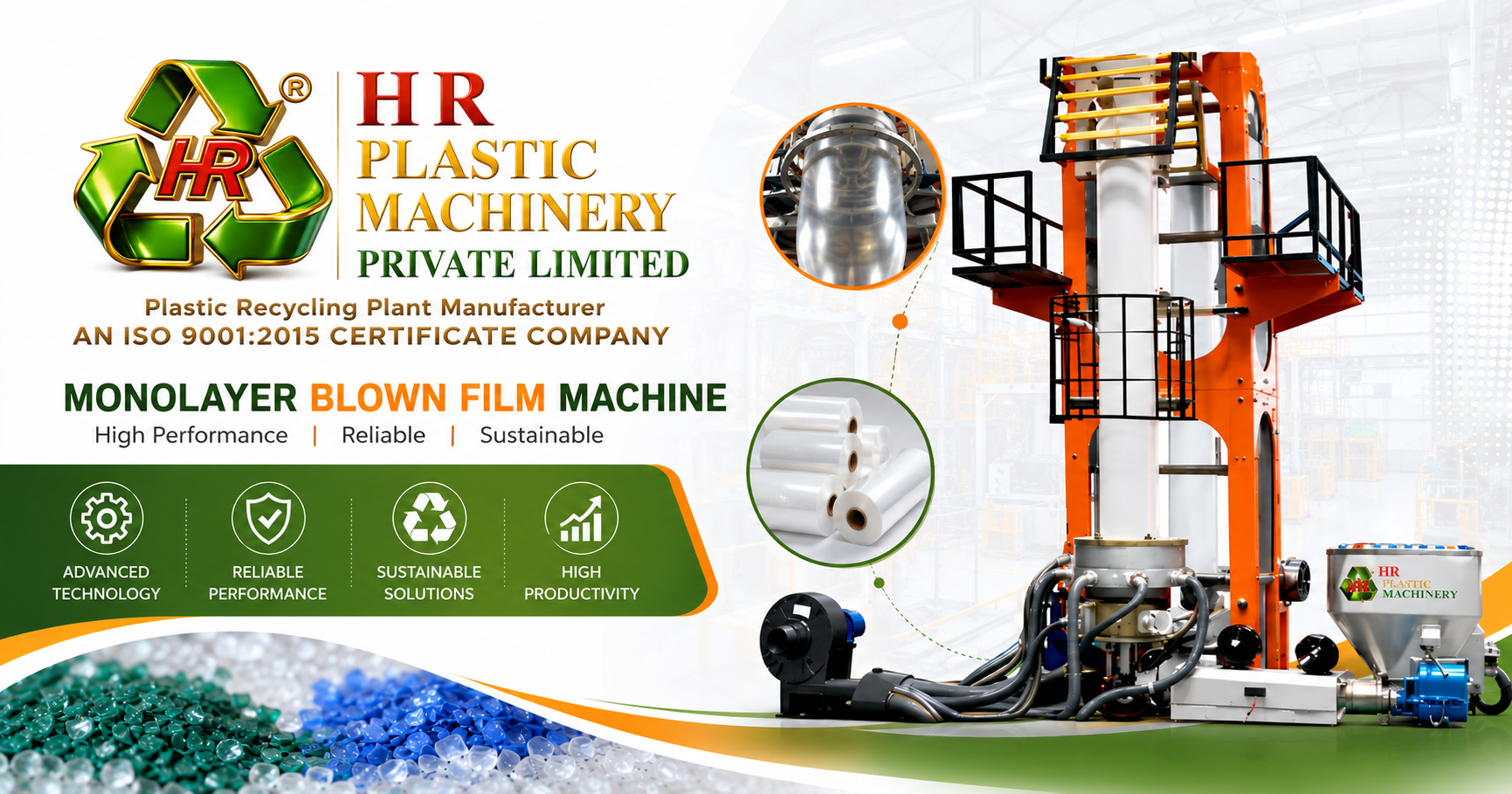
H.R. PLASTIC MACHINERY PVT. LTD.
Plastic Reprocessing Plant Manufacturer
Plastic Reprocessing Plant Manufacturer
Plastic Reprocessing Plant Manufacturer in India | HDPE, LDPE, PP Recycling Lines
Introduction to Plastic Reprocessing Plant Manufacturer
A plastic reprocessing plant converts post-consumer and post-industrial scrap into high-quality granules using size reduction, washing, drying, melt filtration, and pelletizing. A dependable manufacturer helps you match throughput, polymer mix, utilities, and compliance needs while ensuring stable quality and low energy per kg. Evaluate lifecycle service, automation, and water management before finalizing. For layouts, videos, and product categories, explore solutions on www.hrplasticindia.com.
Working Principle and Process Flow of Plastic Reprocessing
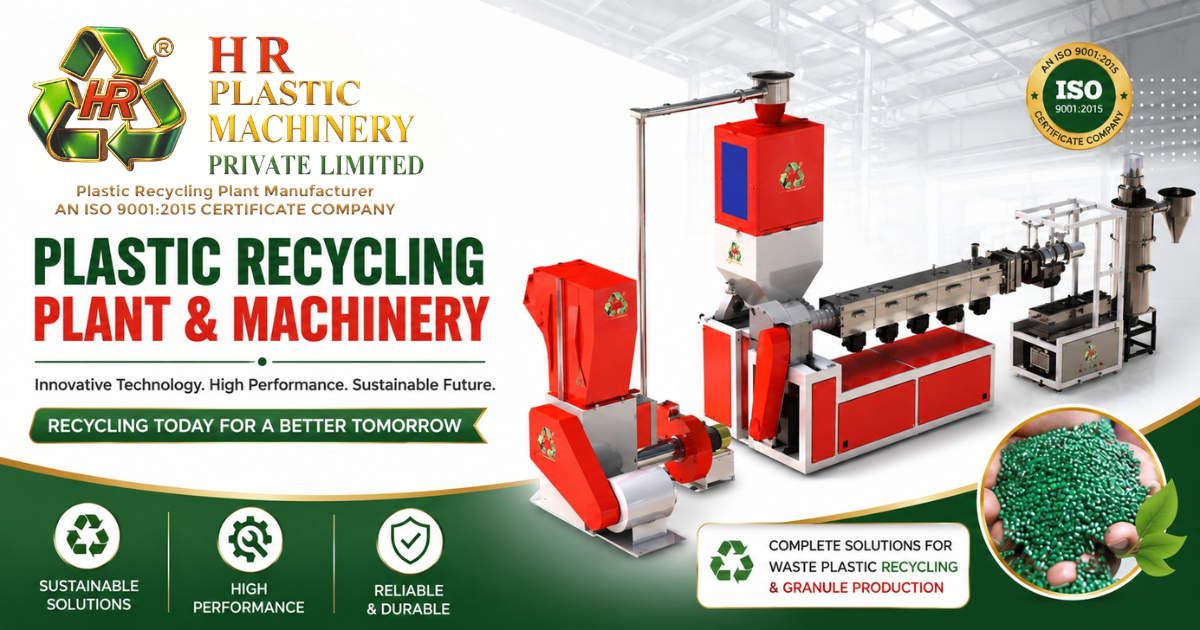
Typical lines follow an integrated flow: inspection and sorting, shredding or crushing, wet or dry separation, intensive washing, friction/density cleaning, mechanical or thermal drying, degassing and multi-stage filtration in the extruder, followed by strand or die-face pelletizing. Vacuum systems remove volatiles and odour, while PLC-SCADA records kWh/kg, melt pressure, and throughput for traceability. Design should consider feed variability, moisture targets, and final MFI specifications to ensure downstream conversion performance.
Types of Plastic Reprocessing Plants
- Monolayer extruder lines for clean, single-polymer streams like PP raffia, HDPE drums, and injection-grade sprues with stable MFI control.
- Twin-stage (mother–baby) reprocessing for heavily printed or contaminated film waste, combining aggressive filtration with enhanced degassing.
- PET bottle-to-pellet modules with hot caustic wash, label separation, and IV retention for fibers, straps, and sheets.
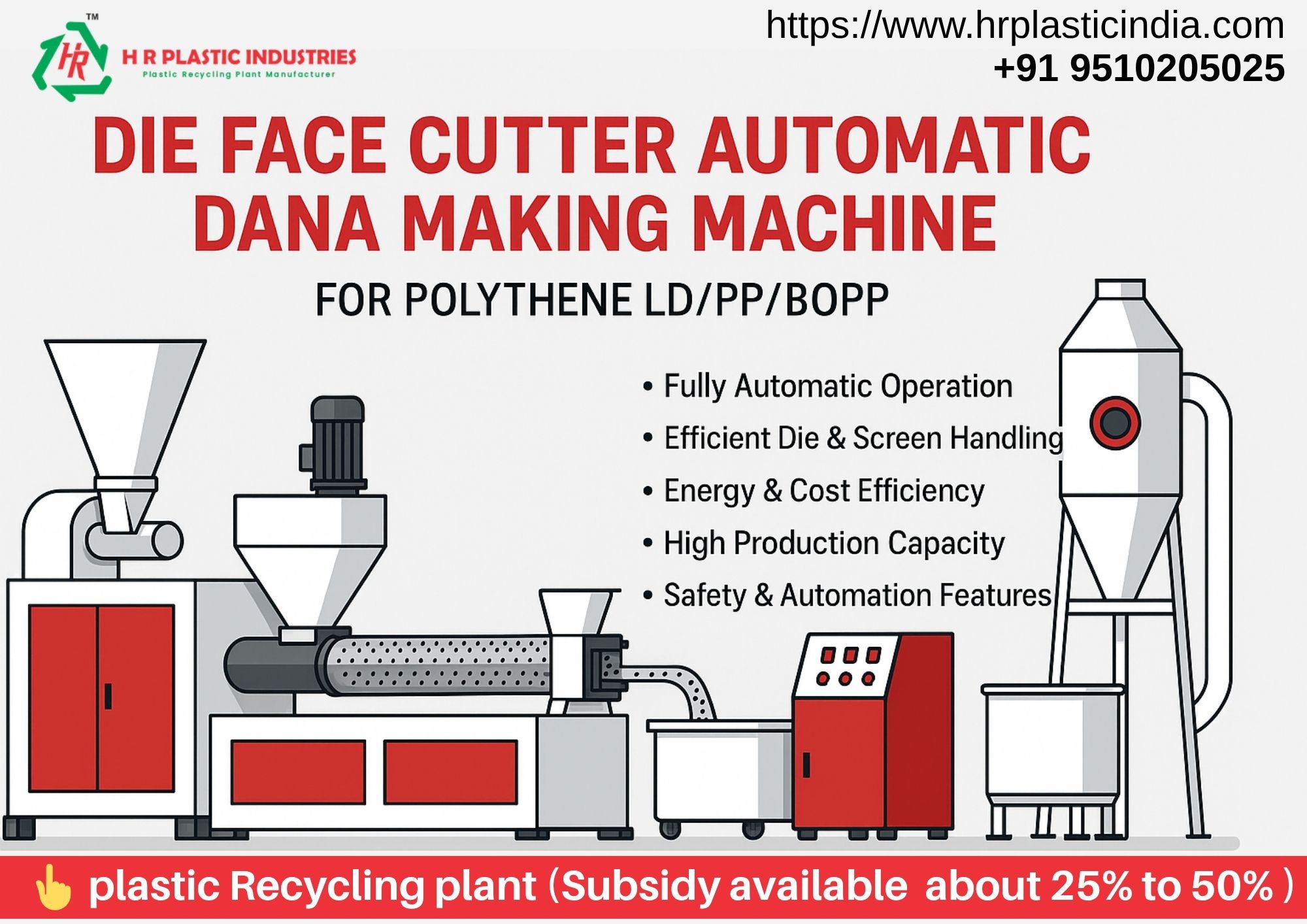
- LDPE/LLDPE film recycling lines with agglomerator, force-feed extruder, and die-face pelletizer optimized for thin flexible inputs.
- Rigid plastics lines for HDPE/PP crates and canisters, integrating metal separation, label removal, and high-impact washing for consistent pellets.
Key Features and Specifications
- Energy-optimized drives with VFDs and documented kWh/kg benchmarks for predictable operating cost control.
- Automatic screen changers, multi-zone heating, and vacuum degassing to ensure clean melt and minimal gel/black specks.
- SS304 contact parts for wet sections; closed-loop water recycling and effluent treatment to reduce freshwater demand.
- PLC-SCADA with recipe presets, alarm logs, preventive maintenance prompts, and remote diagnostics.
- Modular expansions, standardized spares, safety interlocks, and pan-India service to reduce downtime.
Applications of Reprocessed Plastic Granules
- Packaging films and sheets using rLDPE/rLLDPE with targeted MFI and printability for FMCG and industrial liners.
- Blow-moulded containers and canisters using rHDPE with impact and ESCR control for non-food applications.
- Injection-moulded parts such as crates, pallets, and appliance housings with rPP and rHIPS blends.
- Textile and strapping lines consuming rPET for fibres and tapes with tensile and elongation stability.
Benefits of Choosing a Plastic Reprocessing Plant Manufacturer
- Lower material costs and improved scrap monetisation through consistent, saleable granules tailored to customer MFI and colour targets.
- Stable product quality driven by controlled washing, multi-stage filtration, and precise temperature profiles.
- Higher productivity via automated dosing, efficient conveying, quick screen changes, and robust pelletizing systems.
- Sustainability and compliance support with data logging, EPR alignment, safety guarding, and audit-ready documentation.
Leading Manufacturers & Supplier Considerations
When selecting a manufacturer, assess experience with local scrap profiles, pellet quality evidence, and demonstrated energy and water benchmarks. Deliverables typically include layout engineering, installation and commissioning, operator training, spare parts kits, and remote diagnostics. Popular options include stainless contact parts, odour control, SCADA integration, and water-recycling modules. Verify FAT protocols, safety conformity, and performance guarantees tied to throughput, contamination levels, and pellet quality.
Maintenance and Safety Tips
- Inspect knives, bearings, belts, and filters daily; trend vibration, temperature, and pressure readings.
- Maintain wash chemistry, clean tanks and pipes, and manage sludge removal and water recycling regularly.
- Monitor extruder pressures, MFI, and zone temperatures; schedule sensor and load-cell calibration.
- Train operators on lockout–tagout, hot surfaces, confined spaces, and emergency stop usage.
- Stock critical spares like heaters, thermocouples, seals, and screens with traceable part numbers.
FAQs – Plastic Reprocessing Plant Manufacturer
1. Which capacity should I choose for my reprocessing plant?
+
Match capacity to consistent scrap availability, planned shifts, polymer mix, and downstream demand. Modular designs enable scaling without compromising washing or filtration quality.
2. Can the same line handle mixed municipal plastics?
+
Yes, with effective pre-sorting and density separation. Separate loops and tailored filtration help maintain predictable MFI and pellet specs for different grades.
3. What utilities are required for a mid-size plant?
+
Three-phase power, process water for wash and cooling, and compressed air are typical. Include water recycling, effluent treatment, and backup power to stabilise operations.
4. How do I control odour and moisture in pellets?
+
Use hot washing where needed, intensive drying, and strong vacuum degassing. Maintain correct venting and screen packs to reduce gels and volatiles.
5. What after-sales support should be included?
+
Ensure installation, commissioning, operator training, preventive maintenance schedules, remote diagnostics, and guaranteed spares with defined response times and warranty terms.
Contact Details
Talk to our specialists today for tailored solutions and fast assistance.
Company: Hr Plastic India
Phone: +91 95102-05025
WhatsApp: Chat on WhatsApp
Email: [email protected]
Website: www.hrplasticindia.com
Address: Office Address :- 3, Abhishree Industrial Park, B/h. G.V.M.M., Near Odhav Circle, Ahmedabad-382415.
Recent Posts