H.R. PLASTIC MACHINERY PVT. LTD.
Plastic Recycling Line Supplier
Plastic Recycling Line Supplier
Plastic Recycling Line Supplier in India | Turnkey Washing, Drying & Pelletizing
```
```
Plastic Recycling Line Supplier
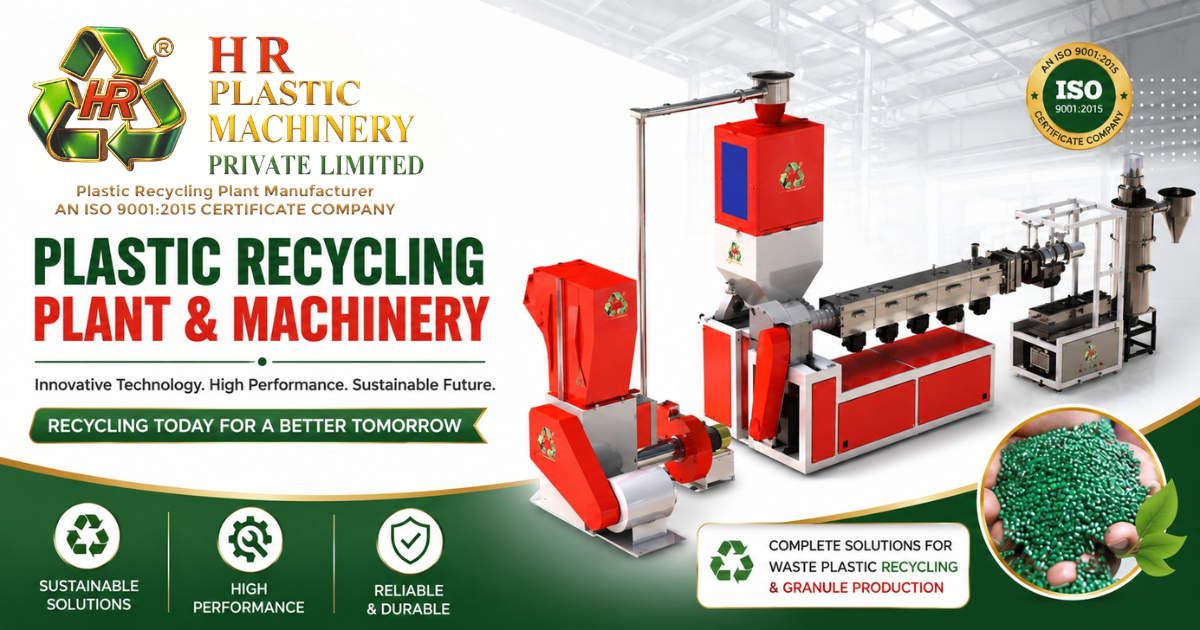
A trusted plastic recycling line supplier designs, integrates, and commissions complete systems for converting post-consumer and post-industrial plastics into saleable granules. Typical lines combine size-reduction, washing, drying, melt filtration, and pelletizing modules tailored to your polymer mix and contamination profile. Evaluate throughput targets (kg/hr), water and energy use, automation level, and after-sales coverage to ensure consistent quality and low operating costs across Indian conditions.
Working Principle and End-to-End Process
Modern plastic recycling lines follow a staged flow: manual/optical sorting, shredding or crushing, friction/hot washing, float-sink separation, centrifugal drying, metal removal, and extruder-based melt filtration followed by die-face or strand pelletizing. Recipe-driven PLC/SCADA controls stabilise MFI, colour, and moisture, while vacuum degassing and automatic screen changers maintain melt cleanliness. Track energy (kWh/kg) and yield to optimise total cost of ownership and ESG reporting.
Types of Plastic Recycling Lines We Supply
- PET bottle-to-flake and bottle-to-fiber lines with hot caustic wash, label removal, and IV retention options for textile and packaging users.
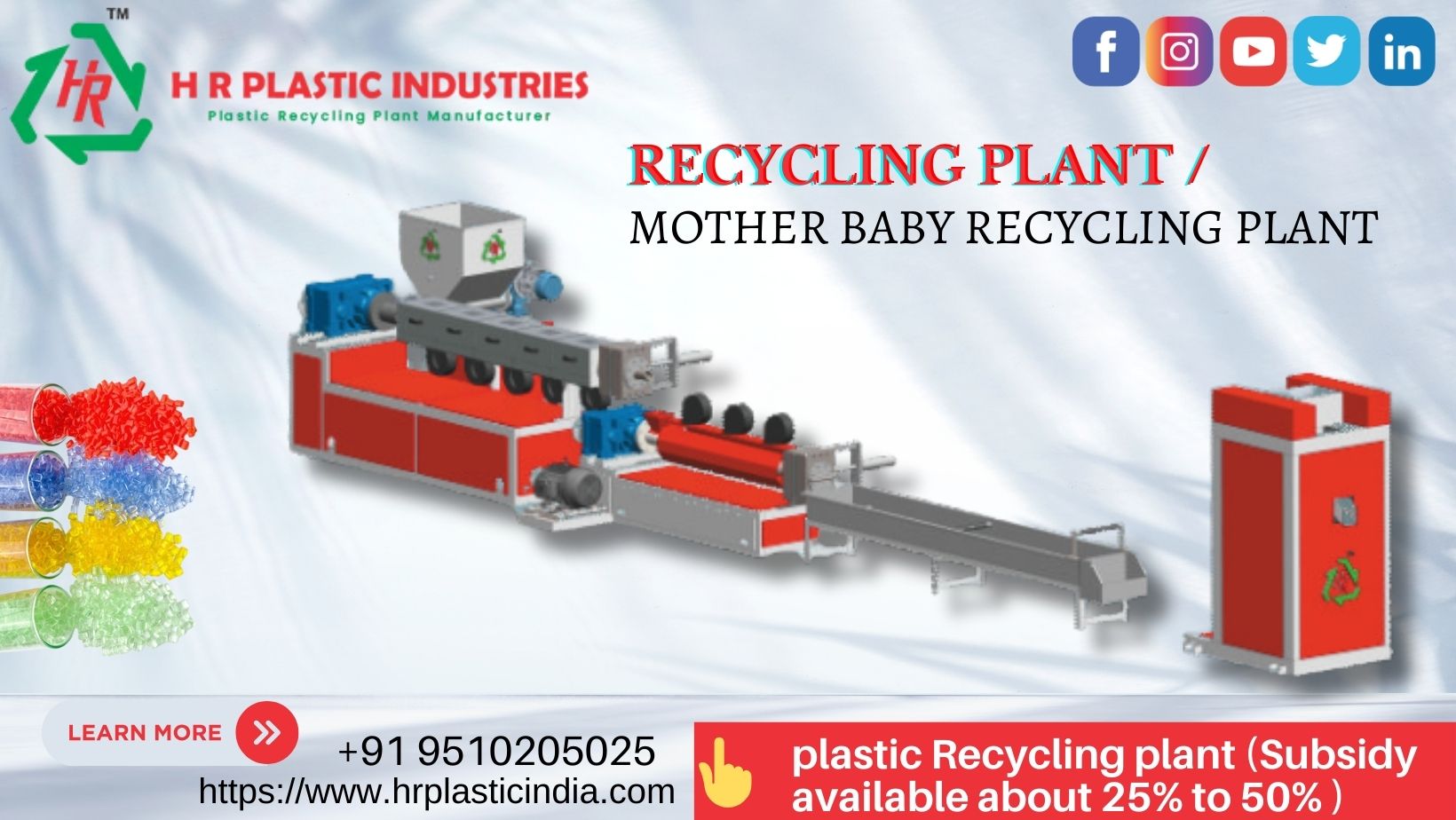
- LDPE/LLDPE film lines with agglomerator or compactor feed, forced-feed extruders, and die-face pelletizers for thin flexible scrap.
- HDPE/PP rigid regrind lines integrating wet granulation, density separation, and intensive washing for drums, crates, and moulded parts.
- Mixed-polyolefin lines with dual filtration loops and deodorisation modules to improve odour and colour stability in PCR applications.
- Decentralised mini-lines (150–300 kg/hr) for MRFs and aggregators, and twin-train plants (800–1500+ kg/hr) for continuous production.
Key Features and Specifications
- Energy-efficient IE2/IE3 motors with VFDs; documented kWh/kg benchmarks for audits and payback modelling.
- Automatic screen changers, multi-zone heating, and vacuum venting for low black specks and stable melt pressure.
- SS304 contact parts on wash modules; closed-loop water treatment to reduce consumption and effluent load.
- PLC-SCADA with recipe control, alarm logs, preventive maintenance prompts, and remote diagnostics.
- Modular upgrades: stainless hardware, odour control, optical sorting, silo handling, and silo-to-extruder conveying.
Applications Served
- Packaging converters using rPP/rPE for films, laminates, and injection parts meeting brand specifications on MFI, printability, and recycled content.
- Textile and strapping producers consuming rPET flakes/chips for fibers, non-wovens, and tapes with tensile and elongation targets.
- Automotive and appliance components where rPP/ABS/HIPS are blended for ducts, trays, and housings with dimensional stability and impact needs.
- Municipal and industrial MRFs converting mixed streams into predictable PCR grades to support EPR compliance and circularity goals.
Why Choose a Specialist Plastic Recycling Line Supplier
- Predictable quality through controlled washing, dual-stage filtration, and vacuum degassing that stabilise MFI, moisture, and colour.
- Higher uptime via robust conveying, quick screen changes, and recipe-based start/stop sequences that cut changeover losses.
- Lower operating cost from efficient drives, heat management, and water recycling; improved yield from better separation and drying.
- Audit-ready operations with data logging, traceability, guarding, and EHS compliance aligned to Indian standards.
How We Compare & What’s Included
Evaluate suppliers on application experience, polymer-specific know-how, and documented trials with your scrap. Expect layout and utility planning, installation and commissioning, operator training, spares, and remote diagnostics. Pan-India service coverage across Ahmedabad, Mumbai, Delhi-NCR, Coimbatore, and Hyderabad helps minimise downtime. Optional add-ons include stainless upgrades, SCADA integration, water recycling, deodorisation, and silo logistics for continuous plants.
Operation, Maintenance & Safety Tips
- Inspect knives, bearings, belts, and filters daily; record vibration, temperature, and pressure trends for predictive maintenance.
- Maintain wash chemistry and replace contaminated water; clean tanks, pipes, and nozzles at scheduled intervals.
- Monitor extruder pressures, heater zones, and moisture; calibrate sensors and load cells regularly.
- Train staff on LOTO, hot surfaces, confined spaces, and emergency stop drills; review incident logs monthly.
- Stock critical spares (heaters, thermocouples, seals, screens) with labelled bins and reorder points.
FAQs – Plastic Recycling Line Supplier
1. What capacity should I choose for my recycling line?
+
Base capacity on stable scrap availability, target shifts, and downstream demand. Consider contamination, polymer mix, and moisture. Modular lines allow incremental scaling without compromising wash or filtration performance.
2. Can a single line process mixed polyolefins effectively?
+
Yes, with proper pre-sorting, density separation, and staged filtration. Separate loops and deodorisation modules help maintain saleable PCR quality and predictable melt flow indices.
3. What utilities are typical for a mid-size plant?
+
Three-phase power, process water for washing/cooling, and compressed air. Plan for water recycling, effluent treatment, and backup power to stabilise output during grid fluctuations.
4. How do we ensure food-grade rPET quality?
+
Use hot caustic washing, multi-stage filtration, IV control, and approved contact materials. Maintain traceability and conduct migration testing with accredited labs.
5. What after-sales support should be included?
+
Installation, commissioning, operator training, preventive maintenance schedules, remote diagnostics, and guaranteed spares. Define response times, warranty, and performance guarantees tied to contamination, throughput, and pellet quality.
Contact Details
Talk to our specialists today for tailored solutions and fast assistance.
Company: Hr Plastic India
Phone: +91 95102-05025
WhatsApp: Chat on WhatsApp
Email: [email protected]
Website: www.hrplasticindia.com
Address: Office Address :- 3, Abhishree Industrial Park, B/h. G.V.M.M., Near Odhav Circle, Ahmedabad-382415.
Recent Posts