H.R. PLASTIC MACHINERY PVT. LTD.
Plastic Pelletizing Recycling Plant
Plastic Pelletizing Recycling Plant
Plastic Pelletizing Recycling Plant in India | LDPE/HDPE/PP/PE Pelletizer Lines
Plastic Pelletizing Recycling Plant
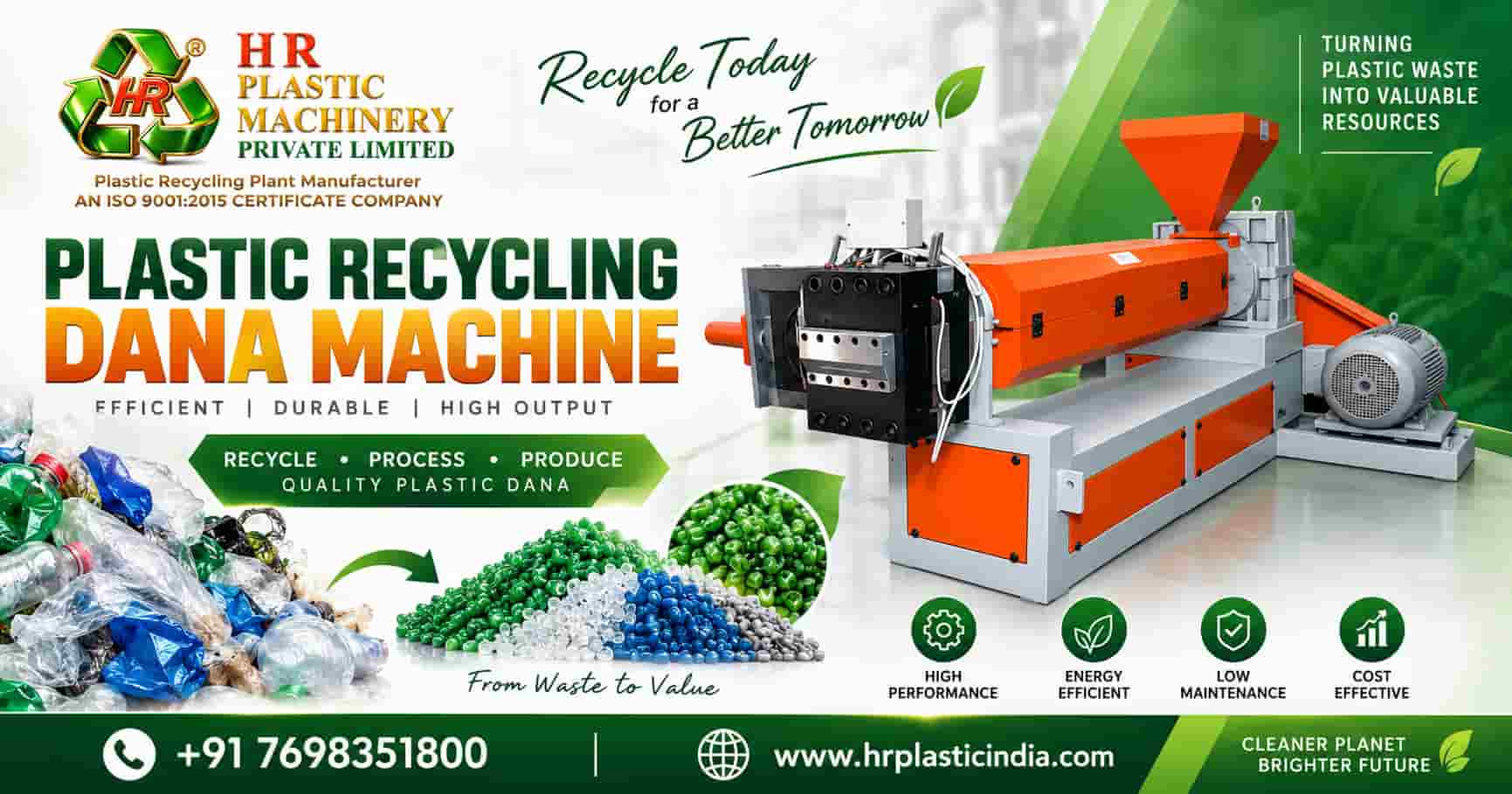
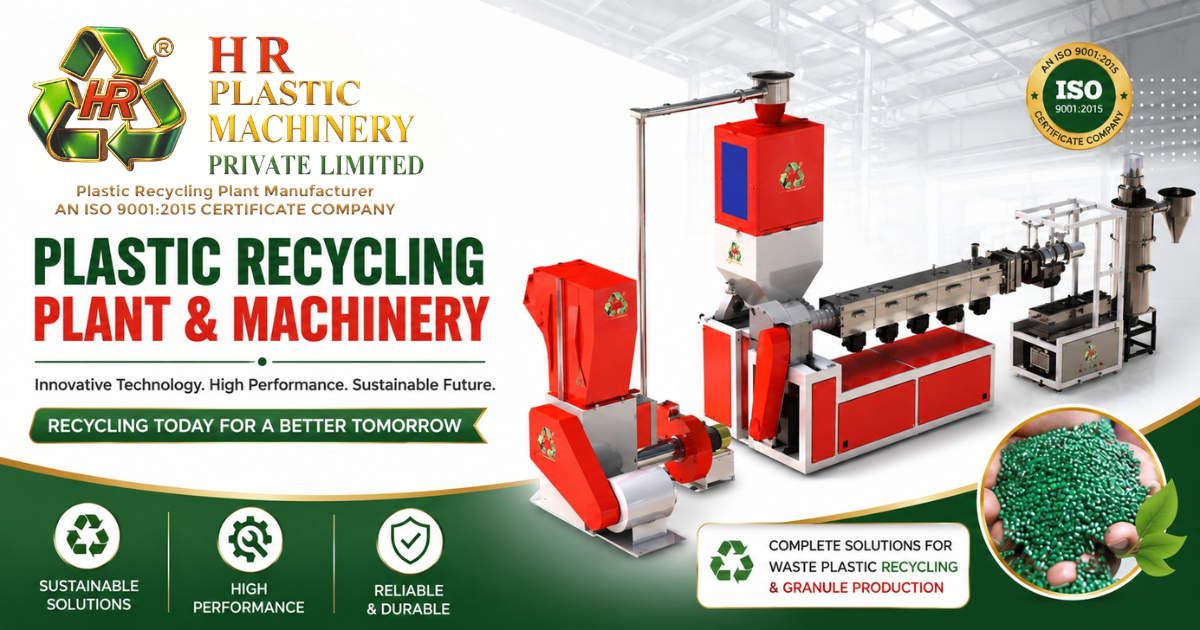
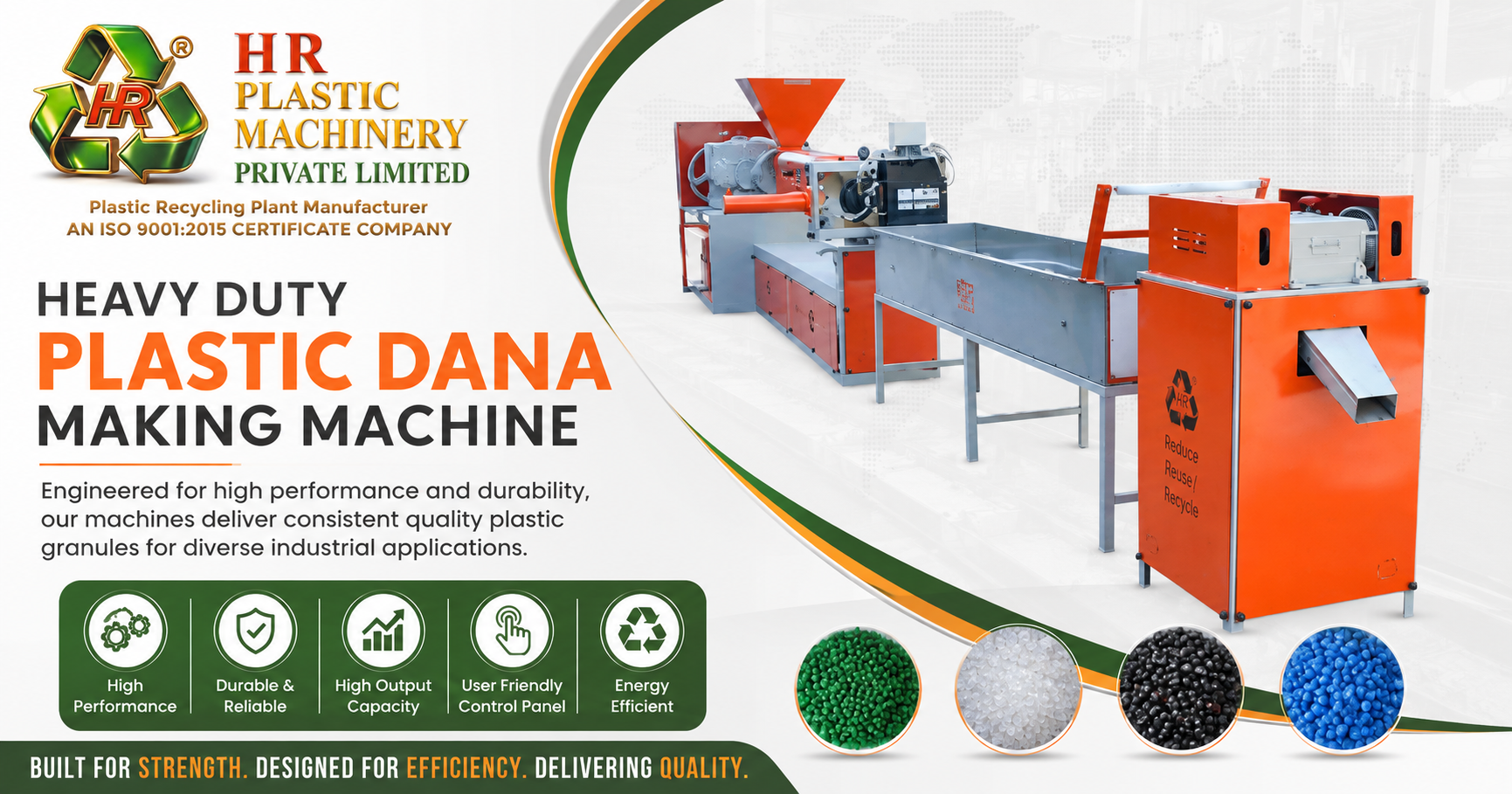
A plastic pelletizing recycling plant converts post-consumer and post-industrial plastics into uniform, high-quality granules ready for film, sheet, molding, and fiber applications. A complete line typically includes feeding, crushing, agglomeration, extrusion, filtration, degassing, pellet cutting, drying, and smart controls. Selecting the right screw design, filtration fineness, and automation level helps Indian processors achieve stable melt flow, lower energy per kg, and reliable downstream performance.
Working Principle and Process Flow
Sorted and size-reduced scrap is fed through a hopper or force-feeder into a single or twin-stage extruder. Mechanical and thermal energy melt the polymer while screen changers remove contaminants. One or two vacuum vents strip volatiles and moisture, improving odour and stability. The melt is cut by die-face or strand pelletizers, pellets are cooled and dried, then conveyed to storage. Recipe-based PLC/SCADA maintains setpoints for temperature zones, pressure, and throughput, ensuring repeatable pellet quality across LDPE, LLDPE, HDPE, PP, and blends.
Plant Variants
- Single-stage pelletizer for clean mono-material streams with moderate contamination and predictable moisture.
- Twin-stage (mother–baby) pelletizer for films and mixed scrap requiring intensive filtration and extended degassing.
- PET strand pelletizing with crystallizer and IV control for fiber and strap applications.
- Compounding-ready pelletizer with side feeders and gravimetric dosing for fillers, masterbatches, and additives.
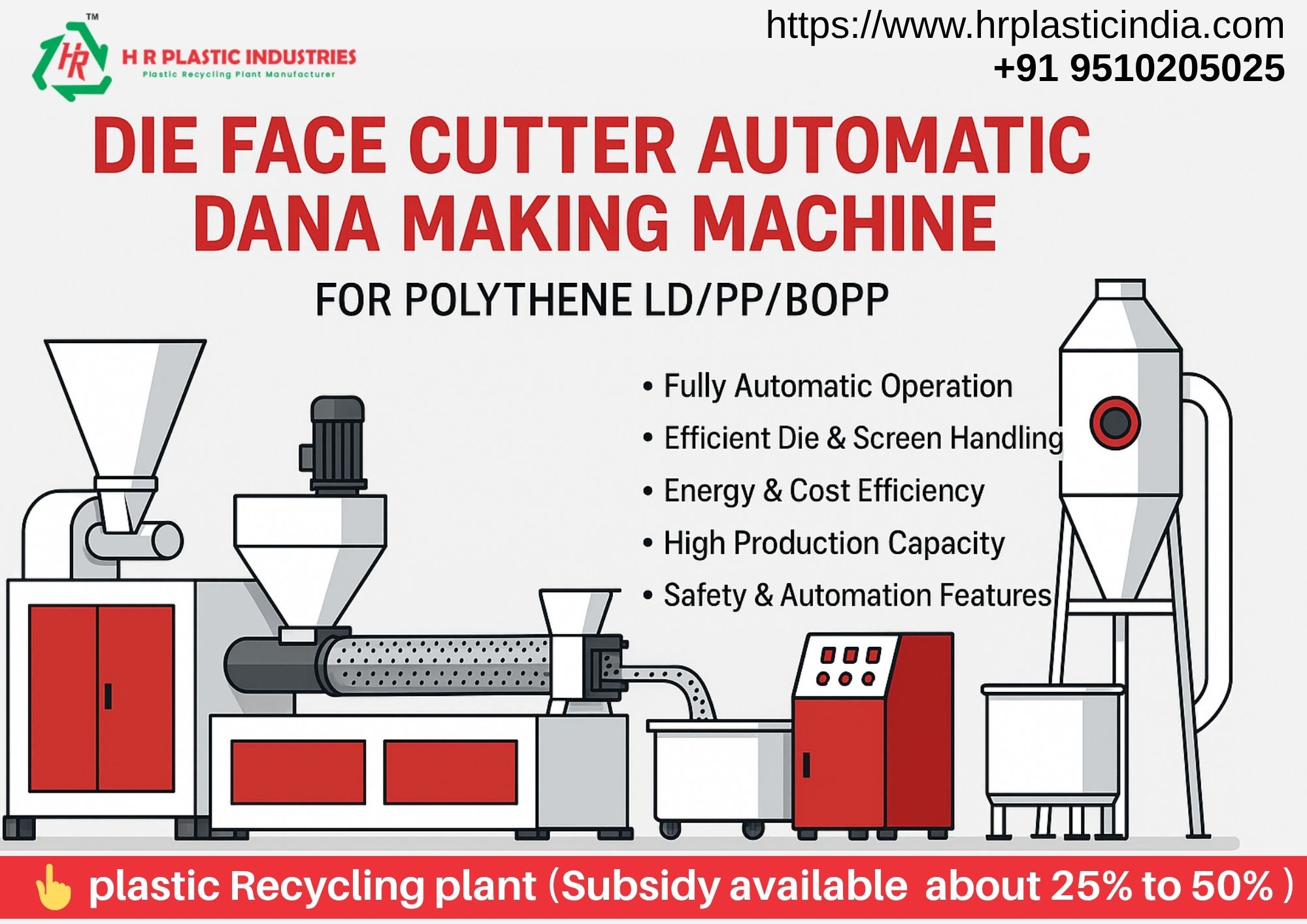
- High-output lines with force-feed extruders and die-face cutters for light-density films and fluffy flakes.
Key Features and Specifications
- Screws/barrels optimised for LDPE/LLDPE/HDPE/PP; hardened metallurgy for long service life and consistent melt.
- Automatic screen changers (hydraulic or continuous) from 60–200 mesh to achieve low black-speck levels.
- Dual vacuum vents with condensate traps for odour reduction and stable MFI across recycled batches.
- Die-face hot-cut or strand cutting with air or water-ring cooling for uniform pellet shape and minimal tails.
- Energy-efficient drives with VFDs; documented kWh/kg to benchmark operating costs and audits.
Applications
- Blown film, liners, carry bags, agricultural mulch, and shrink film using rLDPE and rLLDPE granules with controlled MFI.
- Injection and blow molding parts such as crates, caps, drums, jerrycans, and utility components from rHDPE and rPP.
- Sheet and thermoforming for trays, disposable ware, and separators where colour consistency and stiffness are key.
- Fiber and strapping from rPET and rPP where tensile strength and elongation targets require stable pellet quality.
Benefits of a Pelletizing Recycling Plant
- Lower raw-material costs and improved scrap monetisation with reliable recycled resin supply.
- Stable downstream processing due to controlled filtration, degassing, and narrow MFI variation.
- Higher uptime through automated dosing, quick screen changes, and remote diagnostics.
- Compliance support for EPR, traceability, and customer audits with digital production logs.
Manufacturers & Suppliers in India
Indian suppliers provide turnkey pelletizing plants with layout design, utilities sizing, installation, commissioning, and operator training. Typical options include stainless steel contact parts for washing sections, water-recycling modules, odour control, gravimetric feeders, and SCADA dashboards. When evaluating vendors, compare experience with Indian scrap profiles, documented kWh/kg, filtration capability, pellet uniformity, and after-sales coverage across major hubs such as Ahmedabad, Mumbai, Delhi-NCR, Coimbatore, and Hyderabad.
Maintenance and Safety Tips
- Track screw wear, pressure, motor load, and temperatures; investigate deviations early.
- Maintain screen inventory and change at defined ∆P thresholds to protect product quality.
- Drain and clean pelletizer water circuits; service knives and die plates for clean cuts.
- Follow lockout-tagout for heaters, drives, and hydraulics; guard all rotating parts.
- Keep critical spares like heaters, thermocouples, seals, knives, and meshes in dry storage.
FAQs – Plastic Pelletizing Recycling Plant
1. Which cutting system should I choose: die-face or strand?
+
Die-face hot-cut suits films and light materials for uniform pellets with minimal handling. Strand cut is robust for rigid flakes and mixed streams but needs water bath and dryer; choose based on material form and output goals.
2. How fine should filtration be for film-grade pellets?
+
For thin films aim 120–200 mesh with stable pressure. Clean scrap may run coarser meshes; print-rich or dusty inputs need finer screens and frequent changes or continuous screen changers.
3. When is a twin-stage (mother–baby) line required?
+
Use twin-stage for high-moisture films, inks, and mixed contamination where extra filtration and degassing are essential to stabilise melt, odour, and colour drift.
4. What utilities are needed for a mid-size plant?
+
Three-phase power, process water for cooling and pelletizing, compressed air, and space for water-recycling and ETP. Stabilise power quality and plan for monsoon-season variability.
5. How do I keep MFI consistent across batches?
+
Blend feedstock, maintain drying and venting, track melt pressures, and log MFI per batch. Use recipe controls and adjust temperatures and screen packs to meet setpoints.
Contact Details
Talk to our specialists today for tailored solutions and fast assistance.
Company: Hr Plastic India
Phone: +91 95102-05025
WhatsApp: Chat on WhatsApp
Email: [email protected]
Website: www.hrplasticindia.com
Address: Office Address :- 3, Abhishree Industrial Park, B/h. G.V.M.M., Near Odhav Circle, Ahmedabad-382415.
Recent Posts