H.R. PLASTIC MACHINERY PVT. LTD.
Plastic Pelletizing Machine Manufacturer
Plastic Pelletizing Machine Manufacturer
Plastic Pelletizing Machine Manufacturer
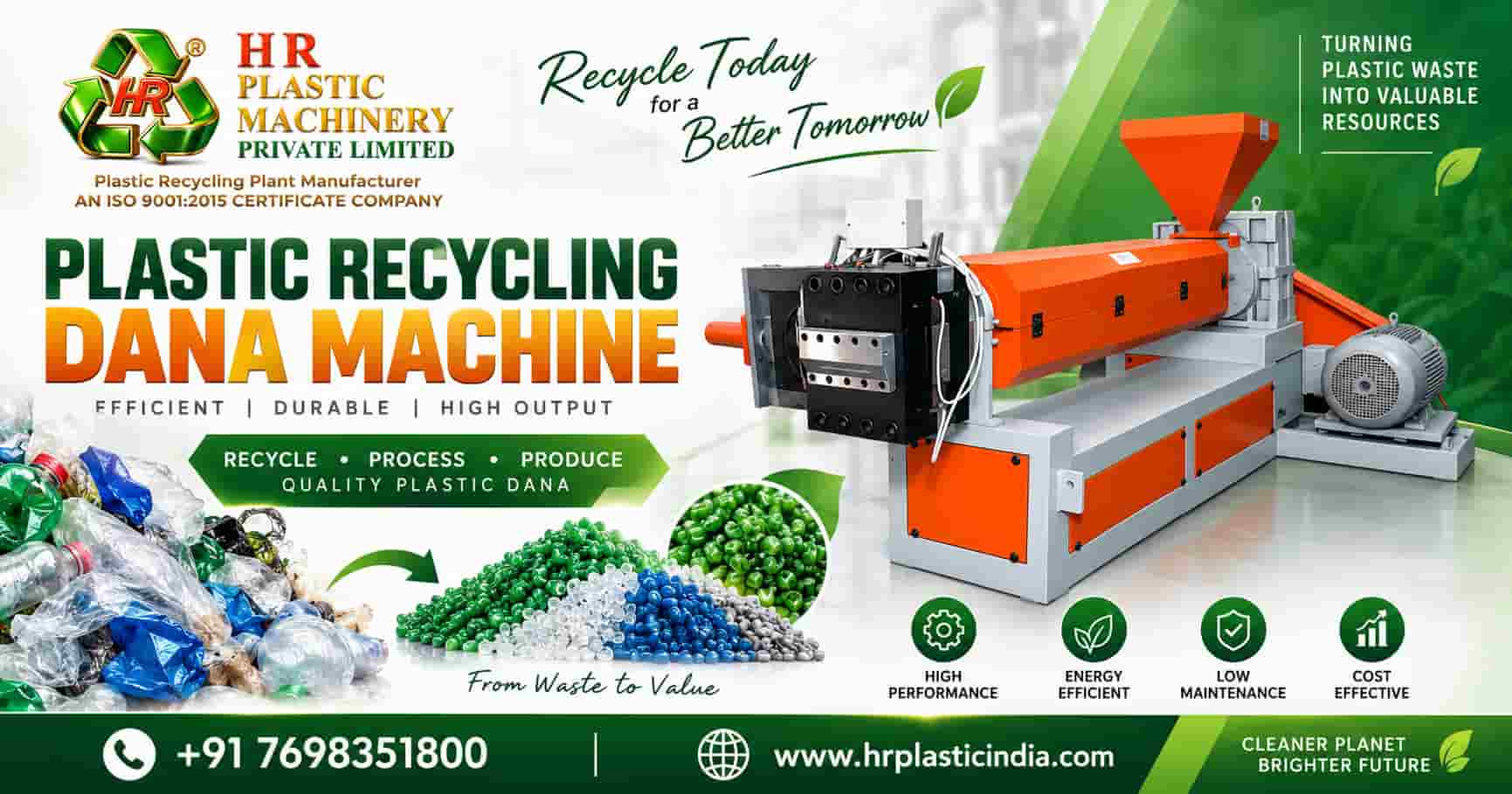
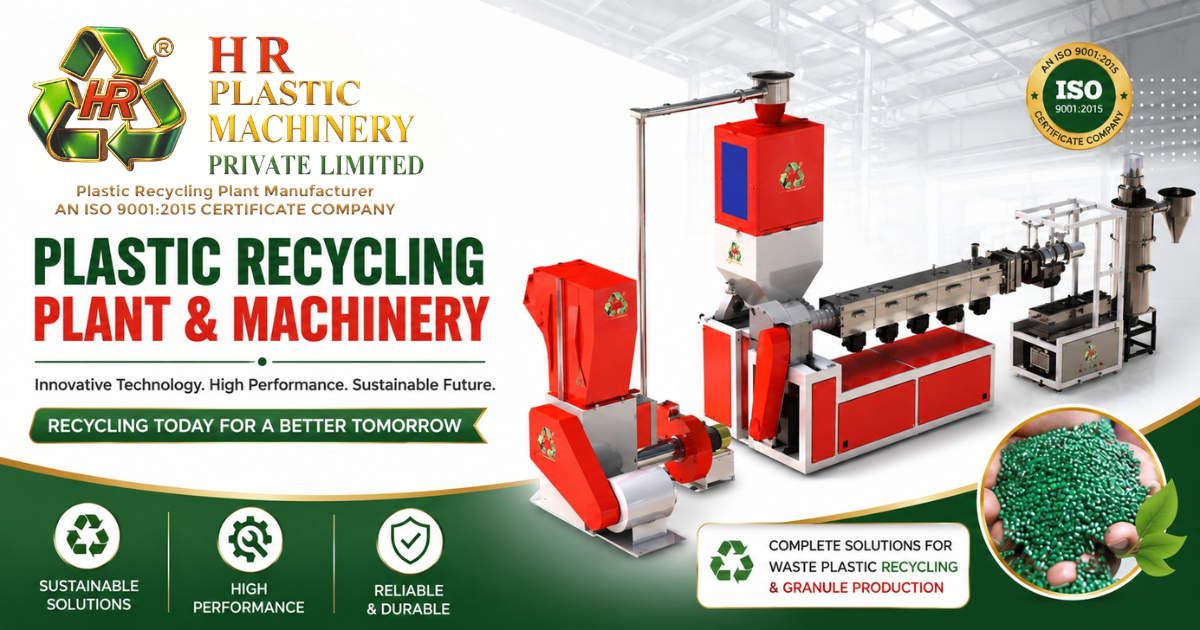
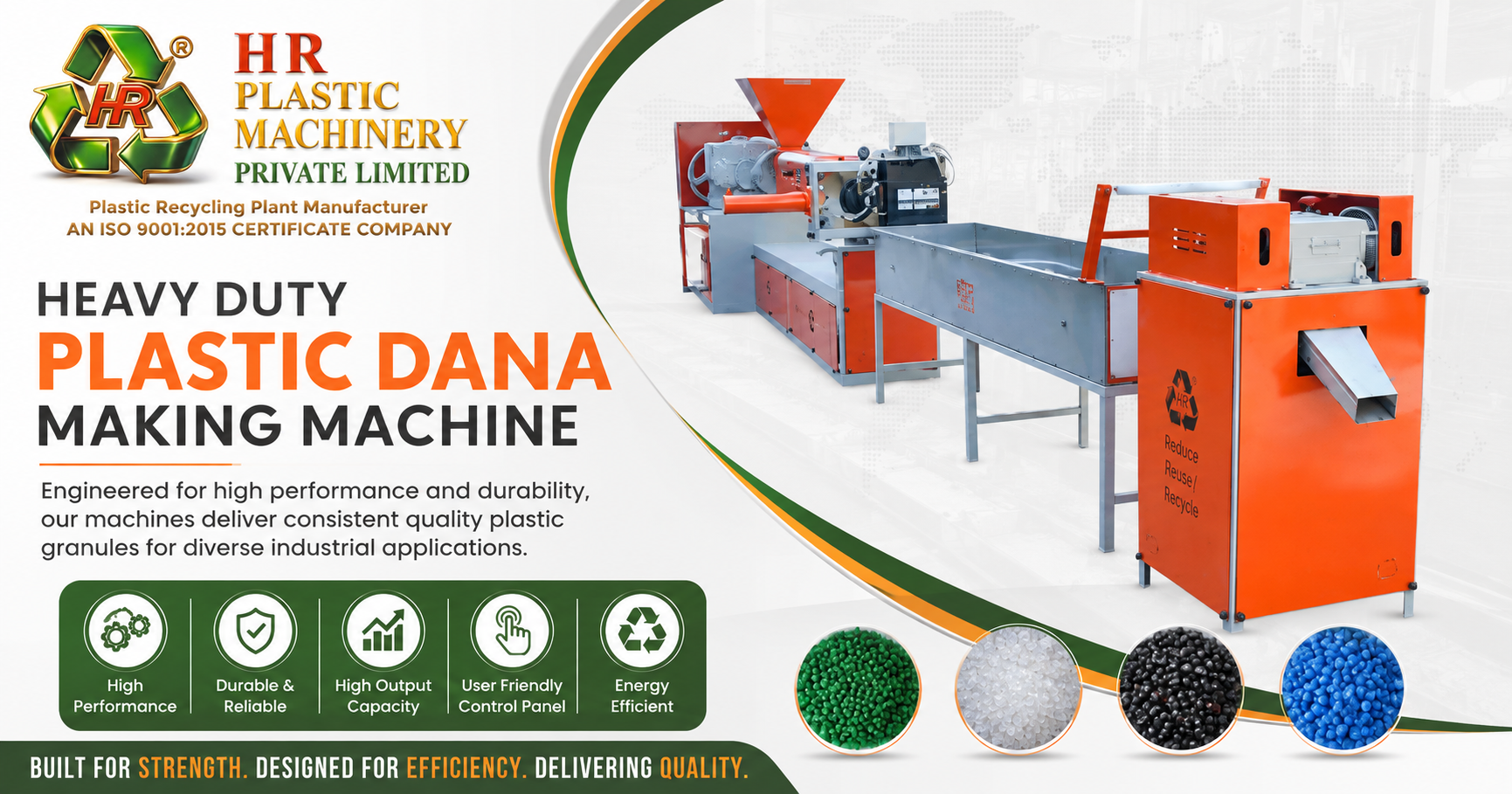
A trusted plastic pelletizing machine manufacturer designs complete lines that convert clean or washed flakes into uniform, high-quality granules. Whether you process LDPE/LLDPE films, HDPE regrinds, PET, PP raffia, or mixed polyolefins, the goal is consistent MFI, minimal gels, and stable pellet shape. Evaluate screw geometry, L/D, filtration area, degassing efficiency, and pelletizing method (strand, water-ring, or die-face cutter) to match your raw material and end-use. This guide covers process flow, machine types, features, applications, and maintenance to help you specify the right system for Indian manufacturing needs.
Working Principle and Process Flow of Pelletizing Lines
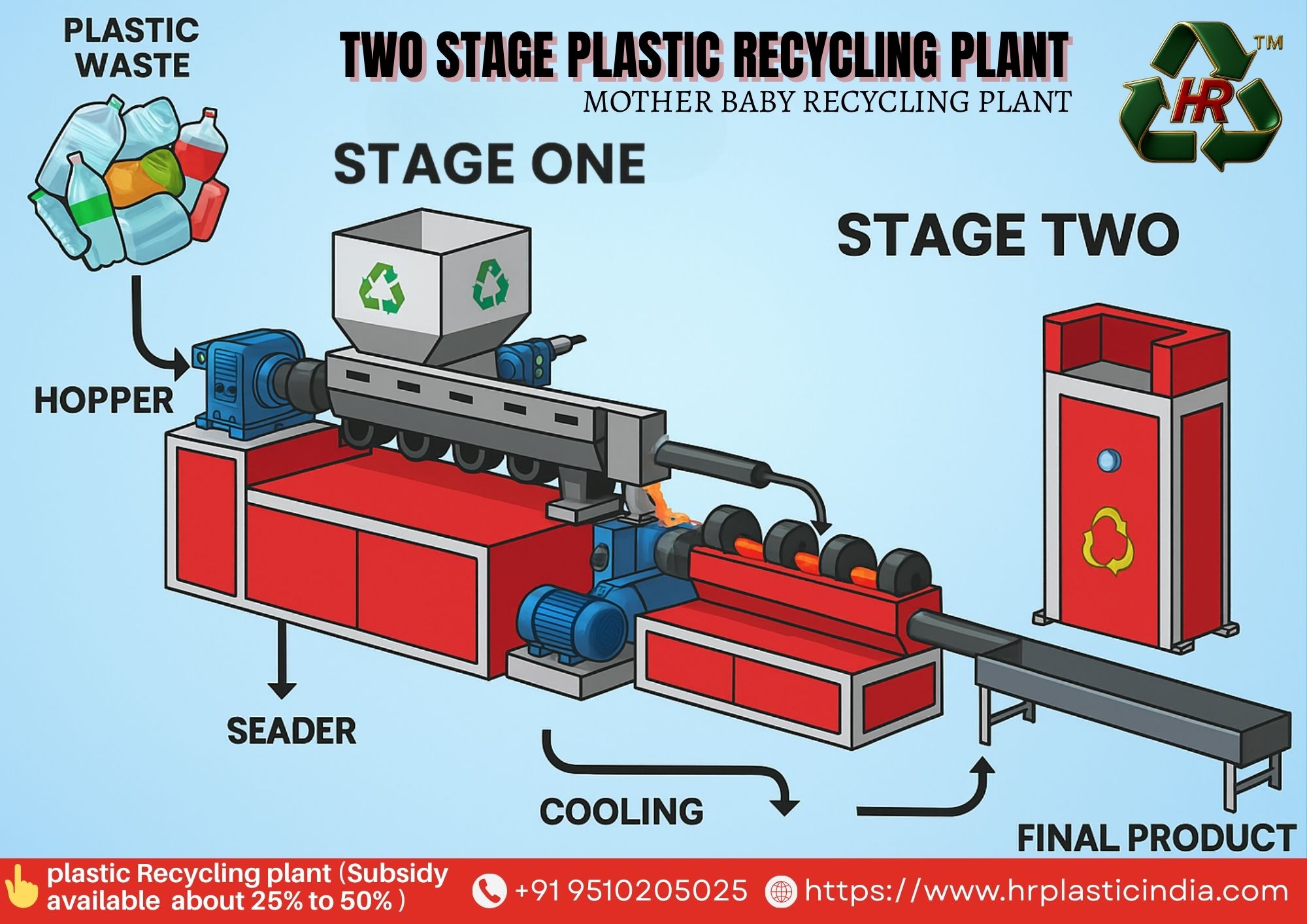
Pelletizing lines follow a controlled sequence: feeding → plasticizing → melt filtration → vacuum/atmospheric degassing → pelletizing → drying → screening → conveying → silo/bagging. Accurate dosing ensures stable throughput; optimized screw/barrel zones provide homogeneous melt; large filtration areas remove fines and contaminants; multi-stage degassing reduces moisture and volatiles for odour control. Choice of pelletizing—strand with water bath, water-ring, or hot die-face—depends on polymer, throughput, and target pellet uniformity. For solutions, layouts, and support, explore hrplasticindia.com.
Types of Plastic Pelletizing Machines
- Single-Screw Extruder Pelletizer (L/D 28–36): Robust and economical for LDPE/LLDPE, HDPE, PP regrinds; ideal for film and rigid regrind with stable MFI control.
- Twin-Screw Co-Rotating Compounding Line: For filled/reinforced blends, masterbatch, color, and additives; excellent mixing, venting, and dispersion performance.
- Die-Face Cutter (Hot-Cut) System: Compact footprint; pellets cut directly at the die, minimal strand handling; preferred for higher throughputs and sticky polymers.
- Water-Ring Pelletizer: Ring water flow cools and shapes pellets; good for polyolefins with consistent, rounded pellets and simplified operation.
- Strand Pelletizing Line: Water bath + air knife + cutter; simple, operator friendly, high control on pellet length; suitable for a wide range of polymers.
Key Features and Specifications
- Throughput options from 150–1500 kg/hr with VFD-driven feeders for steady dosing and low energy per kg.
- Optimized screw design, nitrided/bi-metal barrels, and multi-zone heating for uniform melt, colour stability, and minimal gels.
- Automatic screen changers (manual/hydraulic/continuous) with large filtration area to handle contamination without frequent stops.
- Vacuum degassing and vent ports to reduce moisture/volatiles, improving odour and mechanical properties.
- Pelletizing options—strand, water-ring, hot die-face—with pellet classifiers, centrifugal dryers, and silo systems.
- PLC-SCADA recipe control, alarms, production logging (kWh/kg, kg/hr), and remote diagnostics for predictive maintenance.
Applications of Plastic Pellets
- Packaging film, liners, and lamination grade polyolefins with controlled MFI and printability for FMCG, agriculture, and logistics.
- Injection/Blow moulding of caps, crates, drums, and household items using rPP, rHDPE, and blends stabilized for impact and stiffness.
- rPET fibre, straps, and sheets where IV control, colour consistency, and low AA levels are vital for downstream processing.
- Compounded materials and masterbatches (filler, colour, additive) with tight dispersion for automotive, appliances, and E&E parts.
Benefits of Choosing the Right Manufacturer
- Lower operating cost via energy-efficient drives, optimized thermal profiles, and fewer changeovers with continuous filtration.
- Reliable pellet quality—consistent size, low dust/fines, stable MFI—reducing rejections and improving downstream line speeds.
- Higher uptime with standardized spares, local service teams, and remote diagnostics for quick fault isolation.
- Compliance support for EPR, traceability, and safety with data logs, guarding, interlocks, and documented SOPs.
Manufacturers & Supply Coverage in India
Indian manufacturers supply turnkey pelletizing solutions with layout engineering, installation, commissioning, operator training, and after-sales. Common options include stainless contact parts for PET, water-recycling modules, odour control, masterbatch feeders, and bagging/silo systems. When comparing quotes, verify guaranteed throughput, filtration fineness, energy benchmarks, and FAT protocols. Typical service networks cover Ahmedabad, Mumbai, Delhi-NCR, Coimbatore, and Hyderabad with both on-site and remote support.
Maintenance and Safety Tips
- Track pressure/temperature trends across zones; investigate sudden spikes or drops to prevent gel formation and burns.
- Maintain vacuum seals, condensate traps, and vent lines; moisture/volatiles quickly affect odour and pellet properties.
- Schedule cutter knife inspection, die polishing, and screen inventory; log screen life to predict change intervals.
- Calibrate feeders, load cells, and energy meters; verify kWh/kg and kg/hr weekly to catch drift early.
- Follow LOTO, hot-surface PPE, and guarding checks around drives, cutters, and rotating shafts.
FAQs – Plastic Pelletizing Machines
1. Which pelletizing method should I choose—strand, water-ring, or die-face?
+
For polyolefins at medium throughput, water-ring offers rounded pellets and easy handling; hot die-face suits high throughputs and sticky materials; strand is simple and precise on pellet length but needs more operator handling.
2. What filtration fineness is recommended for recycled film vs. rigid regrind?
+
Film scrap typically needs finer screens (80–150 mesh) to control gels in thin films; rigid regrind can run slightly coarser (60–120 mesh) depending on contamination and end-use requirements.
3. How do I size the extruder for 500 kg/hr production?
+
Match screw diameter and L/D to polymer and melt index; consider feeder consistency, filtration back-pressure, degassing needs, and pelletizing method. Build 15–20% headroom for seasonal scrap variability.
4. Can the same line run PET and polyolefins?
+
It’s possible with thorough cleaning and suitable metallurgy, but best practice is dedicated loops because PET requires IV control, driers/crystallizers, and different process windows than PP/PE.
5. What documents should be part of the purchase contract?
+
Include P&ID, GA layout, utility list, FAT checklist, performance guarantees (throughput, energy, filtration), PM schedule, spares list, and response times for service/warranty.
Contact Details
Talk to our specialists today for tailored solutions and fast assistance.
Company: Hr Plastic India
Phone: +91 95102-05025
WhatsApp: Chat on WhatsApp
Email: [email protected]
Website: www.hrplasticindia.com
Address: Office Address :- 3, Abhishree Industrial Park, B/h. G.V.M.M., Near Odhav Circle, Ahmedabad-382415.
Recent Posts