H.R. PLASTIC MACHINERY PVT. LTD.
Plastic Pellet Making Machine
Plastic Pellet Making Machine
Plastic Pellet Making Machine | Recycling & Granulating Line Supplier in India
```
```
Plastic Pellet Making Machine – Introduction
A plastic pellet making machine converts clean plastic scraps and washed flakes into uniform granules for reuse in extrusion, injection moulding, and film lines. An optimal system combines feeding, melting, filtration, degassing, and pelletizing to stabilize MFI, remove contaminants, and deliver consistent output. When selecting equipment, evaluate throughput (kg/hr), polymer types (PP/PE/HDPE/LDPE/PET/ABS/PS), energy usage (kWh/kg), and after-sales support for Indian operating conditions.
Working Principle and Process Flow of Pelletizing
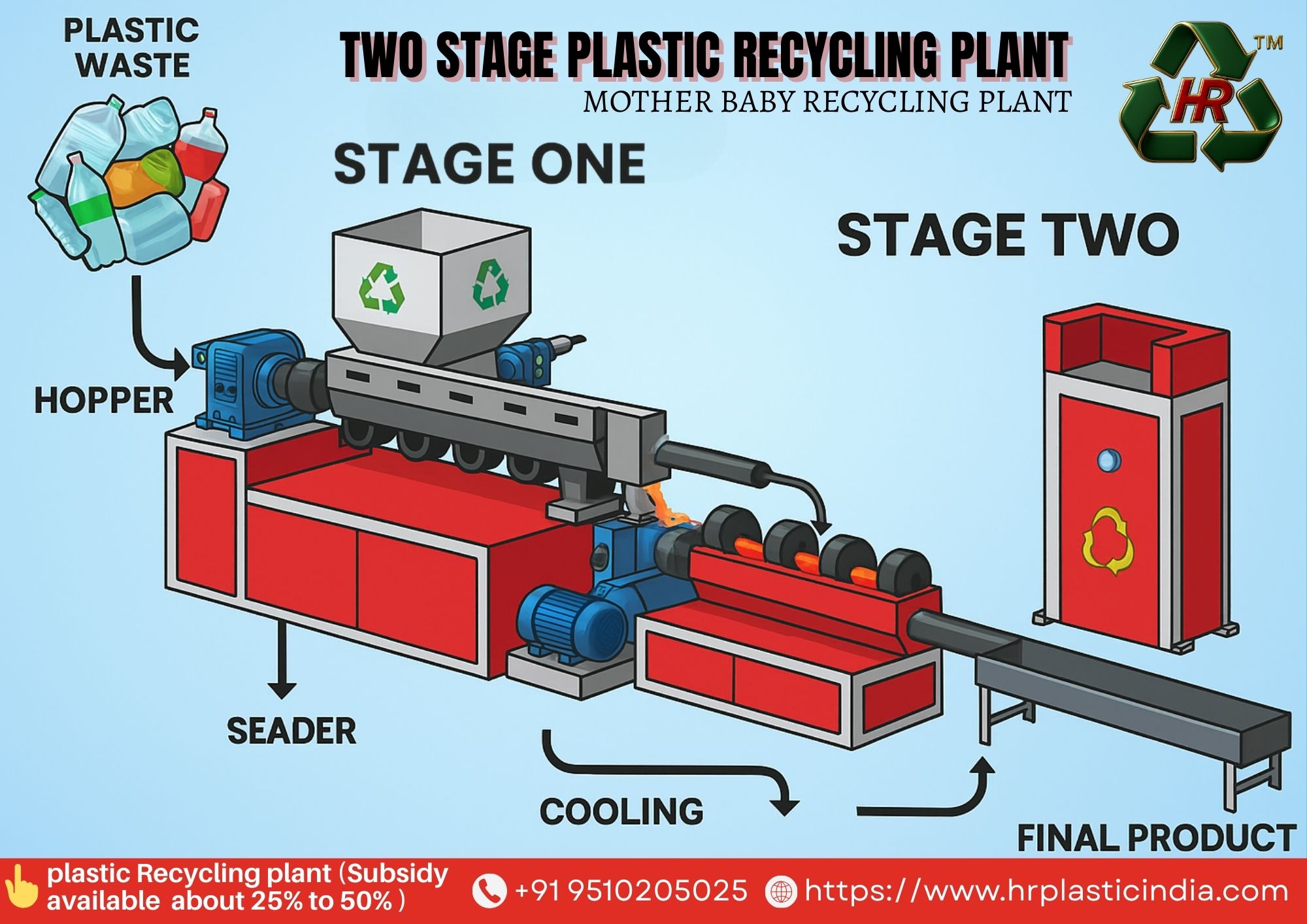
Material is conveyed to an extruder where heaters and screw shear plasticize the feed. Melt passes through screen changers for filtration; vacuum ports remove volatiles and moisture. The clean melt is cut into pellets either by die-face (hot-cut) or strand pelletizers and then cooled and dried. PLC/SCADA controls recipes, temperatures, and alarms, while load cells monitor output. Stable dosing, proper venting, and correct screen selection are key to pellet clarity and mechanical properties.
Types of Plastic Pellet Making Machines
- Single-screw pelletizer lines (120–400 kg/hr) for PP/PE film flakes and general-purpose reprocessing with low operating cost.
- Twin-screw compounding pelletizers (300–1200 kg/hr) for filled/reinforced grades, colour masterbatch, and precise dispersion.
- Force-feed/agglomerator integrated lines that handle light film, raffia, and foam with stable feeding and reduced surging.
- PET pelletizing systems with crystallization, IV retention, and hot vacuum degassing for fibre/strap applications.
- Underwater or die-face hot-cut pelletizers for uniform, dust-free pellets suited to film and pipe extrusion.
Key Features and Specifications
- Hardened barrel & screws, multi-zone heating, and VFD drives; documented energy consumption in kWh/kg.
- Hydraulic/continuous screen changers (double piston) for low pressure spikes and minimal black specks.
- Vacuum degassing (single or double vent) to reduce odour and moisture, improving surface finish and strength.
- Die-face cutting with auto pellet length control; options for strand, water-ring, or underwater cutting systems.
- PLC-SCADA with recipe management, production logs, alarms, and remote diagnostics; pan-India service support.
Applications of Plastic Pellets
- Film and sheet extrusion using rLDPE/rLLDPE pellets for liners, carry bags (as per local norms), stretch/cling films, and agricultural mulch.
- Blow moulding with rHDPE/rPP for jerry cans, drums, household items, and non-critical automotive ducts and reservoirs.
- Injection moulding for crates, caps, appliance housings, and furniture parts where consistent MFI reduces mould change issues.
- Textile & strapping lines consuming rPET pellets for fibre, filament, non-wovens, and PET strap with controlled IV and colour.
Benefits of a Pellet Making Machine
- Lower raw-material cost by converting in-house scrap and market flakes into quality granules with predictable properties.
- Improved downstream productivity due to uniform pellet size, stable MFI, and reduced gels/contaminants after proper filtration.
- Traceability and compliance using production data logs that support audits, EPR targets, and sustainability reporting.
- Flexible configurations: add feeders, dosing units, and screen sizes to handle multiple polymers and contamination levels.
Manufacturers & Suppliers in India
Indian suppliers offer turnkey pelletizing lines covering layout design, installation, commissioning, operator training, and spare parts. Typical options include stainless steel contact parts for washing sections, water recycling modules, and odour control. Compare vendors on documented kWh/kg, filtration fineness (in microns), degassing efficiency, and service response times. For enquiries, evaluate FAT protocols, safety guarding, and performance guarantees tied to throughput and pellet quality.
Maintenance and Safety Tips
- Record temperatures, amps, and pressure differentials each shift; investigate deviations to prevent screw/barrel wear.
- Maintain screen inventory and change proactively; monitor pressure before/after screens to avoid gel formation.
- Service vacuum pumps and check seals to ensure effective degassing and reduced odour/moisture in pellets.
- Lubricate gearboxes and bearings as per schedule; align couplings and check vibration to extend equipment life.
- Train operators on LOTO, hot surfaces, and emergency stops; keep the area dry to prevent slip hazards around water baths.
FAQs – Plastic Pellet Making Machine
1. What capacity should I choose for my pelletizing line?
+
Match capacity to scrap availability, target shift hours, and product mix. For startups, 150–300 kg/hr is common; mid-size factories pick 400–800 kg/hr with modular upgrades for future scaling.
2. Which cutting method is best—strand, water-ring, or die-face?
+
Strand is simple and economical; water-ring improves uniformity for films; die-face hot-cut/underwater delivers premium pellets for high-speed extrusion and sensitive applications.
3. How do I control odour and moisture in recycled pellets?
+
Use proper washing/drying upstream and vacuum degassing on the extruder. Keep vent zones free of blockages and maintain vacuum pump oil and seals for consistent performance.
4. What polymers can a single-screw line handle?
+
PP, PE (LD/LL/HD), and PS are typical. For filled/reinforced compounds, blends, or specialty additives, consider a co-rotating twin-screw extruder with side feeders and venting.
5. What documents should be included in my purchase contract?
+
P&ID, GA layout, utility list, FAT protocol, commissioning plan, spares list, warranty terms, response times, and performance guarantees tied to throughput, filtration fineness, and pellet quality.
Contact Details
Talk to our specialists today for tailored solutions and fast assistance.
Company: Hr Plastic India
Phone: +91 95102-05025
WhatsApp: Chat on WhatsApp
Email: [email protected]
Website: www.hrplasticindia.com
Address: Office Address :- 3, Abhishree Industrial Park, B/h. G.V.M.M., Near Odhav Circle, Ahmedabad-382415.
Recent Posts