H.R. PLASTIC MACHINERY PVT. LTD.
Plastic Mother Baby Plant (Two-Stage Recycling Extruder)
Plastic Mother Baby Plant (Two-Stage Recycling Extruder)
Plastic Mother Baby Plant | Two-Stage Recycling Extruder in India
```
```
Plastic Mother Baby Plant (Two-Stage Recycling Extruder)
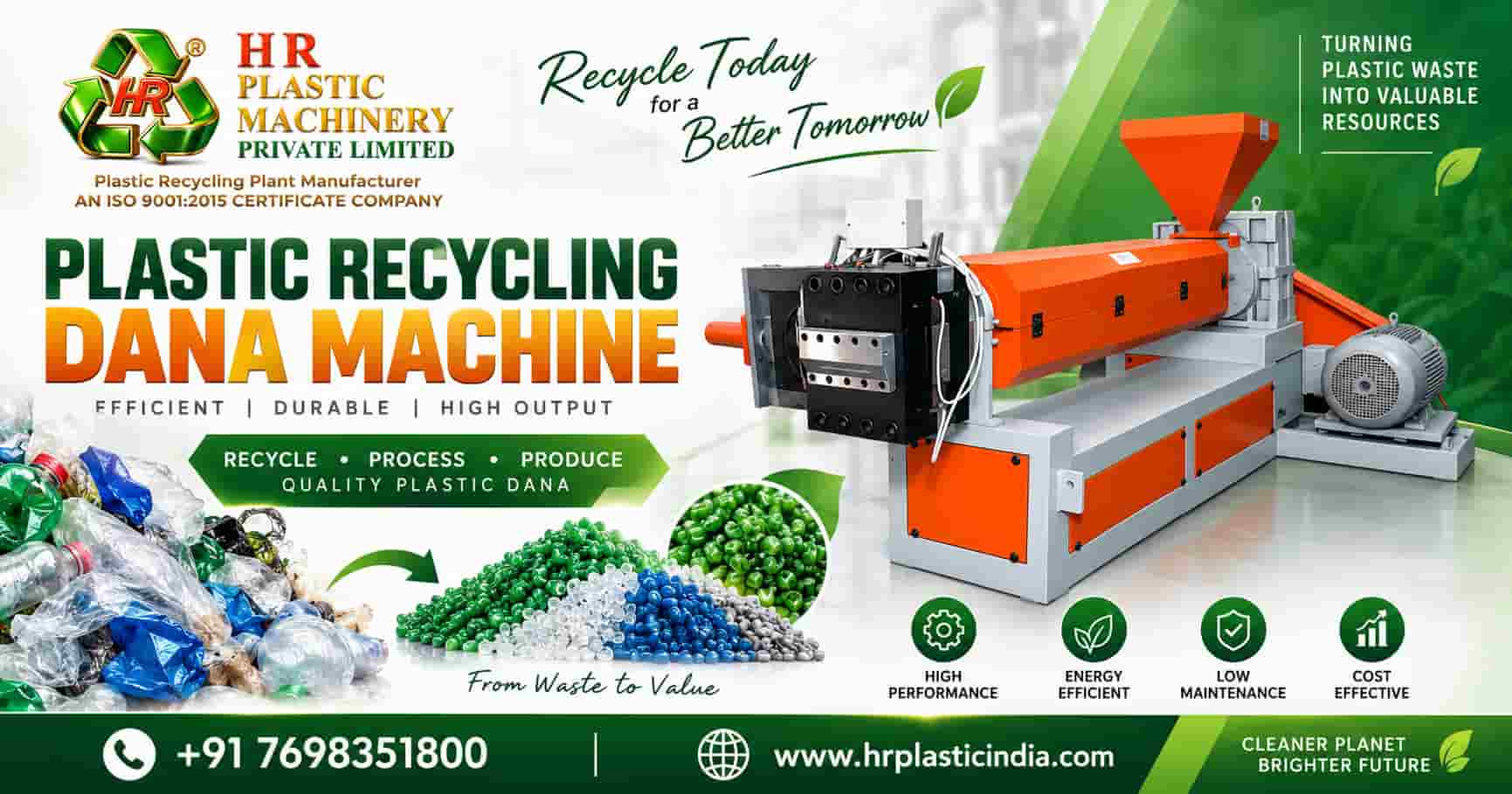
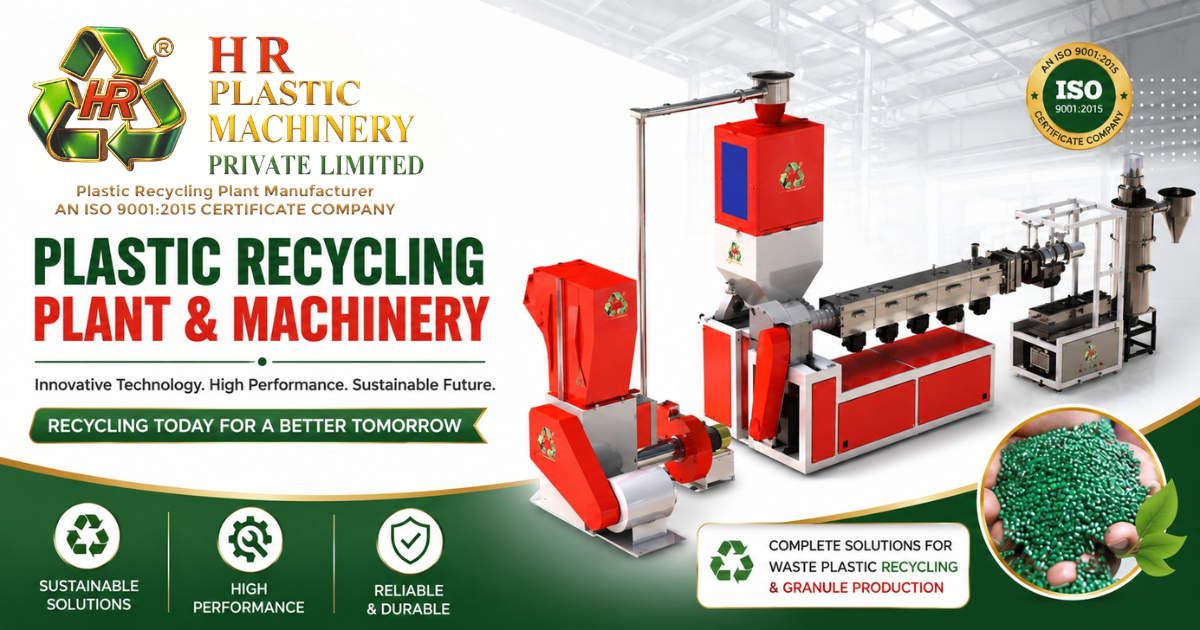
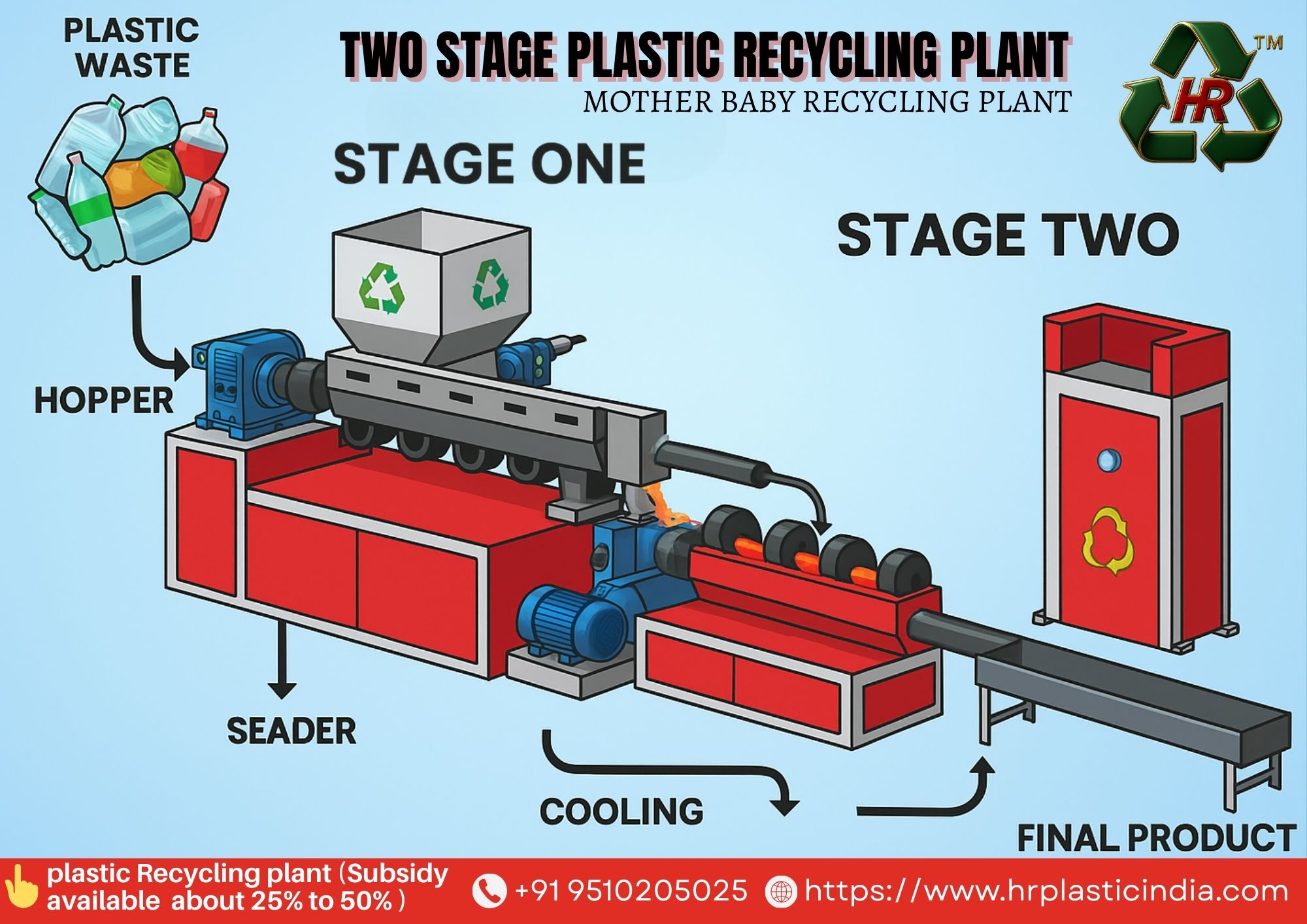
A Plastic Mother Baby Plant is a two-stage extrusion system designed to convert post-consumer and post-industrial plastics into uniform, saleable granules. The mother extruder manages heavy contamination, inks and moisture with aggressive filtration and vacuum venting, while the baby extruder fine-conditions the melt for stable pressure, tighter MFI and cleaner pellets. Ideal for LDPE/LLDPE films, PP raffia/woven sacks, HDPE blow-moulding scrap and mixed flexibles. For layouts, demos and quotations, visit HR Plastic India.
Working Principle & Process Flow
Fluffy film flakes or rigid regrind are conveyed/agglomerated into the mother extruder for primary melting, multi-zone heating and continuous/dual-piston filtration. A melt pump transfers homogenized polymer to the baby extruder, where secondary vacuum degassing stabilizes viscosity before die-face or strand pelletizing. This separation of duties reduces gels, odour and pressure swings, delivering consistent pellet quality with lower downtime. Optional SCADA logs production, kWh/kg and alarms for traceability.
Types & Configurations
- Film & Flexibles MB Line: Agglomerator + vented mother screw, auto screen changer, gear pump + baby stage, die-face cutter for thin films and stretch waste.
- Rigid HDPE/PP Focus: Crusher + (optional) hot wash, intensive filtration; strand water bath + pelletizer for drums, caps, crates and can scrap.
- High-Degassing Packages: Twin vacuum domes, long L/D and optimized vent ports for printed/odorous streams and food-contact preforms.
- Additive/Colour Dosing: Gravimetric dosing for stabilizers, slip/antiblock, or odour-control reactives to meet downstream film/pipe specs.
- Throughput Options: Modular plants from 150–300 kg/h, mid-range 400–800 kg/h, up to 1000–1500+ kg/h with parallel lines for redundancy.
Key Features & Specifications
- Automatic screen changers + melt pumps for constant pressure and fewer black specks.
- Multi-zone heating, high-torque gearboxes and vacuum degassing on one or both stages.
- Energy-efficient motors with VFDs and documented kWh/kg for payback analysis.
- SS304 contact parts on wash sections; hot-wash + friction washer integration for higher purity lines.
- PLC-SCADA with recipe control, alarm logs, preventive maintenance prompts and remote diagnostics.
Applications
- Film Reprocessors: Convert post-consumer LDPE/LLDPE carry bags, liners and stretch wraps into pellets for blown film blends.
- PP Woven/Raffia: Reprocess loom waste and fabric trims into controlled-MFI granules for injection, extrusion and pipe compounds.
- HDPE Blow Moulding: Recycle can/drum/cap scrap for crates, pallets and non-pressure pipes.
- EPR & Brand Programs: Traceable rPE/rPP output supports CPCB documentation and ESG reporting.
Benefits of a Plastic Mother Baby Plant
- Superior pellet quality: Two-stage melt conditioning reduces fisheyes, odour and gels; improves colour and MFI stability.
- Lower downtime: Filtration load isolated in the mother stage; the baby stage runs cleaner for longer.
- Broad feed tolerance: Handles fluffy films, printed inputs and moderate contamination with effective venting.
- Optimized OPEX: Stable pressure curves reduce energy peaks; continuous screen change limits wastage.
- Scalable design: Bolt-on capacity, standardized spares and pan-India service availability.
Manufacturers & Suppliers in India
While shortlisting a Plastic Mother Baby Plant, compare screw geometry (L/D, compression, mixing), filtration area/mesh, vacuum efficiency, pelletizing method (die-face vs strand) and controls. Expect deliverables: GA layout, utilities list, installation & commissioning, operator training, starter spares and performance guarantees tied to throughput, contamination and pellet specs. Explore solutions and request a tailored quote at www.hrplasticindia.com.
Maintenance & Safety Tips
- Trend melt pressure, motor load and vacuum levels; investigate anomalies early to avoid strand breakage.
- Plan screen changes proactively; log mesh history vs. feed contamination for predictive maintenance.
- Calibrate zone temperatures, load cells and dosing; verify MFI and bulk density by batch.
- Follow LOTO; use heat-resistant PPE near die, cutter and hot strands.
- Maintain critical spares: heaters, thermocouples, seals, breaker plates, blades and gear-pump parts.
FAQs – Plastic Mother Baby Plant
1. Why choose a mother–baby line instead of a single-stage extruder?
+
Two stages separate heavy filtration/degassing from final melt conditioning, giving cleaner pellets, steadier MFI and better odour control—ideal for films and printed waste.
2. What throughput should I target?
+
Common ranges: 150–300 kg/h (compact), 400–800 kg/h (mid), 1000–1500+ kg/h (high). Actual output varies with moisture, contamination and mesh size.
3. Die-face or strand pelletizer—how to decide?
+
Die-face suits films/low-viscosity streams for uniform micro-pellets; strand is robust for rigids and masterbatch. Choose per downstream process and cleaning preference.
4. How do we reduce odour and VOCs?
+
Adopt twin vents, strong vacuum pumps, longer L/D on the mother stage and hot-wash quality. Reactive additives and proper drying further curb odour.
5. What utilities are required?
+
Three-phase power, process/cooling water, compressed air and adequate ventilation. Add ETP/water recycling if integrating washing modules.
Contact Details
Talk to our specialists today for tailored solutions and fast assistance.
Company: Hr Plastic India
Phone: +91 95102-05025
WhatsApp: Chat on WhatsApp
Email: [email protected]
Website: www.hrplasticindia.com
Address: Office Address :- 3, Abhishree Industrial Park, B/h. G.V.M.M., Near Odhav Circle, Ahmedabad-382415.
Recent Posts