H.R. PLASTIC MACHINERY PVT. LTD.
Plastic Granule Making Machine
Plastic Granule Making Machine
Plastic Granule Making Machine | Pelletizing Line Supplier in India
Plastic Granule Making Machine — Complete Buyer’s Guide (India)
A plastic granule making machine converts washed plastic scrap into uniform, high-quality pellets suitable for film, moulding, and extrusion applications. Indian processors prefer energy-efficient lines with stable output, low melt contamination, and quick changeovers. This guide explains working principles, types, key specifications, applications, benefits, and maintenance tips so you can configure the right pelletizing line for PP, HDPE, LDPE/LLDPE, PET, HIPS, and more. For layouts, commissioning support, and after-sales service, connect with our specialists below.
Working Principle and Process Flow of Plastic Granule Making
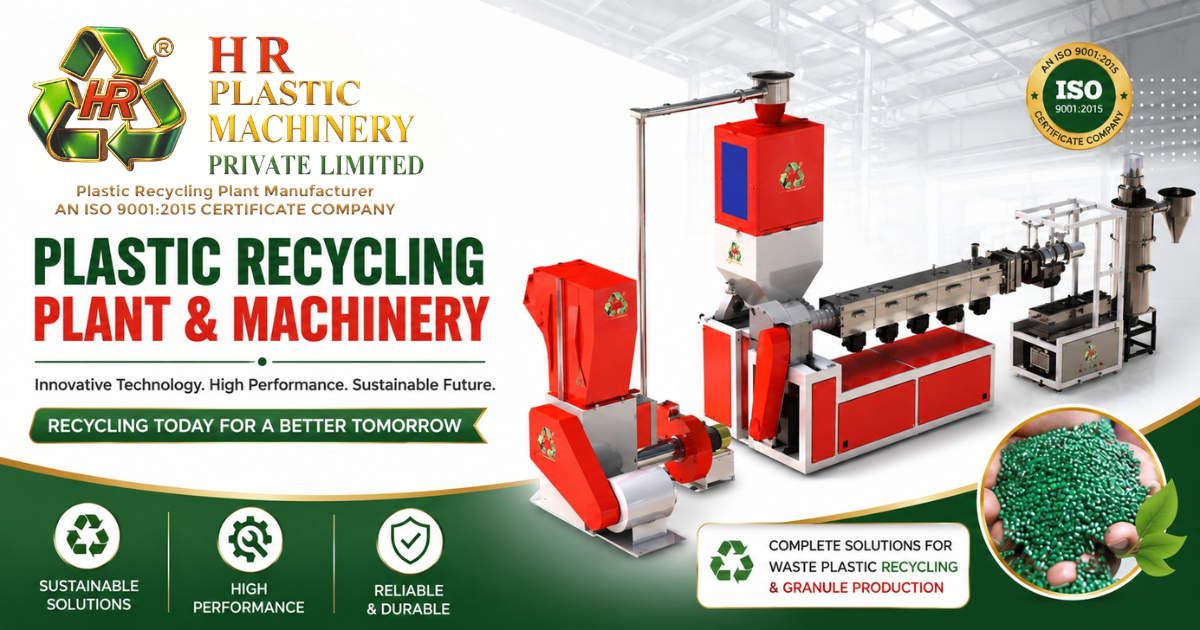
Granulation typically follows a closed loop: sorting → size reduction (shredder/crusher) → washing & drying → extrusion and melt filtration → pelletizing → cooling & classification → bagging. A force-feed or compactor ensures steady feed for films; multi-zone heaters and vacuum degassing remove moisture and volatiles; automatic screen changers capture fines. Depending on polymer and end-use, you may select die-face cutter for flexible films or strand pelletizer for rigid materials. SCADA logs throughput (kg/hr), melt pressure, and kWh/kg for quality audits and cost control.
Types of Plastic Granule Making Machines / Lines
- Single-Screw Pelletizing Line – Versatile and economical for PP/PE films and mixed regrind; capacities from 120–800 kg/hr.
- Twin-Screw Compounding Pelletizer – High mixing for filled or coloured grades; perfect for CaCO₃, talc, or masterbatch production.
- Die-Face (Hot-Cut) Pelletizer – Ideal for thin films and soft materials; consistent cylindrical pellets with minimal strand handling.
- Strand Pelletizer – Robust for rigid HDPE/PP/HIPS; water-bath cooling then cutting; easier inspection of pellet quality.
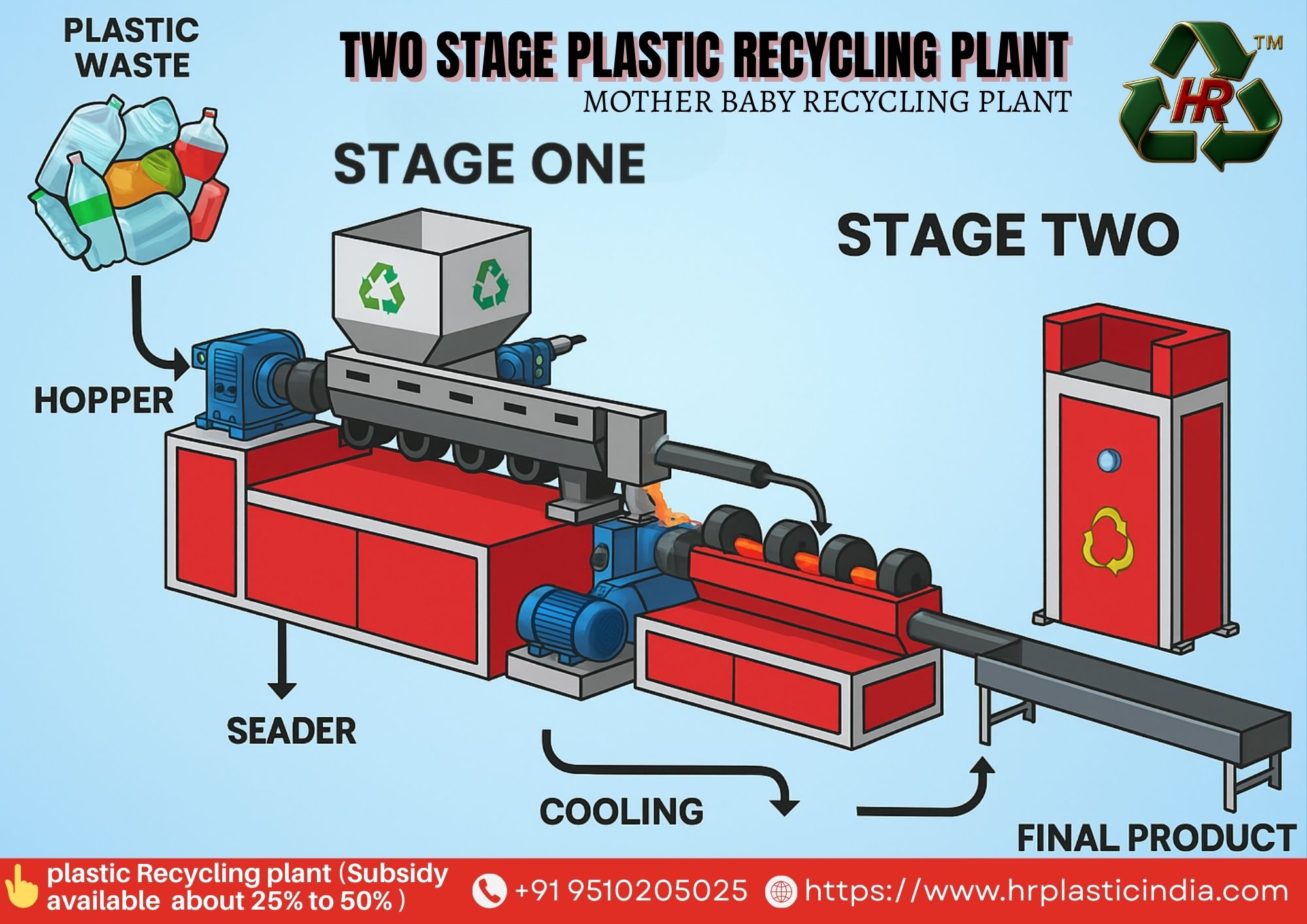
- Mother-Baby (Two-Stage) Line – First extruder for filtration & degassing; second for stabilization—best for heavily contaminated inputs.
Key Features and Specifications
- Throughput: 150–1,200 kg/hr with documented kWh/kg to estimate operating cost and ROI.
- Melt Quality: multi-stage filtration (e.g., 80–120–200 mesh), vacuum zones, and wear-resistant screws/barrels.
- Automation: PLC-SCADA, recipe control, auto screen changer, gravimetric dosing, and alarm logs.
- Pelletizing Choice: die-face for films; strand for rigid; underwater optional for speciality grades.
- Build: SS304 contact parts on wash/dry sections; CE-style safety guarding; standardized spares and VFDs.
Applications of Plastic Granules
- Packaging Films & Bags – LDPE/LLDPE blends for carry bags, liners, and shrink films with stable MFI and gloss.
- Moulded Parts – HDPE/PP crates, caps, and automotive trims using consistent pellet size for smooth mould filling.
- Fibres & Straps – rPET/rPP pellets for textile fibres and PP box-straps meeting tensile and elongation targets.
- Pipes & Sheets – rHDPE pipes, rHIPS sheets for appliances, and thermoformed trays with colour stability.
Benefits of Choosing a Reliable Pelletizing Line
- Lower Cost per kg through efficient motors, optimized screw design, and steady feeding that reduces energy spikes.
- Fewer Rejections with cleaner melt, precise filtration, and controlled moisture/volatiles for consistent downstream processing.
- Higher Uptime thanks to quick screen changes, bolt-on capacity upgrades, and strong local service coverage.
- Compliance & Traceability via data logging, safety interlocks, and documented quality parameters for audits and brand approvals.
Manufacturers & Suppliers in India
India offers a mature ecosystem for plastic granule making machines—from start-up lines to high-throughput compounding systems. While shortlisting, compare polymer expertise (film vs. rigid), filtration design, energy benchmarks, pellet uniformity, and clarity on deliverables: layout, installation, commissioning, operator training, critical spares, and remote diagnostics. Pan-India service and availability of wear parts significantly influence lifecycle cost and payback.
Maintenance and Safety Tips
- Track melt pressure/temperature; investigate sudden deviations to prevent screw/barrel wear and gel formation.
- Service gearboxes, heaters, and thermocouples per schedule; keep calibrated gauges and spare meshes in dry storage.
- Clean hoppers, magnets, and feed zones daily; remove metal/stone contamination to protect screws and screens.
- Train teams on lockout-tagout; secure guards around rotating parts; maintain e-stops and signage.
- Record kWh/kg, MFI, moisture, and pellet size distribution for continuous improvement and cost control.
FAQs – Plastic Granule Making Machine
1. Which pelletizer should I choose—die-face or strand?
+
Use die-face hot-cut for films (LDPE/LLDPE) to minimize strand handling and get uniform pellets. Choose strand for rigid HDPE/PP/HIPS where visual inspection and sizing are easier. Underwater suits speciality compounds.
2. How do I size the extruder capacity?
+
Match kg/hr to stable scrap availability, desired shift plan, and downstream demand. Add a 15–20% buffer for peaks. For mixed films, compactor/force-feed improves consistency and reduces energy spikes.
3. What filtration level is recommended?
+
Start with dual or triple screens (e.g., 80–120–200 mesh) and an automatic screen changer. Heavily contaminated inputs benefit from two-stage (mother-baby) extrusion with vacuum zones.
4. Can one line run multiple polymers?
+
Yes, with proper cleaning and recipe control, but pellet quality is best when lines are dedicated by family (PP/PE vs. PET). Use colour-change and purge protocols to limit cross-contamination.
5. What utilities should I plan for?
+
Three-phase power, process water for cooling/washing, and compressed air. Plan water recycling/ETP and stable power backup to avoid off-spec pellets during voltage dips.
Contact Details
Talk to our specialists today for tailored solutions and fast assistance.
Company: Hr Plastic India
Phone: +91 95102-05025
WhatsApp: Chat on WhatsApp
Email: [email protected]
Website: www.hrplasticindia.com
Address: Office Address :- 3, Abhishree Industrial Park, B/h. G.V.M.M., Near Odhav Circle, Ahmedabad-382415.
Recent Posts