H.R. PLASTIC MACHINERY PVT. LTD.
Mother Baby Extruder Machine
Mother Baby Extruder Machine
Mother Baby Extruder Machine | Twin-Stage Plastic Recycling & Reprocessing Line India
Mother Baby Extruder Machine – Twin-Stage Reprocessing Line
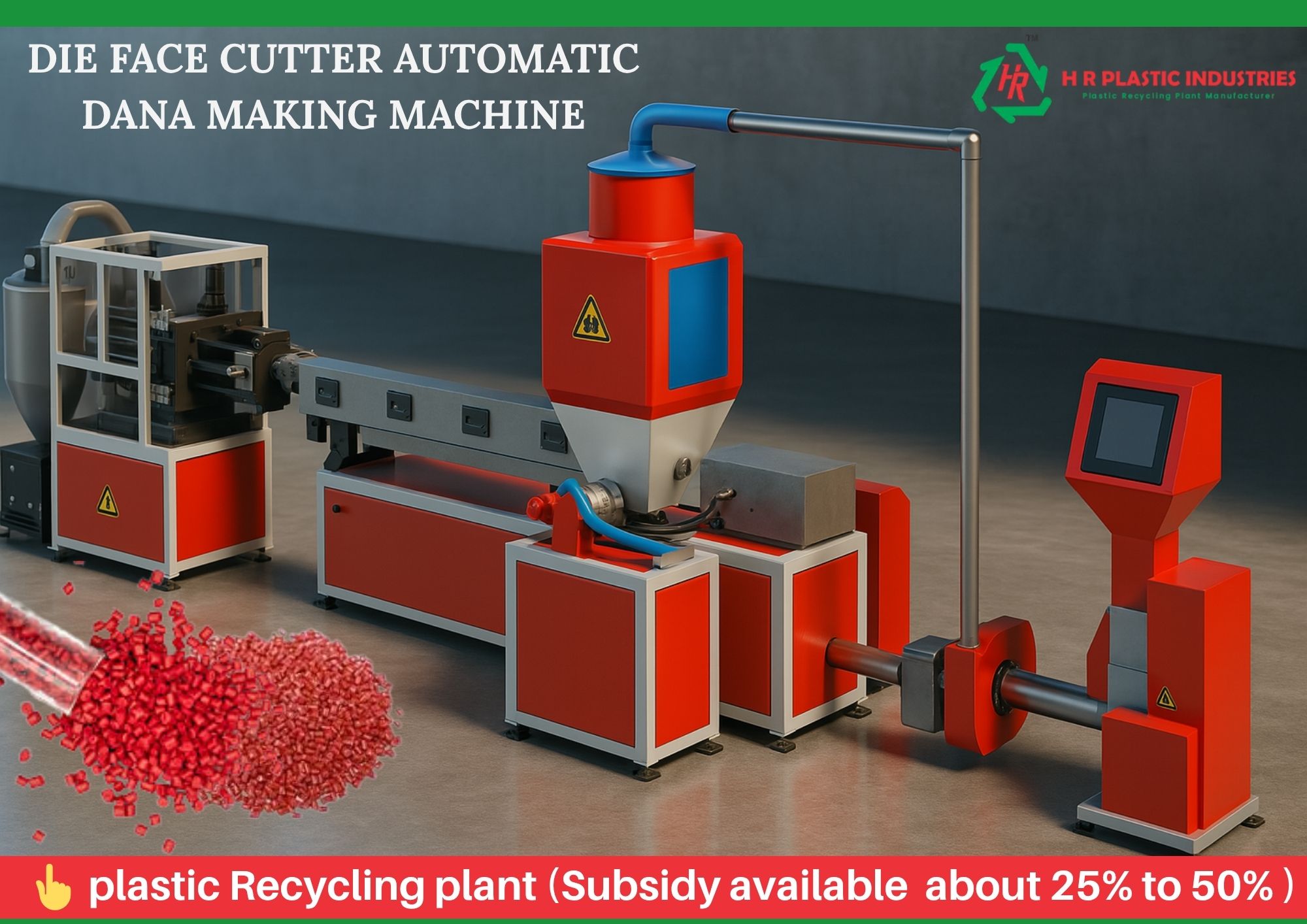
A mother baby extruder machine is a two-stage plastic recycling line designed to convert lightly to highly contaminated film flakes, regrind, and printed waste into uniform, high-quality granules. The first stage (mother) performs intensive plasticizing, degassing, and filtration, while the second stage (baby) stabilizes the melt and pellets it with steady pressure. This configuration improves filtration area, boosts output stability, and protects downstream die and cutter assemblies in demanding Indian converting environments.
Working Principle and Process Flow of Mother Baby Extruder
Material enters the mother extruder through force-feeding or an agglomerator. A robust screw conveys, compresses, and melts the polymer; multiple vent ports and high-vacuum pumps remove moisture, inks, and volatiles. A large-area screen changer filters fines and aluminium traces. The cleaned melt transfers to the baby extruder through a melt pipe with pressure/temperature feedback. The baby stage builds stable head pressure for die-face hot cutting or strand pelletizing. PLC-SCADA recipes maintain zone temperatures, screw speeds, and kWh/kg logs for quality and compliance. Learn more about turnkey recycling integration on www.hrplasticindia.com.
Common Mother Baby Configurations
- Film recycling with compactor/forcer feed on the mother stage and die-face cutter on the baby stage for LDPE/LLDPE packaging waste.
- Rigid plastics reprocessing (HDPE/PP drums, crates) using heavy-duty crusher + metal separation, followed by twin-vent degassing and large-area filtration.
- PET-G multilayer and printed films via optimized degassing, melt filtration, and IV-friendly heat profiles with pellet cooling controls.
- High-ink and printed film jobs using dual vent + vacuum pumps and breaker-plate sequences to reduce gels, smell, and carbon specs.
- Calcium-filled and talc-filled blends managed with hardened screws, wear-resistant barrels, and precisely metered masterbatch dosing.
Key Features and Technical Highlights
- High-torque gearbox, nitrided or bimetallic barrel, and optimized L/D for stable melting across varied MFI ranges.
- Dual or triple degassing with high-capacity vacuum pumps to reduce odour, moisture, and solvents from printed waste.
- Automatic screen changer (hydraulic or continuous) providing large filtration area and minimal pressure spikes.
- AC/VFD drives with low specific energy consumption and digital kWh/kg dashboards for audits and cost control.
- Die-face hot cutting or strand pelletizing options with precise pellet length control and uniform cooling.
- PLC-SCADA with recipe management, alarms, preventive maintenance prompts, and remote diagnostics.
- Modular bolt-on upgrades: gravimetric dosing, melt pumps, ceramic heaters, water-recycling skids, and odour-control units.
Applications of Mother Baby Extruder Granules
- Blown films and liners using reprocessed LDPE/LLDPE blends with controlled MFI and gel count for packaging and agriculture.
- Moulded components in HDPE/PP for crates, caps, furniture parts, and non-critical automotive trim with balanced impact/rigidity.
- Lamination and extrusion coating jobs where pellet consistency supports uniform coat weight and adhesion performance.
- Strapping, monofilaments, and non-woven backsheet layers using rPP/rPET formulations tuned to tensile and elongation targets.
Why Choose a Mother Baby Extruder Line
- Higher throughput and stable pressure due to two-stage melt handling, reducing surging and off-grade pellets.
- Cleaner melt from large-area filtration and deep degassing, lowering black specks, fisheyes, and odour in finished goods.
- Lower changeover losses via automatic screen changes and recipe-based start/stop routines that shorten downtime.
- Predictable operating costs with documented kWh/kg, standardized spares, and pan-India service coverage.
- Future-proof layout with provisions for melt pump, in-line mixers, and additional venting as raw-material profiles evolve.
Selection Guide for Indian Processors
Define input waste (film vs. rigid), contamination level, target MFI, colour, and odour expectations. Size the mother extruder to handle melting/degassing and the baby extruder to stabilize pressure for your pelletizer choice. Evaluate gearbox make, screw metallurgy, vent geometry, screen-changer area, and safety guarding. Verify vendor references in Ahmedabad, Mumbai, Delhi-NCR, Coimbatore, and Hyderabad. Request FAT protocols, performance guarantees at stated contamination, and response times for service and spares.
Maintenance and Safety Tips
- Track melt pressure, vacuum levels, and motor loads; investigate drifts to prevent die surging and off-spec pellets.
- Maintain vent ports, vacuum seals, and condensate traps to keep degassing efficiency high on printed films.
- Inspect breaker plates, screens, and pelletizer blades; replace on schedule to protect die lips and ensure clean cuts.
- Calibrate temperature sensors, load cells, and kWh meters; archive SCADA logs for audits and troubleshooting.
- Follow lockout-tagout and hot-surface protocols; train operators on purging and emergency stop procedures.
FAQs – Mother Baby Extruder Machine
1. When should I choose a mother baby extruder over a single-stage line?
+
Select a two-stage system when processing printed, moist, or highly contaminated films and mixed rigid waste. The mother stage focuses on melting, degassing, and filtration; the baby stage stabilizes pressure for consistent pellet quality at higher outputs.
2. Which pelletizing method works best?
+
Die-face hot cutting suits films and flexible waste for uniform micro-pellets and closed-loop cooling. Strand pelletizing is preferred for rigid regrind or higher viscosity polymers needing longer residence and easy length control.
3. How do I reduce odour from printed and post-consumer films?
+
Use dual or triple venting with high-capacity vacuum pumps, maintain vent cleanliness, optimize melt temperature, and adopt large-area filtration. Add optional odour-control and water-recycling modules for closed-loop plants.
4. What utilities and space are required?
+
Three-phase power, process water for cooling and pelletizing, and compressed air are typical. Provide space for crusher/agglomerator, screen changer access, water-treatment skid, and safe walkways for die and cutter maintenance.
5. How is performance guaranteed?
+
Vendors specify throughput at defined contamination, filtration level, and target MFI. Insist on FAT test data, documented kWh/kg, pellet quality metrics, response times, and spare-parts lists aligned to your production plan.
Contact Details
Talk to our specialists today for tailored solutions and fast assistance.
Company: Hr Plastic India
Phone: +91 95102-05025
WhatsApp: Chat on WhatsApp
Email: [email protected]
Website: www.hrplasticindia.com
Address: Office Address :- 3, Abhishree Industrial Park, B/h. G.V.M.M., Near Odhav Circle, Ahmedabad-382415.
Recent Posts