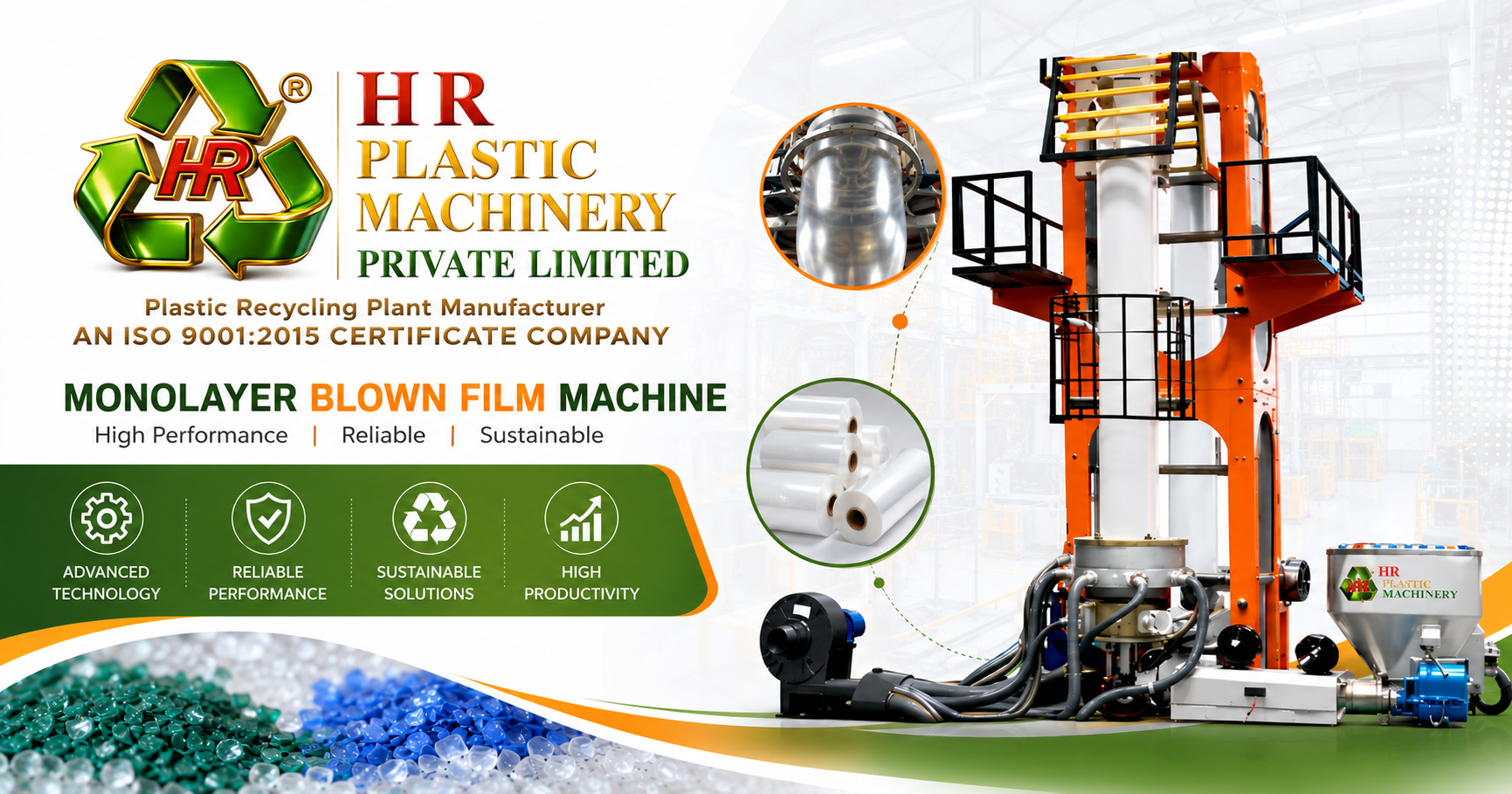
H.R. PLASTIC MACHINERY PVT. LTD.
Industrial Plastic Recycling Plant
Industrial Plastic Recycling Plant
Recycling Machinery Supplier in India | Trusted Equipment for Waste & Material Recovery
Industrial Plastic Recycling Plant
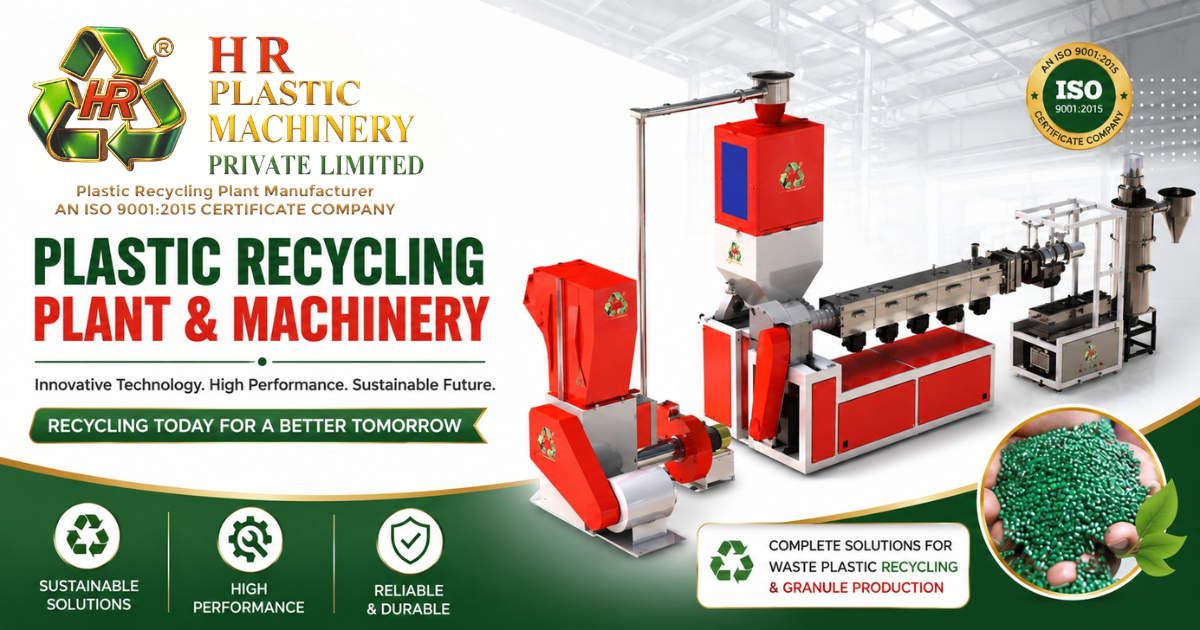
An industrial plastic recycling plant converts post-consumer and post-industrial scrap into consistent, high-quality reprocessed granules. A well-engineered line integrates sorting, size reduction, washing, drying, melt filtration, and pelletizing to deliver predictable MFI, colour, and contamination levels. When evaluating options, compare throughput (kg/hr), kWh/kg, automation level, water recycling, and after-sales support. Use this page to understand configurations, applications, and selection tips tailored for Indian processors.
Working Principle and Process Flow of an Industrial Plastic Recycling Plant
Material flows through staged modules: manual/optical sorting → shredder/granulator → float-sink or air separation → hot/cold friction washing → centrifuge drying → agglomeration (for films) → extruder with vacuum degassing → automatic screen changer → strand or die-face pelletizer → silo and QC. Density separation elevates purity, while vacuum ports remove volatiles and odour. SCADA records kWh, water usage, and output for traceability. Match screw L/D, filtration (in microns), and degassing volume to input contamination and target applications.
Types of Industrial Plastic Recycling Plants
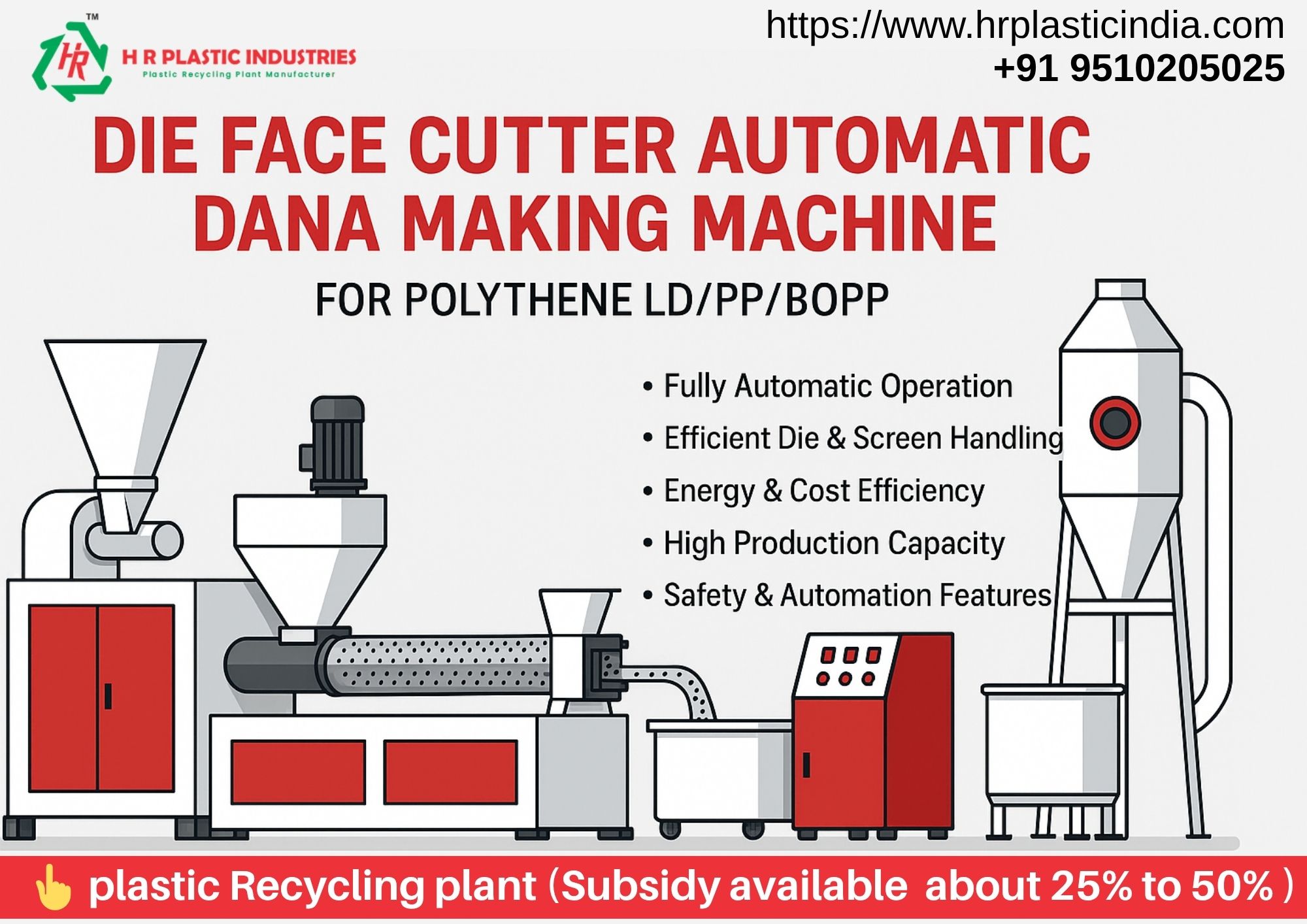
- Film Recycling (LDPE/LLDPE): Agglomerator or compactor feed, forced-feed extruder, die-face cutting for thin films, carry bags, liners, and stretch wrap.
- Rigid Recycling (HDPE/PP): Label removal, metal separation, intensive washing; ideal for drums, crates, caps, and blow-moulded parts.
- PET Bottle to rPET: De-labelling, hot caustic wash, IV retention options, twin-strand pelletizing—suited for fibre, strapping, and sheet.
- Twin-Stage Degassing Lines: Two extruders in series for heavily printed/contaminated inputs, yielding odour-reduced pellets.
- High-Throughput Twin Lines: Parallel 800–1500 kg/hr systems offering redundancy and reduced changeovers for continuous production.
Key Features and Specifications
- Energy-efficient drives with VFDs; documented specific energy (kWh/kg) for cost benchmarking and audits.
- Automatic screen changers (down to 80–120 μm), multi-zone heating, and high-vacuum degassing for cleaner melt.
- Closed-loop water circuits with filters and DAF/ETP options to minimise consumption and comply with norms.
- PLC-SCADA with recipe management, alarms, production logs, and remote diagnostics for uptime.
- Bolt-on capacity upgrades, standardised spares, safety guarding, and pan-India service coverage.
Applications of Recycled Plastic Granules
- Packaging: PE/PP films, carry bags, liners, shrink/stretch wrap, and injection-moulded caps, closures, and houseware.
- Textiles & Strapping: rPET for fibre, filament, and PET straps with controlled IV and tensile properties.
- Automotive & Appliances: rPP, ABS, and HIPS for non-critical trims, ducts, trays, and housings meeting ROHS/REACH needs.
- Construction & Agriculture: pipes, sheets, tarpaulins, mulching films, pallets, and crates with defined MFI and impact.
- Municipal/Industrial Waste Valorisation: converting mixed streams to saleable PCR grades, aiding EPR targets.
Benefits of an Industrial Plastic Recycling Plant
- Lower raw-material costs and faster payback via dependable recycled feedstock and reduced landfill/tipping expenses.
- Consistent quality through controlled washing, multi-stage filtration, and vacuum degassing—fewer rejections downstream.
- Higher productivity with automated dosing, recipe control, rapid screen changes, and robust conveying.
- Improved compliance and ESG reporting with batch-wise traceability, safety interlocks, and water/energy metering.
Manufacturers & Suppliers in India
India hosts established manufacturers of industrial plastic recycling plants with experience in local scrap profiles and utility constraints. Typical scope includes layouting, installation, commissioning, operator training, spares, and remote assistance. Buyers should request FAT documents, guaranteed throughput/contamination limits, and safety conformity. Popular upgrades include stainless-steel contact parts, odour-reduction packages, automated dosing, and water-recycling modules. Service footprints commonly cover Ahmedabad, Mumbai, Delhi-NCR, Coimbatore, and Hyderabad.
Maintenance and Safety Tips
- Track vibration/noise trends on bearings and gearboxes; replace knives and screens per schedule.
- Maintain wash chemistry and TDS; clean tanks/nozzles and service pumps/filters to stabilise quality.
- Verify extruder melt pressure, MFI, and heater zones; calibrate load cells and temperature sensors.
- Train operators on LOTO, hot surfaces, confined spaces, PPE, and emergency stop procedures.
- Stock critical spares—heaters, thermocouples, seals, blades, and screen packs—in dry, labelled storage.
FAQs – Industrial Plastic Recycling Plant
1. What throughput should I choose for my plant?
+
Size capacity to stable scrap availability and customer demand. For decentralised operations, 150–300 kg/hr suits; for continuous industrial supply, 500–1200 kg/hr lines with redundancy minimise downtime.
2. Can one line handle mixed plastics?
+
Yes, with pre-sorting and density/air separation. For printed/contaminated films, select twin-stage degassing and tighter filtration. Separate loops for PET/PE/PP help maintain predictable properties.
3. What utilities do I need?
+
Three-phase power, process water (closed loop preferred), and compressed air. Budget for ETP/DAF, water-recycling, and backup power to counter grid fluctuations and monsoon disruptions.
4. How do I achieve food-contact rPET quality?
+
Use hot caustic wash, multi-stage filtration, IV control, and approved contact materials. Maintain HACCP-style traceability and test migration with accredited labs before market claims.
5. What should after-sales include?
+
Installation, commissioning, operator training, preventive maintenance plans, remote diagnostics, guaranteed spares, defined response time, and performance guarantees tied to contamination and throughput.
Contact Details
Talk to our specialists today for tailored solutions and fast assistance.
Company: Hr Plastic India
Phone: +91 95102-05025
WhatsApp: Chat on WhatsApp
Email: [email protected]
Website: www.hrplasticindia.com
Address: Office Address :- 3, Abhishree Industrial Park, B/h. G.V.M.M., Near Odhav Circle, Ahmedabad-382415.
Recent Posts