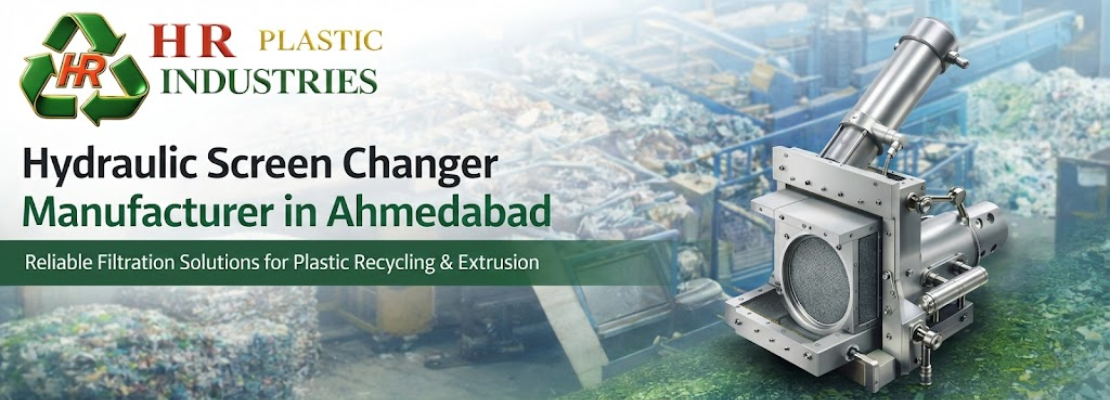
Hydraulic Screen Changer Manufacturer in Ahmedabad
Plastic processing and recycling operations rely on consistent melt quality, uninterrupted production, and effective removal of contaminants. A hydraulic screen changer plays an important role in meeting these requirements by enabling continuous or semi-continuous filtration of molten plastic without frequent machine stoppages. As plastic recycling and extrusion activities expand, demand for dependable hydraulic screen changer manufacturers in Ahmedabad continues to grow across multiple industrial segments.
Ahmedabad has developed into a significant manufacturing hub for plastic processing machinery, supported by a strong industrial ecosystem, a skilled workforce, and proximity to major plastic recycling clusters across Gujarat and western India. Manufacturers in this region cater to both domestic and pan-India requirements through robust engineering practices and application-focused designs.
Understanding hydraulic screen changers and their function
A hydraulic screen changer is a filtration system installed between the extruder and die head in plastic extrusion and recycling lines. Its primary purpose is to remove contaminants such as unmelted particles, paper residues, metal traces, and degraded polymer material from the molten plastic before it enters downstream processes.
The system uses hydraulically operated breaker plates to secure filtration screens in place. When screens become clogged, the hydraulic mechanism allows quick replacement or shifting of the screen pack with minimal disruption to material flow. This helps maintain stable pressure, consistent product quality, and extended equipment life.
Hydraulic screen changers are commonly used in plastic recycling plants, granulation lines, film extrusion units, pipe extrusion systems, and profile manufacturing operations.
Why hydraulic screen changers are essential in plastic recycling and extrusion
Plastic recycling processes often involve raw materials with varying contamination levels. Without proper melt filtration, impurities can damage downstream equipment, affect surface finish, and lead to frequent production interruptions.
Hydraulic screen changers help maintain operational stability by providing continuous filtration under high temperature and pressure conditions. Their use reduces downtime, improves melt homogeneity, and increases overall process efficiency. For high-output extrusion lines, hydraulic systems offer greater control and reliability compared to manual or slide-type screen changers.
In applications such as granule manufacturing, pipe extrusion, and film production, consistent melt pressure and clean material flow are critical for dimensional accuracy and surface quality. Hydraulic screen changers support these requirements throughout extended production cycles.
Manufacturing environment in Ahmedabad for plastic machinery
Ahmedabad has evolved into a specialized center for plastic machinery manufacturing due to its established industrial base and access to fabrication facilities, raw materials, and technical suppliers. The region supports production of recycling plants, granulators, extrusion systems, and auxiliary equipment such as hydraulic screen changers.
Manufacturers benefit from experienced technicians, mature supply chains, and practical design knowledge gained from serving a wide range of plastic processing industries. This environment enables consistent quality control, efficient customization, and reliable service support for hydraulic screen changers supplied across India.
Overview of hydraulic screen changer manufacturing capabilities
A hydraulic screen changer manufacturer in Ahmedabad typically focuses on designs that balance filtration efficiency, mechanical strength, and operational safety. Manufacturing involves precision machining of breaker plates, integration of hydraulic cylinders, seal testing, and pressure resistance verification.
Construction materials are selected to withstand high operating temperatures and corrosive melt conditions. Heavy-duty steel bodies, accurately machined sealing surfaces, and dependable hydraulic components contribute to long service life and stable performance during continuous operation.
Manufacturers commonly offer single-plate, double-plate, and continuous hydraulic screen changer configurations, each suited to different throughput capacities and contamination levels.
Key operational benefits of hydraulic screen changers
Hydraulic screen changers offer several functional advantages that directly influence production efficiency and product consistency.
They enable faster screen replacement without fully shutting down the extruder, reducing material wastage and thermal degradation. Stable melt pressure supports consistent downstream processing, while effective filtration protects dies, molds, and cutting systems from damage.
From an operational perspective, hydraulic systems reduce manual handling and enhance workplace safety. Controlled hydraulic movement ensures accurate positioning and proper sealing of the screen pack, minimizing leakage risks during operation.
Applications across plastic processing industries
Hydraulic screen changers are used across a wide range of plastic processing and recycling applications, including plastic recycling and reprocessing plants handling mixed or post-consumer waste, plastic dana and granules manufacturing units, film extrusion lines for packaging and agricultural films, pipe and profile extrusion plants, sheet and board extrusion operations, and compounding and masterbatch production units.
Their versatility makes them suitable for both small-scale recycling setups and large-capacity industrial extrusion lines.
Factors influencing performance and reliability
The performance of a hydraulic screen changer depends on design accuracy, material selection, and proper integration of the hydraulic system. Precise machining of breaker plates ensures uniform melt distribution and consistent pressure across the screen surface.
Seal quality and hydraulic cylinder alignment are essential for preventing leakage and pressure loss. Ease of maintenance, accessibility for screen replacement, and compatibility with existing extrusion equipment are also important considerations.
In high-output recycling lines, pressure stability and response time of the hydraulic system play a key role in maintaining uninterrupted operation.
How manufacturers ensure quality and compliance
Established hydraulic screen changer manufacturers in Ahmedabad follow structured manufacturing and testing procedures to ensure reliable performance. Components undergo dimensional verification, pressure testing, and functional trials prior to dispatch.
Hydraulic assemblies are tested for smooth movement and sealing integrity under simulated operating conditions. Manufacturers also ensure compatibility with commonly processed polymers and typical extrusion temperature ranges used in recycling and processing applications.
Compliance with industrial safety standards and practical usability requirements ensures reliable operation in demanding production environments.
Choosing the right hydraulic screen changer manufacturer in Ahmedabad
Selecting the right manufacturer requires evaluation of technical expertise, product consistency, and long-term support capability. Buyers should consider whether the manufacturer provides application-specific solutions rather than standardized designs.
Key factors include experience in plastic machinery engineering, customization capability, material quality, and availability of technical assistance. Manufacturers supplying equipment across different regions often understand varied operating conditions and contamination challenges faced by recycling plants.
Clear documentation, installation guidance, and access to spare parts contribute significantly to long-term operational reliability.
Role of after-sales support and service availability
Hydraulic screen changers operate under high pressure and temperature conditions, making ongoing maintenance and technical support essential. Manufacturers offering responsive after-sales service help reduce downtime and extend equipment service life.
Support may include installation assistance, troubleshooting, guidance on hydraulic seal replacement, and performance optimization recommendations. A local manufacturing presence in Ahmedabad often enables faster service response compared to distant suppliers.
Long-term availability of replacement components ensures uninterrupted operation over extended usage periods.
Industry trends influencing hydraulic screen changer demand
Increasing focus on plastic waste management and recycling efficiency has driven adoption of advanced melt filtration systems. Hydraulic screen changers are increasingly preferred over manual alternatives due to improved operational efficiency and reduced labor dependence.
As recycling plants move toward higher capacity and automation, demand for reliable hydraulic systems continues to rise. Manufacturers in Ahmedabad are adapting designs to support higher throughput, improved sealing performance, and simplified maintenance.
Evolving environmental regulations and quality expectations are also encouraging processors to invest in filtration technologies that improve product consistency and reduce rejection rates.
Conclusion
Hydraulic screen changers have become a critical component in modern plastic recycling and extrusion operations by supporting consistent melt quality and stable production. Manufacturers in Ahmedabad play an important role in this segment by delivering technically sound, application-focused solutions for diverse plastic processing requirements.
With established manufacturing capabilities, practical engineering expertise, and reliable service support, Ahmedabad-based hydraulic screen changer manufacturers continue to meet the evolving needs of plastic recyclers and processors across India. Selecting the right manufacturer helps ensure consistent filtration performance, reduced downtime, and long-term operational reliability.