H.R. PLASTIC MACHINERY PVT. LTD.
Heavy Duty Grinder Machine Manufacturer in India
Heavy Duty Grinder Machine Manufacturer in India
Heavy Duty Grinder Machine Manufacturer in India | HR Plastic India
Heavy Duty Grinder Machine Manufacturer in India
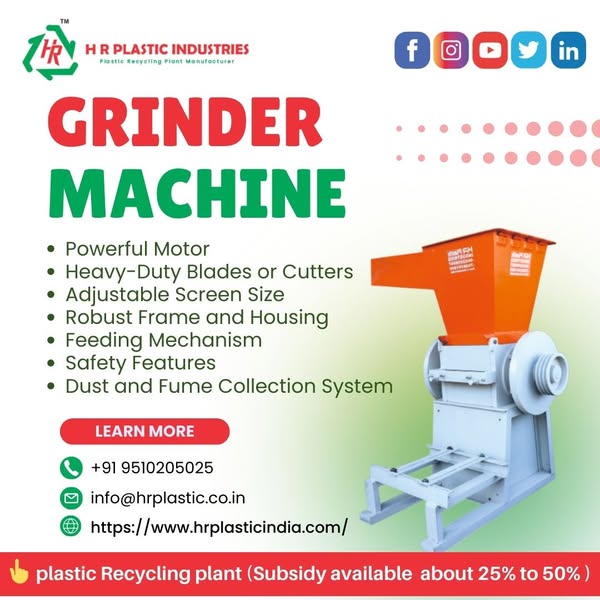
A heavy duty grinder machine manufacturer plays a crucial role in plastic recycling, helping processors convert bulky scrap into uniform flakes that are easy to wash, dry, and reprocess. Rugged grinders with hardened blades, strong frames, and optimized rotor designs handle lumps, purgings, pipes, and thick components without frequent breakdowns. While selecting a supplier, it is important to evaluate throughput, power consumption, rotor configuration, accessibility for maintenance, and after-sales support. HR Plastic India provides guidance on matching the right grinder model with your material, plant layout, and downstream extrusion requirements.
Working Principle of Heavy Duty Plastic Grinder Machines
Heavy duty grinder machines work on the principle of controlled size reduction using a rotating knife rotor and fixed bed blades inside a robust cutting chamber. Scrap is fed through a hopper, gripped by the rotor, and continuously cut until it passes through a perforated screen with a defined hole size. Proper rotor geometry, blade gap, and screen selection ensure consistent flake size and lower fines. Efficient grinders minimise power spikes, reduce dust, and protect downstream wash and extrusion equipment. For model options, layout discussions, and support, explore more on www.hrplasticindia.com.
Types of Heavy Duty Grinder Machines Offered
- Centralised heavy duty grinders mounted near extrusion lines, designed to handle thick lumps, purgings, and start-up waste with high torque and stable cutting performance.
- Beside-the-press grinders positioned next to injection moulding machines, ideal for runners and regrind, with low noise levels and compact footprints for shop-floor layouts.
- High-capacity scrap grinders with wide in-feed mouth for processing crates, drums, profiles, and pipes, integrated with conveyors and blowers for continuous feeding.
- Wet grinders for contaminated plastic waste, combining cutting and pre-washing actions to remove labels, dirt, and loose surface impurities before the main wash line.
- Special-purpose grinders tailored for film, raffia, and woven sacks, using aggressive gripping designs to prevent slippage and ensure stable throughput with thin, flexible materials.
Key Features and Technical Specifications
- Rigid fabricated body with stress-relieved construction, ensuring vibration-free operation and long structural life under continuous industrial duty.
- High-chrome or alloy steel blades with proper heat treatment and re-sharpening capability, maintaining sharp cutting edges and reducing specific power consumption.
- Heavy duty rotor designs such as open, closed, staggered, or V-type, optimised for different scrap forms and desired flake size distribution.
- Replaceable wear plates, screens, and liners in the cutting chamber to protect the housing and simplify maintenance during abrasive or dirty applications.
- Safety interlocks, belt guards, overload protection, and easy access to the chamber for cleaning, screen change, and blade setting, improving uptime and operator safety.
Applications of Heavy Duty Grinder Machines in Recycling
- Plastic recyclers use heavy duty grinder machines to downsize PP, PE, HIPS, ABS, and other engineering scrap into uniform flakes that can be washed, sorted, and extruded into reprocessed granules.
- Injection moulding and blow moulding plants regrind runners, rejected parts, and purgings, feeding the material back into production to reduce waste and improve overall material yield.
- Packaging and film converters process off-grade rolls, edge trims, and start-up waste, using film-specific grinders that maintain consistent flake thickness and minimise dust.
- Automotive, appliance, and industrial component manufacturers recycle bulky housings, panels, and trims, enabling closed-loop material cycles and better sustainability metrics.
Benefits of Partnering with a Heavy Duty Grinder Machine Manufacturer
- Improved scrap management through reliable size reduction, enabling higher regrind utilisation, cleaner processing, and better control over inventory and logistics in recycling plants.
- Lower operating costs by using energy-efficient motors, balanced rotors, and optimised cutting chambers that reduce power peaks, blade wear, and unplanned downtime.
- Consistent output quality with controlled flake size, lower fines, and reduced contamination, which stabilises washing, drying, and extrusion performance across different polymer streams.
- Better workplace safety and ergonomics with designed-in guarding, interlocks, and maintenance access, helping teams follow safe operating practices and reduce manual intervention.
Heavy Duty Grinder Machine Manufacturers and Suppliers in India
India has a strong base of heavy duty grinder machine manufacturers that support both dedicated recyclers and captive processors in packaging, automotive, consumer goods, and infrastructure segments. When evaluating a supplier, users typically compare installed base, application knowledge, after-sales response, and availability of critical spares. Reputed manufacturers such as HR Plastic India assist with equipment selection, layout engineering, noise control, and integration with wash and extrusion lines. Support normally includes erection, commissioning, operator training, and maintenance planning, along with options for custom hopper design, conveyor feeding, and automation upgrades.
Maintenance and Safety Tips for Heavy Duty Grinder Machines
- Inspect blades, screens, belts, and bearings at defined intervals, recording vibration, temperature, and unusual sounds in a basic maintenance logbook.
- Maintain correct blade gap and rotor alignment after each sharpening or replacement to ensure efficient cutting and reduce unnecessary heat or dust generation.
- Clean the cutting chamber, hopper, and screen regularly, removing trapped metal, stones, and foreign objects that may damage blades or cause blockages.
- Follow lockout-tagout procedures before opening any inspection door, making sure the rotor has fully stopped and power is isolated during service.
- Keep critical spares such as blades, screens, belts, couplings, and bearings in stock, stored properly and labelled with machine references for fast replacement.
FAQs – Heavy Duty Grinder Machine Manufacturer
1. How do I select the right heavy duty grinder capacity for my plant?
+
Start by estimating the hourly scrap generation, type of material, and feeding method. A manufacturer like HR Plastic India will consider peak loads, duty cycle, and available floor space to recommend a grinder with suitable rotor width, motor rating, and screen size that matches your recycling line.
2. Can one heavy duty grinder handle different types of plastic scrap?
+
Yes, many heavy duty grinder machines are designed to handle a mix of purgings, moulded parts, and film with appropriate rotor design and screen changes. However, for best performance and stable flake quality, your supplier may suggest dedicated hoppers or separate lines for very different materials or contamination levels.
3. What utilities are required for a heavy duty grinder machine?
+
Typical requirements include three-phase electrical power, proper earthing, and adequate ventilation around the machine. When integrated with conveyors or blowers, compressed air and ducting may also be needed. Your manufacturer can provide detailed load data and recommended cable and breaker sizes during the planning stage.
4. How often should grinder blades be sharpened or replaced?
+
Sharpening frequency depends on material type, contamination level, and operating hours. Monitoring power draw, flake quality, and noise helps identify when blades are becoming dull. Manufacturers generally define a recommended sharpening schedule and maximum number of regrinds before replacement is required.
5. What kind of after-sales support should I expect from a grinder machine manufacturer?
+
You should expect installation and commissioning assistance, operator training, preventive maintenance guidelines, and availability of genuine spares. A reliable partner will also offer troubleshooting help, inspection visits, and suggestions for upgrades when your production or scrap profile changes over time.
Contact Details
Talk to our specialists today for tailored solutions and fast assistance.
Company: Hr Plastic India
Phone: +91 95102-05025
WhatsApp: Chat on WhatsApp
Email: [email protected]
Website: www.hrplasticindia.com
Address: Office Address :- 3, Abhishree Industrial Park, B/h. G.V.M.M., Near Odhav Circle, Ahmedabad-382415.
Recent Posts