Blog Overview and Purpose
This blog explains grinder machines from a functional and operational
perspective, focusing on how they are used, how they work, the industries that depend on them, and why demand
for grinder machines in Ahmedabad remains consistently strong. The content is intended to help plant owners,
production managers, and technical buyers make informed decisions based on process requirements rather than
promotional claims.
Understanding the Role of a Grinder Machine in Plastic Processing
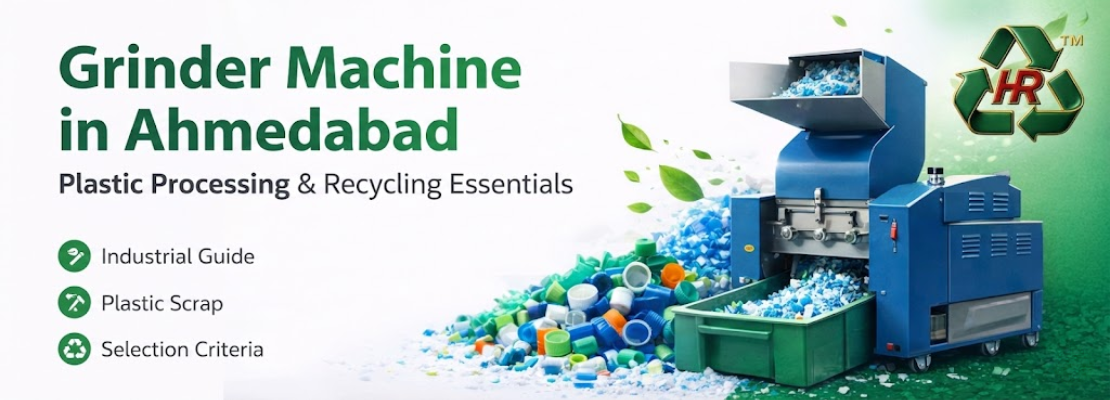
A grinder machine is designed to reduce plastic scrap into smaller, uniform
pieces suitable for reuse or further processing. In plastic manufacturing and recycling, material size
uniformity directly influences extrusion stability, melting behavior, and final granule quality. Grinder
machines achieve this by using rotating blades that cut, shear, and break plastic into controlled sizes
through mechanical action.
Unlike shredders, which are used for coarse size reduction, grinder machines
are typically applied where a finer and more consistent output is required. They are commonly positioned
downstream of molding, extrusion, or cutting operations, or upstream of recycling and granulation lines. The
ability to deliver predictable particle sizes makes grinder machines essential for maintaining quality control
throughout plastic production cycles.
How Grinder Machines Work in Industrial Environments
The working principle of a grinder machine is based on high-torque
rotational cutting. Plastic material is fed into a grinding chamber where rotating blades interact with fixed
blades mounted along the chamber walls. As the rotor turns, the material is repeatedly cut until it becomes
small enough to pass through a screen or mesh installed at the bottom.
In industrial plastic applications, grinder machines are engineered to
handle continuous loads, variations in material hardness, and different polymer types such as HDPE, LDPE, PP,
PVC, and PET. Motor capacity, blade configuration, and chamber design are selected according to throughput
requirements and material characteristics. This ensures stable operation while minimizing overheating,
clogging, and uneven output.
Key Applications of Grinder Machines in Ahmedabad-Based Industries
Ahmedabad hosts a strong concentration of plastic manufacturing units,
recyclers, pipe producers, packaging suppliers, and extrusion plants. Across these sectors, grinder machines
are used as a core utility rather than a secondary accessory.
Common application areas include:
Grinding of plastic scrap generated during extrusion, molding, or cutting processes
Size reduction of rejected plastic parts for reprocessing
Preparation of plastic waste before feeding into recycling or granulation systems
Processing of rigid and semi-rigid plastic materials for controlled reuse
Support operations in recycling plants handling mixed plastic inputs
Because many units in Ahmedabad operate with high material volumes and tight
production schedules, grinder machines are expected to perform consistently with minimal downtime. This
operational reality drives demand for robust construction and predictable machine performance.
Types of Grinder Machines Used in Plastic Processing
Grinder machines used in plastic industries are available in multiple
configurations, each suited to specific operational requirements. Selection depends on material type, desired
output size, and integration with other machinery.
Common grinder machine categories include:
Plastic scrap grinder machines for rigid and semi-rigid waste
Heavy-duty grinder machines for thick or high-density plastic parts
High-speed grinders for fine and uniform output
Low-speed grinders for noise-sensitive environments or delicate materials
Each configuration differs in blade design, motor rating, chamber thickness,
and feed mechanism. Understanding these differences is essential for aligning machine capability with
plant-level process needs.
Technical Factors That Influence Grinder Machine Performance
Grinder machine performance is not defined by output capacity alone. Several
technical parameters influence operational efficiency, output consistency, and long-term reliability. In
Ahmedabad's industrial environment, where machines often run for extended duty cycles, these factors become
especially important.
Key considerations include blade material and geometry, motor power rating,
chamber plate thickness, rotor balance, and screen configuration. Well-engineered grinder machines reduce
vibration, limit blade wear, and maintain uniform particle size, which directly supports downstream process
stability.
Dust management and safety systems also play a functional role. Grinder
machines equipped with proper enclosures, safety interlocks, and dust control features help maintain safer
working conditions and reduce maintenance-related interruptions.
Why Ahmedabad Has Sustained Demand for Grinder Machines
Ahmedabad's industrial ecosystem includes both established plastic
manufacturers and newer recycling-focused units. The city's proximity to raw material suppliers, logistics
networks, and export infrastructure makes it a preferred location for plastic processing operations. As
sustainability practices and recycling requirements expand, grinder machines are increasingly regarded as
essential infrastructure rather than optional equipment.
Local manufacturers typically seek machines that are serviceable, adaptable
to different materials, and compatible with existing production lines. This practical demand pattern explains
why grinder machines remain a consistent requirement across both small-scale operations and large industrial
plants in the region.
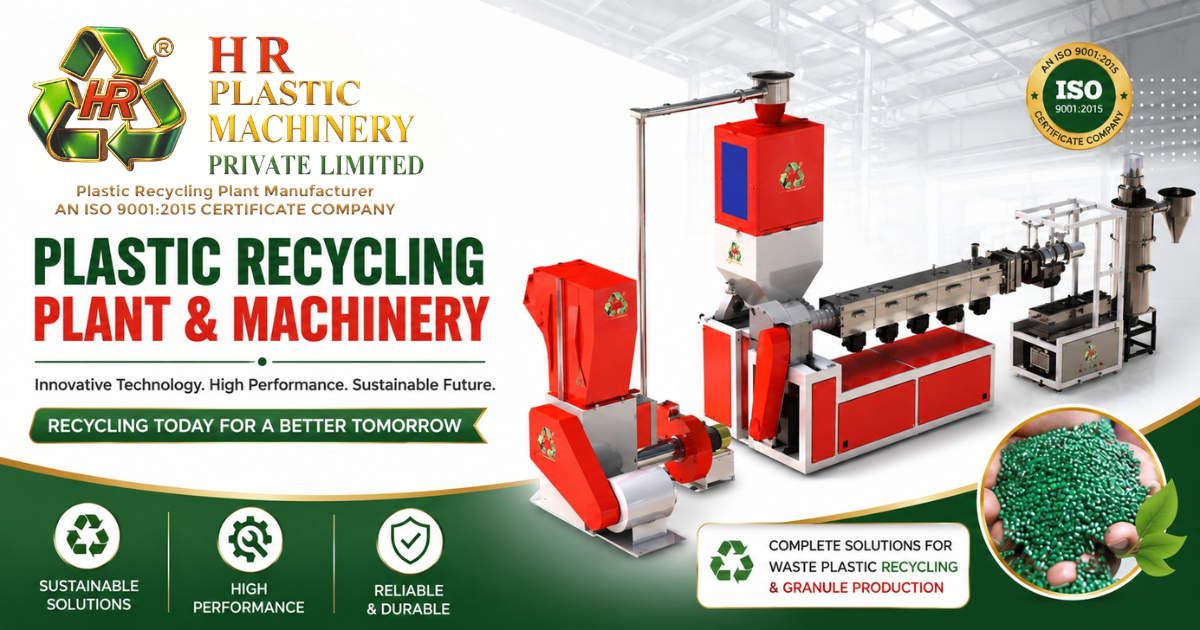
How Grinder Machines Integrate with Recycling and Granulation Systems
In plastic recycling workflows, grinder machines function as a precision
size-reduction stage following primary shredding or manual segregation. By producing uniform feed material,
they support stable melting and extrusion during granulation.
Integration generally follows a sequence in which plastic waste is sorted,
ground to a defined size, and then processed through extrusion and pelletizing systems. Grinder machines that
deliver consistent output help reduce extruder load fluctuations and improve final granule quality. This
integration role underscores why grinder machines are considered process-critical rather than standalone
equipment.
Choosing a Grinder Machine for Industrial Use
Selecting a grinder machine requires alignment between machine
specifications and actual operating conditions. Buyers often focus on throughput figures alone, but long-term
usability depends on a deeper technical match.
Important evaluation points include:
Type and thickness of plastic material to be processed
Required output size and consistency
Expected operating hours per day
Compatibility with upstream and downstream equipment
Availability of technical support and spare parts
A grinder machine that meets these criteria reduces operational risk and
improves overall plant efficiency without adding unnecessary complexity.
Operational Reliability and Maintenance Considerations
Grinder machines operate under continuous mechanical stress due to constant
cutting action. Proper maintenance directly affects blade life, energy efficiency, and output quality.
Industrial users typically schedule blade inspection, screen cleaning, and bearing lubrication as part of
routine preventive maintenance.
Machines designed with easy access to grinding chambers and blade
assemblies help reduce maintenance time. In high-volume operations, even minor design efficiencies can
translate into measurable productivity gains over the long term.
Grinder Machines and Compliance with Industrial Standards
In modern plastic processing environments, machinery must comply with
safety and operational standards. Grinder machines are expected to incorporate protective guards, emergency
stop mechanisms, and stable electrical systems. Compliance supports operator safety and alignment with factory
audits and regulatory expectations.
Machines built with standardized components and documented specifications
are easier to integrate into ISO-aligned production systems, which are increasingly common among
Ahmedabad-based manufacturing units.
Future Relevance of Grinder Machines in Plastic Manufacturing
As plastic recycling and material reuse continue to grow, grinder machines
will remain a foundational part of processing infrastructure. While ongoing developments may improve energy
efficiency, noise control, and automation, the core requirement for controlled size reduction will remain
unchanged.
In regions like Ahmedabad, where industrial growth intersects with
sustainability goals, grinder machines are likely to play an even more central role in efficient plastic
material management.
Conclusion
Grinder machines are a core component of plastic processing and recycling
infrastructure, particularly in industrial hubs such as Ahmedabad. Their role in ensuring material
consistency, process stability, and efficient reuse makes them indispensable across manufacturing scales. A
clear understanding of their function, applications, and selection criteria enables businesses to integrate
grinder machines effectively into long-term production strategies.