H.R. PLASTIC MACHINERY PVT. LTD.
Grinder Machine for Plastic Recycling in India
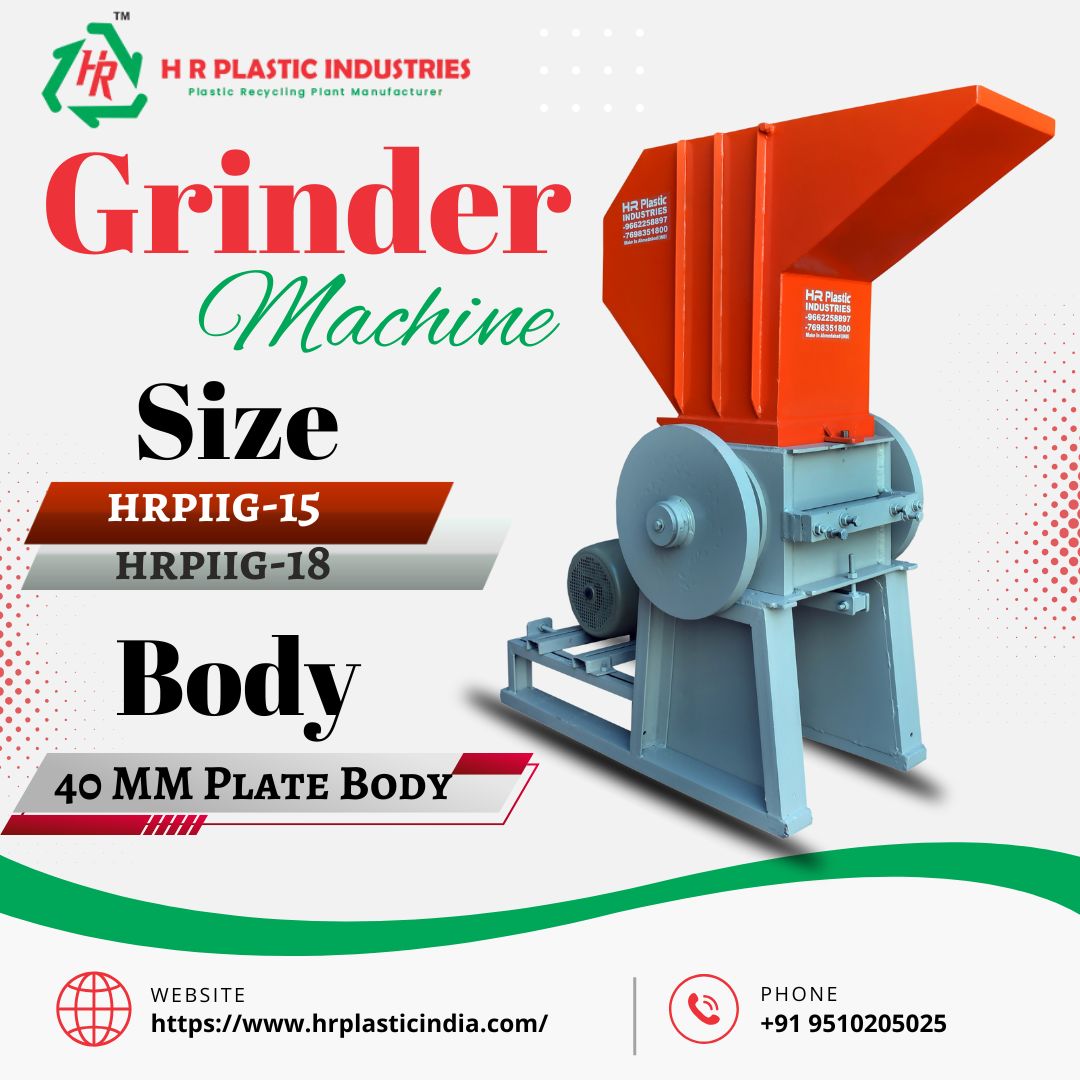
Grinder Machine for Plastic Recycling in India
Grinder Machine for Plastic Recycling | Hr Plastic India
Grinder Machine for Plastic Recycling in India
A grinder machine for plastic recycling is the first and most critical step in converting rejected parts, lumps, runners, film, and scrap into uniform regrind. A well-designed plastic scrap grinder improves line efficiency, stabilises feed to extruders, and reduces material wastage in injection moulding, blow moulding, sheet, and film plants. When selecting a grinder, Indian processors should evaluate throughput, rotor design, knife metallurgy, screen size range, safety guarding, and noise control. The right partner helps match the grinder machine to polymer type, scrap form, and downstream application for reliable recycling.
Working Principle of Grinder Machine for Plastic Recycling
A plastic recycling grinder operates on size reduction principles using a rotor fitted with moving blades and a fixed bed knife. Scrap is fed through a hopper into the cutting chamber, where rotating knives shear material against stationary knives to generate uniformly sized flakes. The ground material passes through a perforated screen and falls into collection bins or is pneumatically conveyed to storage silos or extruders. Rotor speed, chamber geometry, and knife setting directly impact flake size, dust generation, and energy consumption. For consistent performance, knife gap and sharpening intervals must be controlled and screens selected according to required granule size for reprocessing.
Types of Grinder Machines Used in Plastic Recycling
- Central plastic scrap grinders installed near extrusion, sheet, and blown film lines to process start-up waste, off-spec rolls, and trimmings into uniform flakes for in-plant recycling.
- Online beside-the-machine grinders fitted at injection moulding and blow moulding machines to handle sprues, runners, and rejected components with minimal manual handling and quick refeed.
- Heavy-duty plastic lump and pipe grinders with wider infeed and reinforced rotors for thick purgings, HDPE pipes, blow-moulded drums, pallets, and rigid components.
- High-speed film and bag grinders designed with open rotors and optimised airflow for LDPE, LLDPE, and PP films, ensuring smooth feeding and reduced wrapping around blades.
- Low-speed screenless granulators for delicate, low-noise operation in clean rooms and high-precision moulding areas where dust and fines must be minimised.
Key Features and Specifications of Plastic Scrap Grinder Machines
- Robust steel fabricated body and precision-machined cutting chamber designed to handle continuous duty in demanding Indian processing environments.
- Optimised rotor design with staggered or open configuration to improve cutting efficiency, reduce power consumption, and handle various scrap geometries.
- Hardened alloy steel knives with adjustable setting and regrinding options to extend service life and maintain consistent flake size over long production runs.
- Changeable screens with multiple perforation sizes, allowing processors to control regrind particle size for direct feeding into extrusion, injection, or compounding lines.
- Safety interlocks, belt guards, overload protection, and sound insulation options to improve operator safety, reduce noise levels, and comply with plant safety policies.
Applications of Grinder Machines in Plastic Recycling
- Injection moulding units recycle runners, sprues, and rejection parts by grinding them into regrind, which is blended back into virgin resin to reduce raw material cost and improve utilisation.
- Blow moulding plants for bottles, containers, and drums use grinders to process parison waste, flash, and damaged products, generating uniform flakes for reuse in non-critical components.
- Film extrusion and bag-making lines handle edge trims, roll start-up scrap, and rejected film by grinding and reprocessing, supporting high recycled content targets in packaging.
- Recycling facilities and scrap yards deploy heavy-duty plastic grinders to process mixed rigid plastics, purgings, crates, and automotive parts as a pre-stage to washing and pelletizing lines.
- Compounding and masterbatch manufacturers use grinder machines to prepare regrind feedstock with controlled particle size for consistent mixing, colour dispersion, and extrusion throughput.
Benefits of Using a Reliable Grinder Machine for Plastic Recycling
- Strong reduction in overall material cost through in-house recycling of sprues, purgings, and off-grade parts, improving yield and reducing dependence on virgin polymer purchases.
- Better process stability as uniform flake size and controlled regrind ratio help maintain melt pressure, output rate, and product quality in extrusion, injection, and blow moulding lines.
- Improved housekeeping and safer scrap management because grinder machines centralise waste handling, minimise loose scrap accumulation, and make storage and transfer more organised.
- Enhanced sustainability credentials by converting production waste into reusable regrind, supporting circular economy initiatives, EPR compliance, and customer sustainability programmes.
- Faster return on investment when robust grinder machines are correctly sized, maintained, and integrated with conveying systems, leading to lower downtime and reduced manual rework.
Manufacturers and Suppliers of Grinder Machine for Plastic Recycling in India
India hosts a mature base of manufacturers and suppliers offering grinder machines for plastic recycling across various capacities and configurations. Buyers typically evaluate build quality, rotor design, knife metallurgy, and screen range alongside proven performance with PP, PE, PVC, PET, and engineering plastics. Service support, availability of spare knives and screens, and guidance on installation and integration with existing extrusion or recycling lines are equally important. Many suppliers provide customised hoppers, feed conveyors, cyclone separators, and storage silos to create complete grinding and conveying systems. When finalising a grinder machine, it is advisable to review reference installations, energy consumption data, and safety features tailored to the plant’s scrap profile.
Maintenance and Safety Tips for Plastic Grinder Machines
- Inspect knives, screens, belts, and bearings regularly; track vibration, unusual noise, and temperature changes to avoid sudden breakdowns.
- Maintain proper knife setting and sharpness with scheduled regrinding, ensuring clean cutting action, lower power consumption, and reduced dust generation.
- Clean the cutting chamber, hopper, and collection bins frequently to prevent material build-up, contamination, and cross-mixing of different polymer grades.
- Follow lockout and tagout procedures during maintenance; never access the cutting chamber while power is connected or the rotor is moving.
- Use appropriate personal protective equipment such as gloves, safety glasses, ear protection, and safety shoes, especially during knife changes and cleaning.
FAQs – Grinder Machine for Plastic Recycling
1. How do I choose the right grinder size for my plastic recycling needs?
+
Start by assessing the type of scrap, expected hourly scrap generation, and required flake size. For high-volume extrusion or moulding units, select a grinder with sufficient rotor width and motor power to handle peak loads. Discuss your scrap profile and downstream process with the supplier to match capacity, rotor design, and screen options.
2. Can the same grinder handle both film and rigid plastic components?
+
A single grinder can process different materials within a defined range, but film and rigid parts behave differently during cutting. Open rotors work better for films, while heavy-duty rotors suit thick parts. Many plants either use dedicated grinders or select a versatile design with proper feeding arrangements and screen changes to handle multiple scrap types safely.
3. What factors affect power consumption in a plastic scrap grinder?
+
Power consumption depends on rotor design, knife sharpness, scrap thickness, screen size, and loading method. Dull knives, overfeeding, or using very fine screens increase load on the motor. Regular maintenance, correct knife setting, and using the recommended screen size help keep kWh per kilogram under control.
4. How important is flake size for reusing ground plastic in production?
+
Flake size directly influences feeding consistency, melting behaviour, and mixing quality. Very large pieces can cause bridging or uneven melting, while excessive fines may lead to dust and filtration issues. Selecting the right screen and maintaining consistent flake size ensures smooth dosing, stable melt pressure, and predictable mechanical properties in reprocessed products.
5. What after-sales support should I look for when buying a grinder machine?
+
Look for installation and commissioning assistance, training on knife setting and maintenance, availability of spare knives and screens, and quick service response. Documentation on recommended maintenance intervals, lubrication points, and safety procedures helps your team run the grinder reliably and extend its service life.
Contact Details
Talk to our specialists today for tailored solutions and fast assistance.
Company: Hr Plastic India
Phone: +91 95102-05025
WhatsApp: Chat on WhatsApp
Email: [email protected]
Website: www.hrplasticindia.com
Address: Office Address :- 3, Abhishree Industrial Park, B/h. G.V.M.M., Near Odhav Circle, Ahmedabad-382415.
Recent Posts