H.R. PLASTIC MACHINERY PVT. LTD.
Automatic Recycling Plant / Dana Making Machine in Ahmedabad
Automatic Recycling Plant / Dana Making Machine in Ahmedabad
H.R. Plastic Industries · Ahmedabad, Gujarat
Automatic Recycling Plant / Dana Making Machine in Ahmedabad
H.R. Plastic Industries is an established plastic machinery manufacturer based in Ahmedabad, Gujarat, with manufacturing operations dating back to 1987. The company specializes in the design and production of plastic recycling and processing machinery, including dana making machines, plastic scrap grinders, mixers, agglomerators, and supporting auxiliary equipment. Its manufacturing focus is on converting plastic waste into reusable raw material through controlled mechanical and thermal processes. With structured production practices and dedicated industrial facilities in Ahmedabad, the company supplies machinery to recycling and plastic processing units across India.
Automatic recycling plant and dana making machine overview
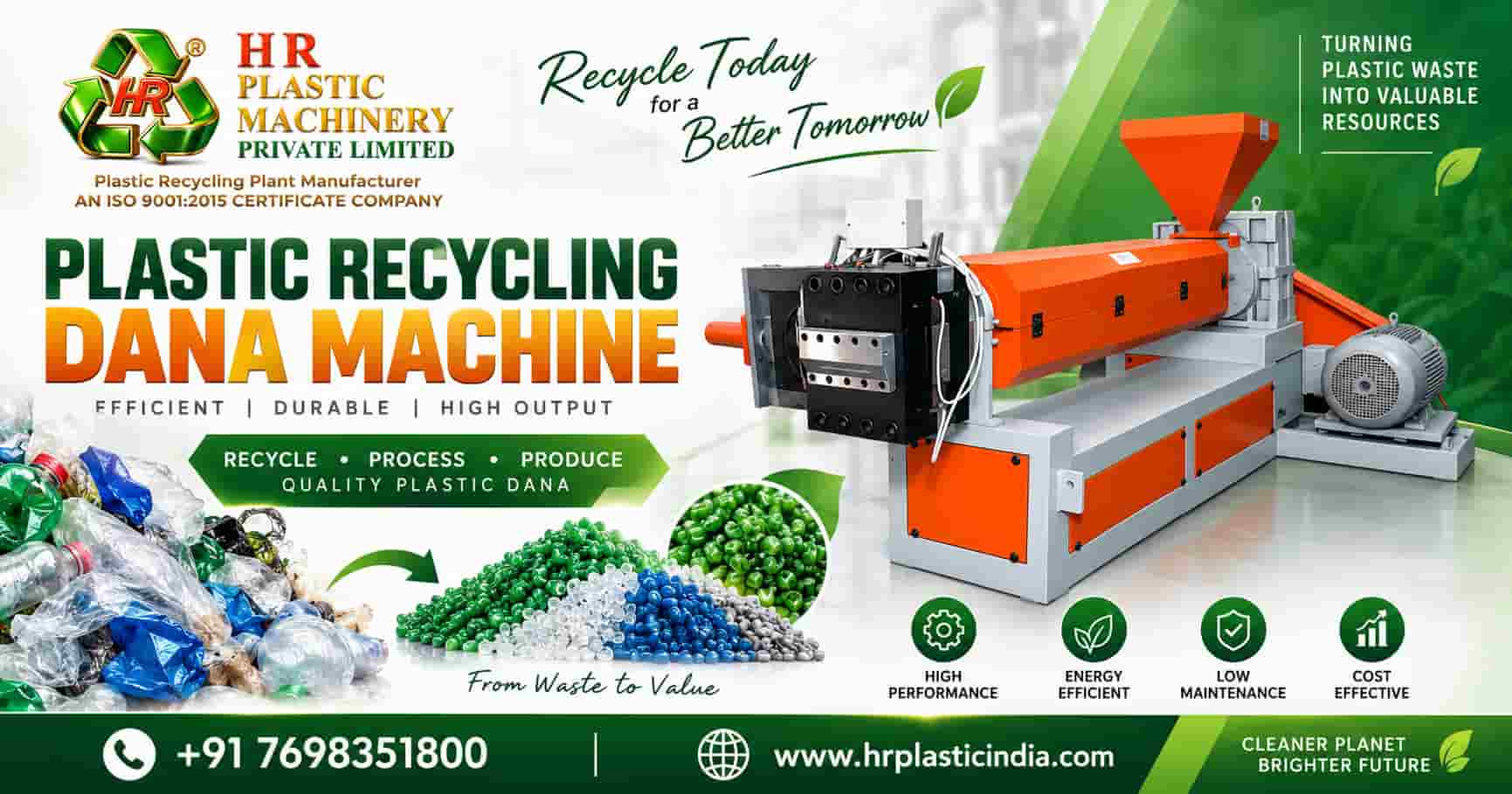
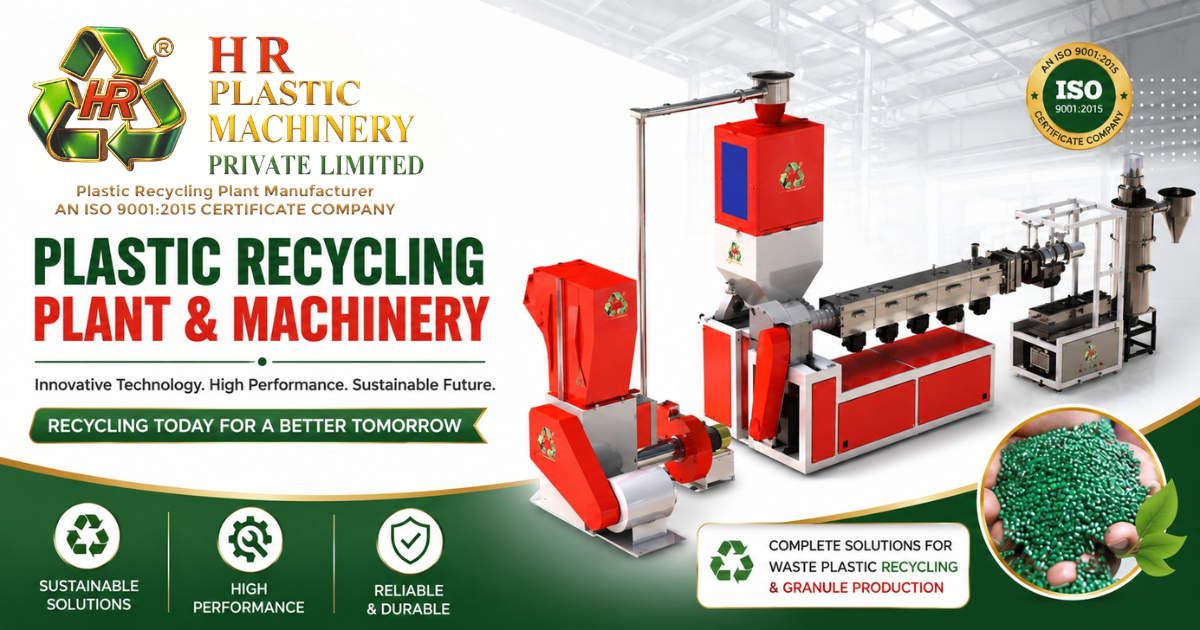
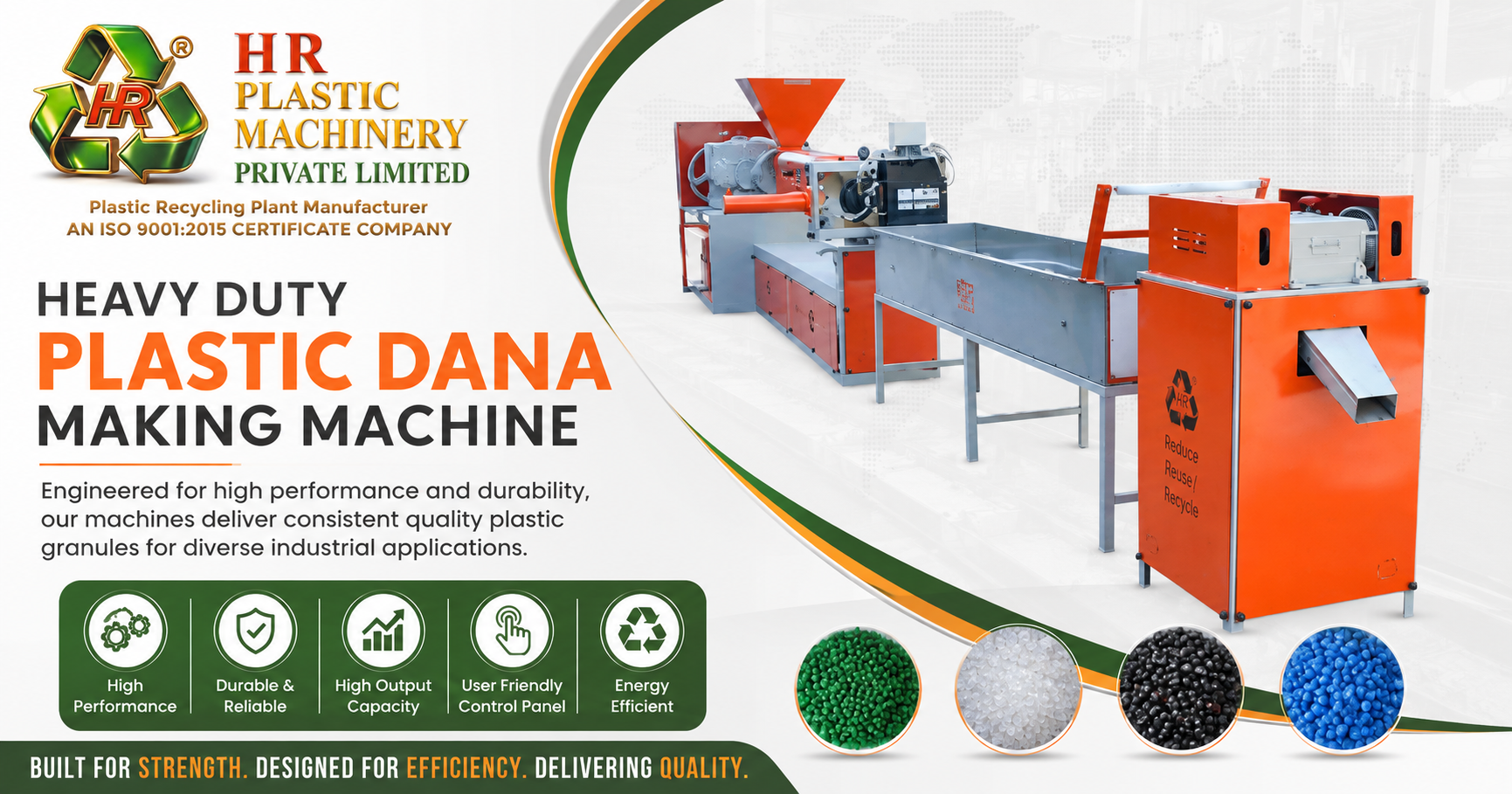
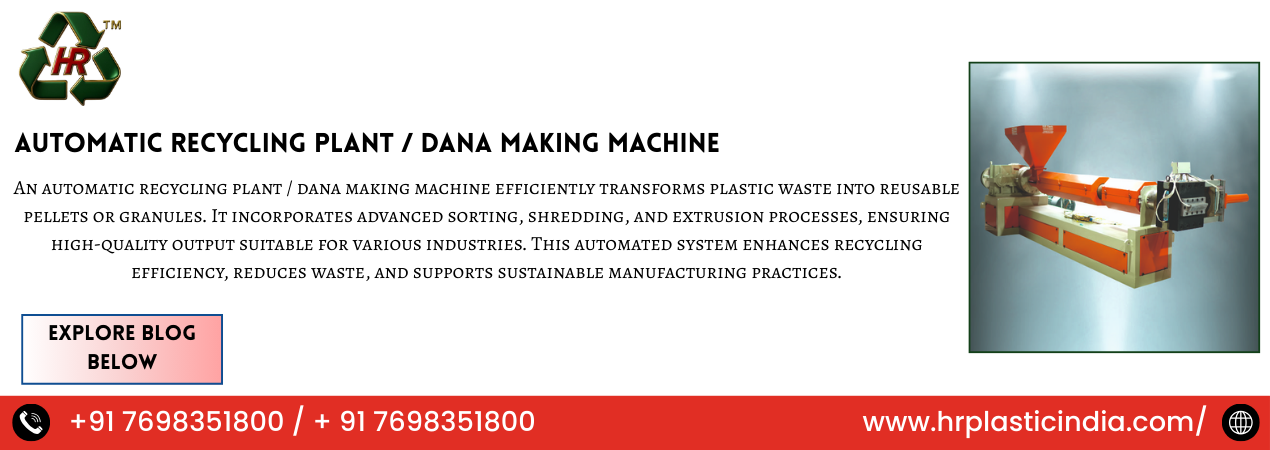
An automatic recycling plant combined with a dana making machine is used to convert plastic waste into uniform plastic granules suitable for reuse in manufacturing. The system integrates shredding, extrusion, filtration, cooling, and cutting into a continuous, automated workflow. It is designed to process materials such as LDPE, HDPE, and PP plastic scrap, agglomerated waste, and plastic chips while maintaining consistent output quality and stable processing conditions.
Understanding the role of automatic recycling plants in plastic processing
Plastic recycling plants play an important role in modern manufacturing by reducing reliance on virgin plastic raw materials. An automatic recycling plant is engineered to process post-industrial or post-consumer plastic waste into reusable granules through controlled mechanical operations. These granules, commonly known as dana, are widely used in injection molding, extrusion, and blow molding applications.
Automation ensures stable process parameters such as temperature, pressure, screw speed, and material flow. This consistency improves material quality, reduces process variation, and minimizes manual intervention, making the system suitable for continuous industrial operation. In Ahmedabad, where plastic manufacturing and recycling units are concentrated across industrial zones, automatic recycling plants support both small-scale and large-scale recycling activities.
Automatic recycling plant and dana making machine working process
An automatic recycling plant operates through a sequence of coordinated stages designed to convert plastic waste into reusable granules. The process begins with material preparation, followed by controlled melting and filtration, and concludes with pellet formation.
The main operational stages include:
- Plastic waste collection and sorting to remove incompatible materials
- Shredding or grinding of plastic scrap into manageable sizes
- Feeding shredded material into the extruder system
- Controlled heating and melting inside the screw barrel
- Filtration through screen changers to remove contaminants
- Extrusion of molten plastic through a die
- Cooling of extruded strands
- Cutting of strands into uniform plastic dana
An automated control panel continuously monitors and adjusts operating parameters to ensure uniform melting, stable pressure, and consistent granule size. This level of automation supports higher productivity and reduces process fluctuations.
Key components of an automatic dana making plant
An automatic recycling plant consists of multiple mechanical and electrical components that function together as an integrated system. Each component contributes to maintaining process stability and output consistency.
Major components include the extruder screw and barrel assembly for melting and conveying material, vented screw systems to release trapped gases and moisture, hydraulic or manual screen changers for effective filtration, cutter machines for pelletizing, mixture machines for uniform feeding, and a centralized control panel for monitoring operations. Optional equipment such as die face cutter systems and hopper loaders can be incorporated based on material type and production requirements.
These components are available in different capacity ranges, allowing manufacturers to configure plants according to their operational scale and material throughput needs.
Material compatibility and processing flexibility
Automatic recycling plants are designed to process a wide range of thermoplastic materials commonly used in manufacturing. Material compatibility is particularly important for recycling units in Ahmedabad, where plastic waste streams originate from packaging, molding, and industrial scrap sources.
Commonly processed materials include LDPE film waste, HDPE containers, PP molded articles, agglomerated plastic waste, and plastic chips. Vented extruder systems help manage moisture and volatile gases during processing, improving melt stability and granule quality. Proper filtration reduces contamination levels, making the recycled dana suitable for reuse in multiple downstream applications.
Applications of plastic dana produced from recycling plants
Plastic dana produced from automatic recycling plants is used across a variety of manufacturing sectors. The granules serve as a secondary raw material for producing new plastic products, supporting material reuse and waste reduction.
Common application areas include:
- Injection molding units manufacturing household and industrial components
- Extrusion plants producing pipes, profiles, and sheets
- Blow molding units manufacturing containers and bottles
- Film manufacturing for packaging applications
- Production of non-critical plastic components
The reuse of recycled granules supports material availability and operational continuity for manufacturers operating in and around Ahmedabad.
Importance of automation in recycling plants
Automation improves reliability and repeatability in plastic recycling operations. Automatic recycling plants reduce dependence on manual control, minimizing human error and ensuring consistent product quality. Automated systems also support continuous operation, which is essential for industrial-scale recycling facilities.
Control panels equipped with sensors regulate temperature zones, motor loads, and material flow rates. This controlled processing environment helps maintain stable extrusion conditions, reduces material degradation, and improves granule uniformity over long production cycles.
For manufacturers in Ahmedabad, automation supports operational efficiency while helping maintain consistent processing standards.
Why Ahmedabad is a key location for plastic recycling machinery
Ahmedabad is a major industrial center with a strong presence of plastic processing, packaging, and manufacturing units. The city’s developed industrial infrastructure, skilled workforce, and access to raw materials make it a strategic location for plastic recycling operations.
Demand for automatic recycling plants in Ahmedabad is driven by increasing plastic waste generation, regulatory emphasis on waste management, and the need for sustainable manufacturing practices. The local availability of machinery manufacturers also simplifies installation, servicing, and technical support, making Ahmedabad a preferred location for recycling plant investments.
Operational considerations for recycling plant buyers
Selecting an automatic recycling plant requires careful evaluation of operational needs, material types, and expected output. Buyers should assess factors such as machine capacity, material compatibility, power requirements, and available installation space.
Important evaluation points include:
- Output capacity matched to waste volume
- Compatibility with LDPE, HDPE, and PP materials
- Quality of screw barrel and filtration systems
- Availability of automation and control features
- Ease of maintenance and accessibility of components
Proper assessment helps ensure long-term operational stability and consistent granule quality.
Maintenance and process stability in dana making machines
Routine maintenance is essential for maintaining performance and extending equipment life. Regular inspection of screw barrels, screen changers, cutters, and drive systems helps prevent unplanned downtime. Automated control systems simplify troubleshooting by providing real-time operational data.
Maintaining clean filtration systems and consistent material feeding practices supports stable extrusion and uniform granule size. These practices are particularly important for recycling units processing mixed or contaminated plastic waste.
Conclusion
An automatic recycling plant with a dana making machine is a critical system for converting plastic waste into reusable granules in a controlled and efficient manner. In Ahmedabad, where plastic manufacturing and recycling activities are well established, such plants support industrial sustainability and material reuse. By integrating automation, effective filtration, and precision extrusion, these systems help maintain consistent output quality while enabling continuous operation. Proper selection, operation, and maintenance of recycling plants allow manufacturers to manage plastic waste efficiently and contribute to long-term resource efficiency.
FAQs
What is an automatic recycling plant used for
An automatic recycling plant is used to convert plastic waste into reusable plastic granules through shredding, extrusion, filtration, and cutting processes under controlled operating conditions.
What types of plastic can be processed in a dana making machine
Dana making machines commonly process LDPE, HDPE, PP, agglomerated plastic waste, and plastic chips, depending on machine configuration.
How does automation improve recycling plant performance
Automation maintains consistent temperature, pressure, and material flow, reducing manual errors and improving output quality and operational efficiency.
Where are automatic recycling plants commonly installed in Ahmedabad
These plants are typically installed in industrial estates and manufacturing zones where plastic waste generation and processing activities are concentrated.
Is recycled plastic dana suitable for manufacturing
Recycled plastic dana is widely used in injection molding, extrusion, blow molding, and other plastic manufacturing processes.
What factors affect output quality in recycling plants
Material cleanliness, filtration efficiency, screw design, temperature control, and consistent feeding directly influence granule quality.
How does a vented extruder benefit recycling operations
A vented extruder releases moisture and gases during processing, improving melt quality and reducing defects in recycled granules.
Get in Touch
Address
Office Address :- 3, Abhishree Industrial Park, B/h. G.V.M.M., Near Odhav Circle, Ahmedabad-382415.
Company Address : 35, Shivalik Industrial Park, Nr. Amba Hotel, Chowkadi, Near Kuha Gam, Ahmedabad to Indor Highway, Ahmedabad-382433. Open in Google Maps Email [email protected] Send an email Phone +91 7698351800 Call now
Company Address : 35, Shivalik Industrial Park, Nr. Amba Hotel, Chowkadi, Near Kuha Gam, Ahmedabad to Indor Highway, Ahmedabad-382433. Open in Google Maps Email [email protected] Send an email Phone +91 7698351800 Call now
Relevant Tags
Recent Posts